Eggs are a breakfast staple, but the way they’re cooked can spark some serious debate. Among the most popular styles are over easy and over medium, each offering a unique twist on the classic fried egg. Understanding the difference between these two methods can elevate any breakfast experience and cater to personal preferences.
Over easy eggs feature a delicate, runny yolk encased in a tender white, perfect for those who love a splash of richness on their plate. In contrast, over medium eggs strike a balance, with a slightly firmer yolk that still retains some creaminess. Whether you’re a fan of dipping toast into a gooey yolk or prefer a more substantial bite, knowing the distinctions between these cooking styles can help anyone become an egg connoisseur.
Understanding Egg Cooking Terms
Understanding egg cooking terms clarifies the distinction between different styles. Two popular methods, over easy and over medium, enhance the culinary experience.
What Is Over Easy?
Over easy refers to eggs fried on one side and flipped to cook the other side briefly. The yolk remains largely intact and runny, while the whites appear slightly firm. This method allows for a delicate texture and rich flavor when the yolk breaks. Over easy eggs pair well with toast, as the runny yolk creates a flavorful dipping sauce.
What Is Over Medium?
Over medium describes eggs cooked similarly to over easy, but with a longer cooking time after flipping. The yolk remains somewhat runny yet firmer than over easy eggs. Whites are completely set and lightly browned. This style balances creaminess with enough firmness, appealing to those who enjoy a slightly cooked yolk. Over medium eggs can complement a variety of breakfast dishes, providing a savory addition to plates.
The Cooking Process
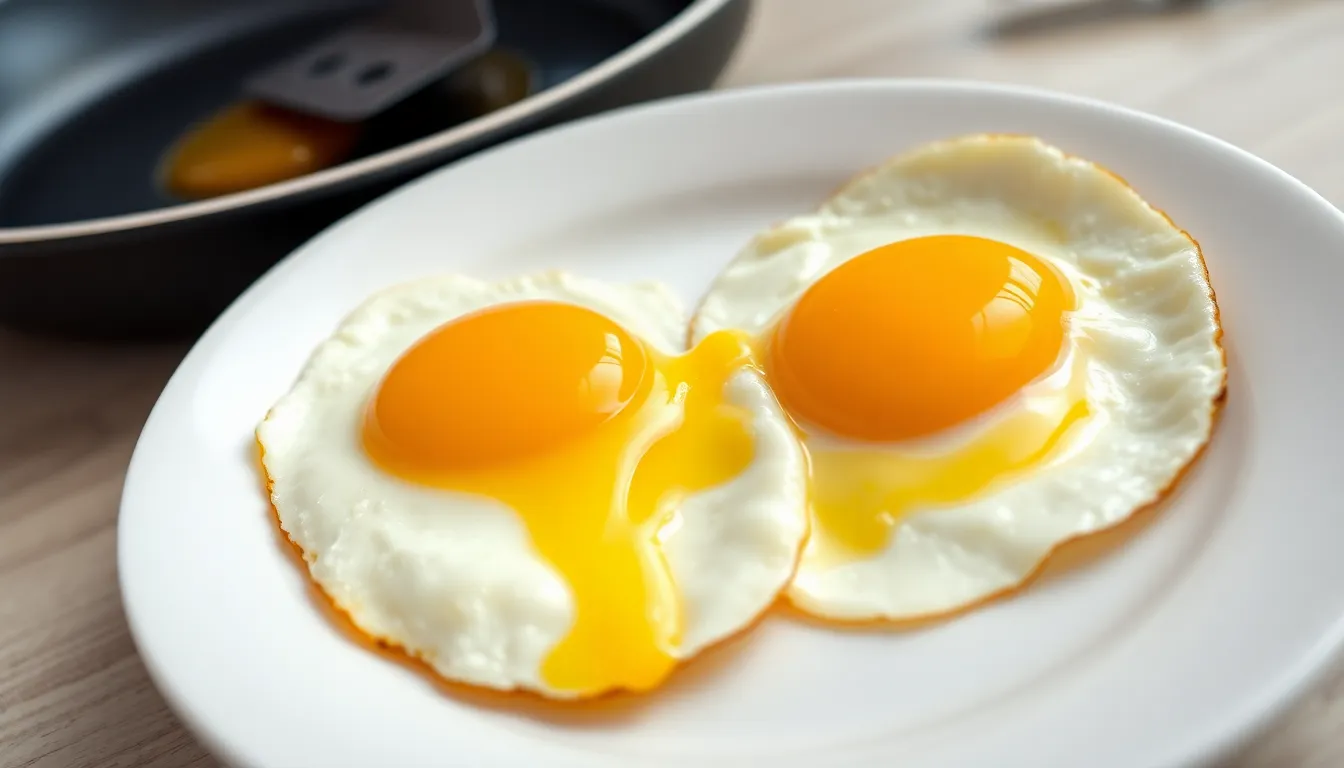
Cooking eggs over easy and over medium involves distinct techniques that influence texture and flavor. Understanding these methods allows for better preparation of eggs according to personal preference.
Cooking Techniques for Over Easy
- Heat the Pan: Preheat a non-stick skillet over medium heat to ensure even cooking.
- Add Fat: Use butter or oil to coat the pan, preventing the egg from sticking.
- Crack the Egg: Gently crack the egg into the skillet, avoiding breaks in the yolk.
- Cook the First Side: Allow the egg to fry for 2-3 minutes, until the whites are set but the yolk remains runny.
- Flip the Egg: Carefully slide a spatula under the egg, flipping it gently for a brief 30 seconds to 1 minute.
- Serve: Once flipped, carefully remove the egg from the skillet, keeping the yolk intact.
Cooking Techniques for Over Medium
- Heat the Pan: Preheat a non-stick skillet over medium heat, similar to over easy preparation.
- Add Fat: Use butter or oil in the skillet to prevent sticking.
- Crack the Egg: Gently crack the egg into the skillet, taking care not to break the yolk.
- Cook the First Side: Allow the egg to fry for about 3-4 minutes, ensuring the whites are fully set.
- Flip the Egg: Slide a spatula under the egg and flip it, cooking for an additional 1-2 minutes.
- Check the Yolk: Assess that the yolk is firm yet still slightly creamy before removing from the pan.
- Serve: Carefully transfer the egg onto a plate, maintaining the integrity of the yolk.
Taste and Texture Differences
The taste and texture of eggs vary significantly between over easy and over medium styles. Each preparation offers a unique experience that caters to different preferences.
Flavor Profile of Over Easy
Over easy eggs present a rich and buttery flavor. Their runny yolks deliver a creamy texture that enhances dishes such as toast or breakfast sandwiches. The tenderness of the whites adds to the overall mouthfeel, making over easy eggs a popular choice for those who enjoy a delicate balance of flavors. The brief cooking time prevents the egg from overcooking, preserving its natural taste, which pairs well with other breakfast items like avocados or salsas.
Flavor Profile of Over Medium
Over medium eggs offer a more balanced flavor profile with a firmer yolk than over easy. The yolk remains somewhat runny but has a creamier consistency, creating a satisfying contrast with the fully set whites. This combination results in a heartier texture, making over medium eggs versatile for breakfast burritos, salads, or grain bowls. The slightly longer cooking time allows for additional caramelization of the whites, contributing to a more robust taste that complements various ingredients.
Nutritional Aspects
Eggs provide essential nutrients and vary slightly in caloric content based on cooking styles. Understanding the nutritional differences between over easy and over medium eggs can help individuals make informed dietary choices.
Caloric Differences
Caloric values for both cooking styles are similar, with minor variations based primarily on cooking time and fat used. Over easy eggs typically contain about 90 calories per egg, while over medium eggs contain approximately 92 calories. The difference arises from the longer cooking process of over medium eggs, which may result in marginal fat loss through the cooking oil used.
| Cooking Style | Approximate Calories per Egg |
|---|---|
| Over Easy | 90 |
| Over Medium | 92 |
Health Benefits of Both Styles
Both over easy and over medium eggs offer substantial health benefits. Eggs are an excellent source of high-quality protein, containing all nine essential amino acids. They provide vital vitamins and minerals, including vitamin B12, selenium, and choline.
- Over Easy Eggs: Their runny yolks retain more nutrients due to minimal cooking. This style offers higher levels of antioxidants like lutein and zeaxanthin, which support eye health.
- Over Medium Eggs: The firmer yolk provides a satisfying texture while still containing a significant amount of nutrients. This cooking style often increases the protein absorption rate due to thorough cooking.
Both styles contribute to a balanced breakfast and can fit into various dietary plans, making them suitable for diverse nutritional needs.
Choosing between over medium and over easy eggs ultimately depends on personal taste and preference. Both styles offer unique textures and flavors that can elevate any breakfast. Whether one enjoys the rich and creamy yolk of over easy eggs or the heartier, firmer yolk of over medium eggs, each option has its place in a balanced diet.
Understanding the nuances of cooking techniques can enhance the breakfast experience. With their nutritional benefits and versatility, both styles can cater to various dietary needs and culinary creations. Embracing these differences allows for a more enjoyable and satisfying meal, making eggs a delightful staple in any breakfast routine.