Table of Contents
ToggleSan Diego homeowners have a distinct advantage when it comes to outdoor living, mild winters, minimal rain, and year-round usable yards. That same climate makes landscape lighting not just practical, but essential for extending evening enjoyment of patios, gardens, and walkways. Whether highlighting coastal succulents or illuminating a stone path, the right fixtures can transform a backyard from functional to breathtaking after sunset. This guide covers everything from fixture selection to installation, tailored specifically for San Diego’s unique coastal and inland microclimates.
Key Takeaways
- San Diego’s Mediterranean climate, with 266 sunny days annually and minimal freeze-thaw cycles, extends landscape lighting system lifespan and eliminates concerns about ground heave or cable damage.
- LED fixtures consume 80–90% less power than incandescent bulbs and last 25,000–50,000 hours, costing San Diego homeowners just $15–25 annually to operate compared to $120–180 with halogens.
- Coastal homeowners within 3 miles of the Pacific should invest in marine-grade 316 stainless steel or heavy powder-coated aluminum fixtures with IP65/IP67 ratings to prevent salt corrosion and extend fixture lifespan to 10+ years.
- Path lights spaced 8–10 feet apart with 3–5 watt LEDs, cast aluminum housings, and 6-inch ground stakes provide optimal safety and visual flow in San Diego’s sandy and loamy soils.
- Low-voltage landscape lighting systems (12-volt) require no residential permits in San Diego County and can be DIY-installed using 12-gauge direct-burial cable buried 6–8 inches deep, avoiding irrigation lines and tree roots.
- Solar landscape lights underperform in coastal areas affected by June gloom but work reliably in inland zones; combine solar accents with low-voltage LEDs for functional path and security lighting to balance aesthetics with dependable performance.
Why San Diego’s Climate Is Perfect for Landscape Lighting
San Diego’s Mediterranean climate, defined by the National Weather Service as dry summers and mild, wet winters, means outdoor fixtures face far less stress than those in freeze-thaw zones or high-humidity regions. With an average of 266 sunny days per year and minimal temperature swings, transformers and wiring don’t expand and contract aggressively, extending system lifespan.
Rainfall averages just 10–12 inches annually, concentrated between November and March. This low moisture reduces corrosion on metal housings and connectors, even in non-marine-grade fixtures. Inland areas like Poway and Escondido experience even less salt exposure, so standard aluminum or powder-coated steel fixtures perform well without aggressive rust prevention.
The lack of hard freezes eliminates concerns about ground heave disturbing buried cables or cracking fixture lenses. Homeowners can install low-voltage systems year-round without worrying about frozen ground or seasonal thaw cycles damaging underground components. For those near the coast, from La Jolla to Imperial Beach, salt air is the primary environmental factor, but that’s manageable with proper fixture selection (covered in a later section).
Another advantage: San Diego’s extended outdoor living season. Patios and decks get used well into November and start up again in February, making landscape lighting a functional upgrade, not just decorative. Systems that might sit dormant for months in colder climates earn their keep here nearly year-round.
Best Types of Landscape Lighting for San Diego Homes
Path Lights and Walkway Fixtures
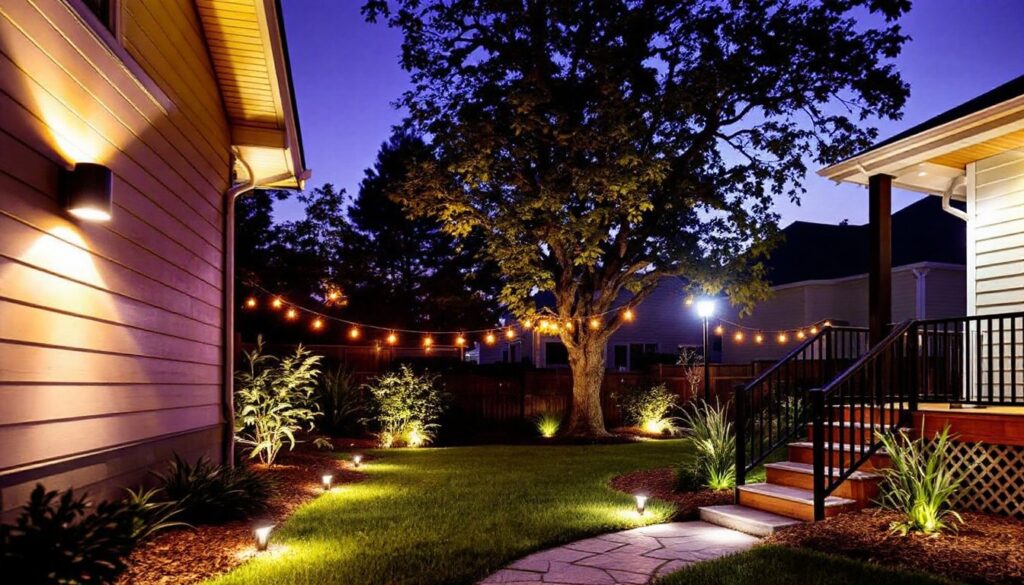
Path lights serve dual purposes: safety and visual flow. For San Diego landscapes, low-voltage LED path lights spaced 8–10 feet apart provide adequate illumination without glare. Look for fixtures with 3–5 watts per bulb: anything brighter overwhelms desert-adapted eyes accustomed to softer evening light.
Materials matter. Cast aluminum or composite resin housings hold up better than plastic in UV-intense environments. San Diego’s strong sun, especially in inland valleys, degrades cheaper plastics within 18–24 months, causing brittleness and discoloration. Fixtures with tempered glass lenses resist scratching from windblown sand, common in coastal and foothill areas.
For decomposed granite or flagstone paths popular in drought-tolerant yards, choose fixtures with ground stakes at least 6 inches long. Shorter stakes pull loose in sandy or loamy soils during Santa Ana wind events. If the path borders turf, install fixtures 2–3 inches outside the mow line to avoid trimmer damage.
Accent and Uplighting for Plants and Architecture
Uplighting transforms mature palms, agave clusters, and architectural features like stucco columns or stone veneers. Bullet-style fixtures with adjustable heads offer the most flexibility. Mount them 12–18 inches from the base of a plant or wall, angled at roughly 30 degrees.
For California natives like manzanita or toyon, use warm white LEDs (2700–3000K) to complement reddish bark and avoid washing out foliage color. Cooler temps (4000K+) work better on gray-blue succulents like senecio or blue chalksticks.
Wall-washing larger surfaces, like a retaining wall or the side of a house, requires wider beam spreads (60–120 degrees) and fixtures positioned farther back, typically 3–4 feet from the surface. For two-story homes, consider fixtures with at least 10 watts to reach upper eaves without creating dark zones midway up.
Avoid uplighting messy trees like eucalyptus or evergreen ash: falling leaves and bark strips clog fixtures and create fire hazards if debris contacts hot (non-LED) bulbs. Stick with clean-canopy species or architectural elements in high-maintenance zones.
DIY Installation Tips for Your San Diego Landscape Lighting
Most landscape lighting runs on 12-volt low-voltage systems, which don’t require permits in San Diego County for residential installations. (If tapping into 120-volt house current for the transformer, hire a licensed electrician or pull a permit if doing it yourself, NEC Article 411 applies.)
Start by mapping the layout on graph paper. Mark transformer location, cable runs, and fixture placements. Transformers should mount within 2 feet of a GFCI-protected outdoor outlet and stay accessible, not buried behind shrubs. Choose a transformer rated for at least 20% more wattage than your total fixture load to prevent overheating and extend component life.
Use 12-gauge or 14-gauge direct-burial cable rated for wet locations. Twelve-gauge handles longer runs (up to 100 feet from the transformer) without significant voltage drop: 14-gauge works for shorter legs (under 50 feet). Bury cables 6–8 inches deep along planting beds or under mulch, not beneath turf where aeration or future digging will sever lines.
When trenching, avoid irrigation lines and tree root zones. In San Diego’s clay-heavy soils (common in Mira Mesa, Tierrasanta), a flat spade works better than a trenching shovel for narrow cuts. Rocky areas like Point Loma or parts of Rancho Peñasquitos may require a mattock or demo bar to break through caliche layers.
Secure connections with waterproof wire connectors filled with silicone grease, not standard wire nuts. Even in San Diego’s dry climate, morning dew and winter rains will corrode exposed copper over time. Test the system before backfilling trenches, troubleshooting a dead fixture is infinitely easier with exposed wiring.
For timer or smart controls, choose models with photo sensors and manual overrides. San Diego’s variable marine layer means sunset times can feel different day to day: photo sensors adjust automatically.
Choosing Weather-Resistant Fixtures for Coastal Conditions
Within 3 miles of the Pacific, salt spray accelerates corrosion on any metal that isn’t purpose-built for marine environments. Look for fixtures with marine-grade 316 stainless steel, solid brass, or heavy powder-coated aluminum housings. Standard aluminum fixtures will pit and corrode within 2–3 years in Encinitas, Del Mar, or Ocean Beach.
Gaskets and seals matter as much as housing material. Fixtures should carry an IP65 or IP67 rating (Ingress Protection), meaning they’re dust-tight and protected against water jets or temporary immersion. Cheaper fixtures often claim “weatherproof” without specifying an IP rating, skip those for coastal installs.
LED boards and drivers are vulnerable to moisture intrusion. Quality manufacturers pot (encapsulate) electronics in silicone or epoxy resin, preventing saltwater from corroding solder joints. If a fixture has visible circuit boards or loose wiring inside when you open it, it won’t last near the coast.
For lens material, impact-resistant polycarbonate outperforms glass in high-wind zones. Polycarbonate won’t shatter if a fixture tips during a windstorm or gets hit by yard equipment. It does yellow slightly over 5–7 years under intense UV, but many manufacturers now add UV inhibitors that extend clarity.
Coastal homeowners should also rinse fixtures with fresh water every 6 months. A quick hose-down removes salt buildup on lenses and housings, preventing long-term etching and maintaining light output. It’s a 10-minute task that doubles fixture lifespan in marine environments.
Energy-Efficient Lighting Options: Solar vs. LED
LED fixtures dominate the landscape lighting market for good reason: they draw 80–90% less power than incandescent equivalents and last 25,000–50,000 hours (roughly 15–30 years at 5 hours per night). For a typical San Diego yard with 12 fixtures running 5 hours nightly, annual electricity cost runs $15–25 with LEDs versus $120–180 with halogens.
LEDs also produce minimal heat, critical when fixtures sit near wood mulch or dried ornamental grasses during fire season. A 3-watt LED bulb stays cool to the touch even after hours of operation, unlike a 20-watt halogen that can ignite dry debris.
Solar landscape lights appeal to DIYers avoiding wiring, but performance in San Diego varies by microclimate. Coastal areas with frequent June gloom and marine layer see solar panels underperform, batteries may not fully charge on overcast days, leading to dim output or lights that shut off before midnight. Inland zones like Santee or Alpine get more consistent sun, improving solar reliability.
Most solar path lights use 0.5–2 watt LEDs powered by small rechargeable batteries. They work fine for decorative accents but lack the lumen output for true path lighting or security applications. Expect 10–25 lumens per fixture from solar versus 50–150 lumens from low-voltage LEDs.
Battery replacement is the hidden cost. Solar fixture batteries degrade after 300–500 charge cycles (roughly 1–2 years) and cost $5–15 per fixture to replace. Over a 10-year span, that maintenance can exceed the install cost of a low-voltage LED system.
For hybrid needs, some homeowners use solar for decorative accent lights in beds and low-voltage LEDs for functional path and security lighting. This balances energy savings with reliable performance where it matters most.
Regular lighting maintenance, cleaning lenses, checking connections, and replacing failing components, keeps any system performing optimally. Many landscape lighting fixtures now integrate smart controls, allowing schedules and dimming adjustments from a phone app. That level of control pairs well with strategic lighting layouts that balance aesthetics, safety, and energy use.
San Diego homeowners benefit from guidance on outdoor design and lighting strategies. Resources like The Spruce’s home improvement guides offer year-round maintenance tips, while Hunker’s design inspiration showcases trending fixture styles and installation techniques. For regionally appropriate plant-lighting pairings, Southern Living’s garden features provide ideas that translate well to Southern California’s Mediterranean palette.