Table of Contents
ToggleThe kitchen island has evolved from a simple work surface into the command center of modern homes, a spot for meal prep, assignments, casual dining, and conversation. And nothing defines that space quite like the lighting hanging above it. Get it right, and you’ve got task lighting that makes chopping safe, ambient glow that sets the mood, and a visual anchor that pulls the whole room together. Get it wrong, and you’re squinting at onions or banging your head on a fixture every time you reach for the cutting board. This guide walks through fixture types, sizing rules, style considerations, and installation basics so you can make informed decisions and avoid the most common pitfalls.
Key Takeaways
- Lighting over kitchen island serves three critical roles—task lighting for food prep, ambient illumination, and accent design—so proper fixture selection improves both safety and visual impact in your kitchen.
- Pendant lights are the most popular choice for kitchen islands; for standard 36–42 inch islands, choose 10–14 inch diameter pendants spaced 24–30 inches apart to avoid the “bowling ball” effect.
- Apply the one-third rule: your combined fixture width should equal roughly one-third of the island’s length, and hang fixtures 30–36 inches from the countertop to balance task performance with head clearance.
- Choose a lighting style that complements your kitchen design—modern kitchens suit matte black or brushed nickel fixtures, while farmhouse kitchens benefit from seeded glass and oil-rubbed bronze finishes.
- Always verify your electrical setup before purchasing; use ceiling-rated metal boxes for fixtures over four pounds, install an LED-compatible dimmer switch for adjustable light, and test fixture height for a day or two before final installation.
- For long islands (six feet or longer), consider a single linear fixture over multiple pendants to simplify installation and create a cleaner aesthetic.
Why Kitchen Island Lighting Matters
Island lighting serves three distinct roles: task lighting for food prep and cooking, ambient lighting that contributes to the room’s overall illumination, and accent lighting that adds visual interest. Unlike overhead ceiling lights that wash the entire room, island fixtures concentrate light where you need it most.
From a practical standpoint, proper island lighting reduces eye strain and improves safety when using knives, graters, and other sharp tools. A well-lit work surface also makes it easier to spot food quality issues, bruised produce, undercooked meat, or foreign objects.
But function isn’t the whole story. Island fixtures often serve as the kitchen’s focal point, drawing the eye and establishing design hierarchy. They can reinforce your style direction (modern, farmhouse, industrial) or introduce contrast. And because most islands sit in open sight lines from adjoining rooms, the fixtures you choose affect how the entire first floor feels. When homeowners consider comprehensive interior lighting strategies, the island is typically the first place they focus their budget and attention.
Types of Lighting Fixtures for Kitchen Islands
Pendant Lights
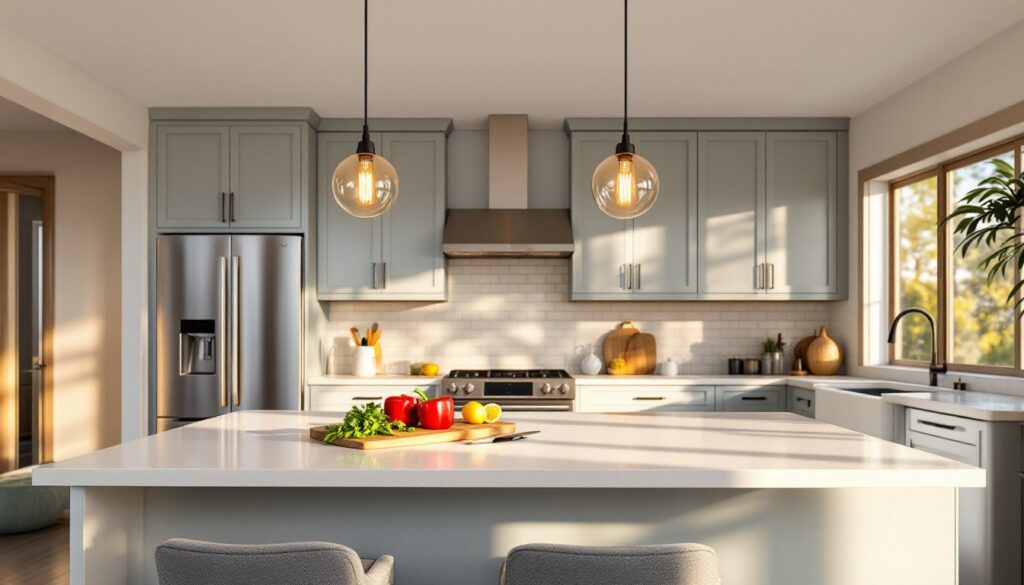
Pendants are the most popular choice for islands, and for good reason: they’re scalable, versatile, and available in every style and price point. A pendant light is a single fixture suspended from the ceiling by a cord, chain, or rigid rod. Most islands use two to four pendants spaced evenly along the length.
Glass globes work well in transitional and contemporary kitchens, offering diffused light that’s easy on the eyes. Metal shades (dome, cone, or drum) throw more directional light downward, which improves task performance but can create harsh shadows if the bulb wattage is too high. Exposed-bulb pendants lean industrial or Edison-vintage and require dimmable LED filament bulbs to avoid glare.
Pendant sizing matters. For a standard island (36–42 inches wide), individual pendants should measure 10–14 inches in diameter. Go smaller and they’ll look like Christmas ornaments: go larger and they’ll block sight lines across the kitchen. Spacing should be 24–30 inches apart, measured center to center. According to guides from Remodelista, this spacing prevents the “bowling ball” effect while ensuring even coverage.
One practical tip: if your island has an overhang for seating, avoid opaque downlight-only pendants. You’ll need some upward or lateral light spill to illuminate faces during conversation. Translucent or perforated shades work better.
Chandeliers and Linear Fixtures
If your island is six feet or longer, a linear chandelier or single large fixture can replace multiple pendants. Linear fixtures (also called island chandeliers or billiard lights) mount on a rectangular or oval canopy and distribute multiple bulbs along a central spine. They’re especially popular in farmhouse, rustic, and modern kitchens.
Linear fixtures simplify installation, one electrical box instead of three or four, and create a cleaner look on long islands. Widths typically range from 30 to 54 inches, and most are height-adjustable via chain or rod. Look for models with four to six bulbs (60-watt equivalent LED each) to deliver adequate task lighting.
Traditional chandeliers work on large islands in formal or transitional kitchens, but choose carefully: many chandeliers are designed for dining rooms and throw most of their light upward, leaving the work surface dim. Hybrid designs that combine downlights with decorative arms offer better functionality. Just ensure the total height (from ceiling to lowest point) leaves at least 30–36 inches of clearance above the countertop.
How to Determine the Right Size and Height
Start with the island dimensions. Measure length and width in inches, then apply the one-third rule: your combined fixture width should equal roughly one-third of the island’s length. For example, a 72-inch island (6 feet) works well with three 12-inch pendants (36 inches total) or a single 30-inch linear fixture.
For pendant spacing, divide the island length by the number of fixtures plus one. On that 72-inch island with three pendants: 72 ÷ 4 = 18 inches. Install the first pendant 18 inches from one end, the last pendant 18 inches from the other end, and space the middle pendant evenly. This ensures balanced coverage and prevents the “too cramped” or “too spread out” look.
Hanging height is critical for both function and safety. The standard guideline is 30–36 inches from the bottom of the fixture to the countertop. If your island has seating, err toward 36 inches to preserve sight lines and prevent head bumps. If it’s purely a work surface, 30 inches delivers stronger task lighting.
Ceiling height affects these numbers. In kitchens with 9-foot ceilings, you may need adjustable-height fixtures or shorter cords to avoid a “floating” appearance. For 10-foot or vaulted ceilings, longer rods or chains help the fixtures feel anchored. Many pendant kits include 6–12 feet of adjustable cord: trim excess inside the canopy, but don’t cut until you’ve test-hung the fixture. If you’re planning other upgrades, a lighting layout tool can help visualize how fixture placement interacts with recessed cans, undercabinet strips, and natural light sources.
One often-missed detail: measure from the finished countertop, not the cabinet box. If you’re installing fixtures before counters are templated, add 1.5 inches for stone or 1 inch for laminate to your calculations.
Choosing the Perfect Style for Your Kitchen
Your island lighting should complement, not clone, your cabinetry and finishes. If your kitchen leans modern (flat-panel cabinets, quartz counters, stainless appliances), consider glass globes, geometric cages, or minimalist drum pendants in matte black, brushed nickel, or polished chrome. Avoid ornate details and warm-toned metals.
For farmhouse or country kitchens, seeded glass, wirework baskets, and fixtures with Edison bulbs deliver that lived-in feel. Finishes like oil-rubbed bronze, galvanized steel, or distressed wood pair well with shiplap, apron sinks, and butcher-block counters. Just be honest about maintenance, open wirework collects dust and grease.
Transitional kitchens (which blend traditional and contemporary elements) offer the most flexibility. Drum pendants with fabric or metal shades, clear glass with classic profiles, or lantern-style fixtures in mixed metals all work. Match your fixture finish to cabinet hardware and faucet finish for a cohesive look, or introduce one accent metal as a deliberate contrast.
Industrial styles lean on raw materials: exposed bulbs, black iron, concrete, or mesh shades. They pair naturally with open shelving, subway tile, and concrete counters. But be mindful of scale, industrial fixtures trend large and can overwhelm a small kitchen. Inspiration galleries on sites like Homedit showcase hundreds of real-world examples that can help narrow your options.
One practical consideration: finish durability. Kitchens see grease, humidity, and temperature swings. Powder-coated metals and sealed wood hold up better than painted finishes or uncoated brass, which can tarnish or streak. If you’re drawn to a delicate finish, plan for regular lighting maintenance and be prepared to replace or refinish down the line.
Installation Tips and Electrical Considerations
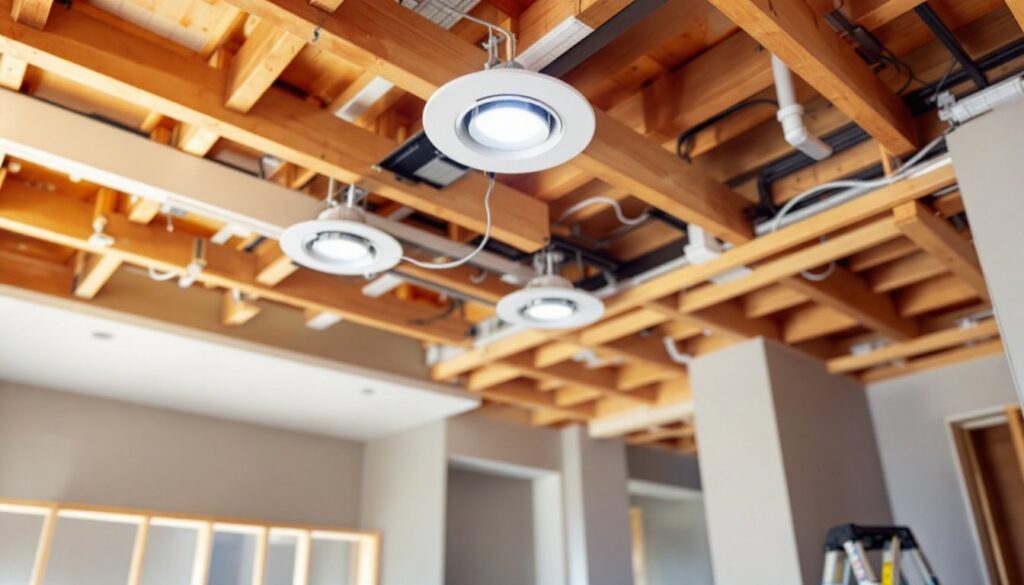
Before you buy, confirm you have an electrical box (or multiple boxes for pendants) centered over the island. If you’re remodeling or building new, run wiring during the rough-in stage. Retrofitting boxes into finished ceilings is possible but messy, especially if joists don’t line up.
Most jurisdictions require ceiling-rated electrical boxes for fixtures over four pounds. For pendants in the 8–15 pound range, use a metal pancake box or retrofit fan-rated box anchored to a joist or blocking. Lightweight fixtures (under 5 pounds) can hang from plastic nail-on boxes, but metal is more durable and meets stricter code standards.
Wiring basics: most modern fixtures use 120-volt AC wiring (black/hot, white/neutral, bare or green/ground). Turn off the circuit breaker, verify power is off with a non-contact voltage tester, then connect wires using twist-on connectors (wire nuts). Match black to black, white to white, and ground to ground. If your home was built before 1985, check for aluminum wiring, it requires special connectors and often a licensed electrician.
If you’re installing multiple pendants on one switch, you have two options: parallel wiring (all fixtures on one circuit) or separate circuits for independent control. Parallel is simpler and code-compliant as long as total fixture wattage stays under 80% of the circuit’s capacity (typically 15 or 20 amps). For reference, three LED pendants at 60-watt-equivalent each draw roughly 24 watts total, well within limits.
Dimming: install a compatible dimmer switch if you want adjustable light levels. LED bulbs require LED-compatible dimmers: using an old incandescent dimmer causes flickering, buzzing, or premature failure. Lutron, Leviton, and Legrand all make reliable options in the $20–$50 range. For smart home integration, consider Wi-Fi or Zigbee dimmers that work with Alexa, Google Assistant, or HomeKit.
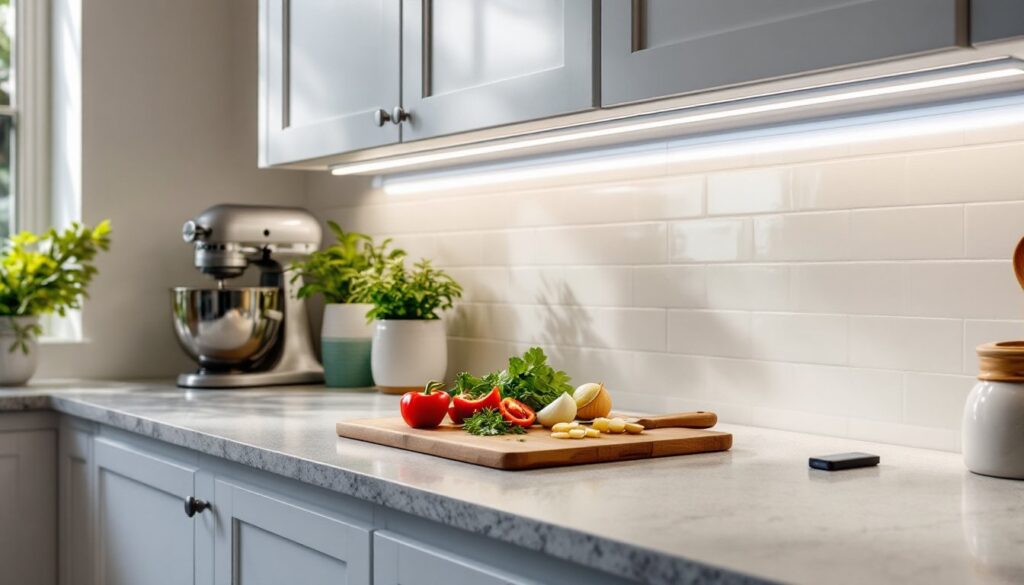
Safety reminders: wear safety glasses when drilling overhead, and work from a stable stepladder, not a chair or countertop. If your ceiling is plaster or you’re dealing with knob-and-tube wiring, hire a licensed electrician. Most jurisdictions require permits for new circuits or relocated boxes: call your local building department before you start. For kitchens with varied task areas, balancing island lighting with ambient lighting from recessed cans or undercabinet strips creates the most functional and inviting result.
One last tip: test your fixture height and light output before you secure everything. Hang the fixture loosely, turn it on, and live with it for a day or two. Adjust height or swap bulbs as needed, then make the final installation. It’s easier to tweak now than after the canopy is caulked and painted.