Table of Contents
ToggleCharlotte homeowners know that curb appeal doesn’t end when the sun sets. Well-planned landscape lighting transforms a property after dark, improving safety, security, and visual impact. Whether you’re highlighting mature oaks along Providence Road or illuminating a walkway in Dilworth, outdoor lighting requires consideration of Charlotte’s humid subtropical climate, local electrical codes, and energy costs. This guide walks through fixture selection, installation options, and practical strategies for lighting your Charlotte landscape effectively.
Key Takeaways
- Landscape lighting in Charlotte enhances safety, security, and curb appeal while extending usable outdoor space into evening hours and potentially increasing property value.
- Always contact NC 811 (Call Before You Dig) at least three business days before installation to avoid hitting underground utilities like gas lines and fiber optic cables.
- LED fixtures are the top choice for Charlotte’s climate, consuming 75–80% less energy than halogen alternatives and lasting 25,000–50,000 hours while producing equivalent brightness.
- Low-voltage 12V or 24V landscape lighting systems are DIY-friendly and don’t require permits in Charlotte, typically costing $400–$800 for a basic 8–10 fixture setup.
- Prioritize durable materials like brass, copper, or powder-coated aluminum with IP65 water-resistance ratings and tempered glass lenses to withstand Charlotte’s hot, humid summers and occasional storms.
- Professional installation ($2,500–$6,000 for typical quarter-acre lots) is recommended for complex designs, 120V systems, or challenging terrain with existing irrigation.
Why Landscape Lighting Matters for Charlotte Homeowners
Outdoor lighting serves three distinct functions: safety, security, and aesthetics. In Charlotte neighborhoods with mature tree canopy and uneven terrain, path lighting prevents trips and falls on steps, grade changes, and root-lifted pavers. Motion-activated fixtures near entry points deter opportunistic break-ins, Charlotte-Mecklenburg police note that well-lit properties are statistically less attractive targets.
From a design standpoint, strategic lighting extends usable outdoor space into evening hours. A lit patio or deck becomes a functional room rather than dead space after 7 PM in winter months. Uplighting architectural features or specimen plants adds depth and visual interest that flat daytime sun can’t achieve.
Property value also factors in. Homes with professionally designed landscape lighting systems often appraise higher and photograph better for listings, particularly in established Charlotte neighborhoods like Myers Park, Eastover, and Cotswold where outdoor entertaining spaces are expected.
Before digging or running wire, contact NC 811 (Call Before You Dig) at least three business days ahead. Charlotte has extensive underground utilities, and nicking a gas line or fiber optic cable turns a weekend project into a costly repair.
Popular Landscape Lighting Styles in Charlotte
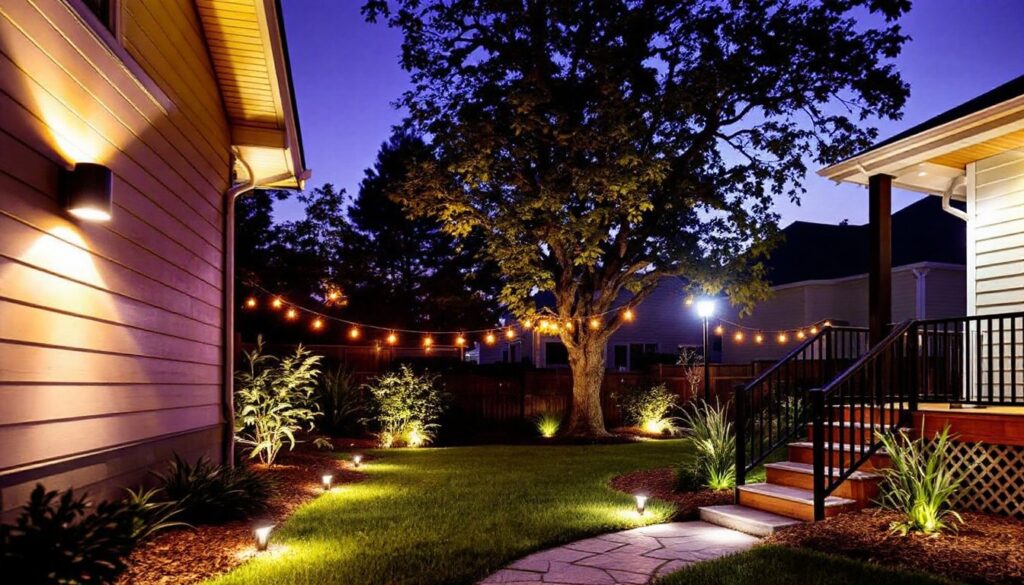
Charlotte’s architectural diversity, from 1920s bungalows in Plaza Midwood to new construction in Ballantyne, means lighting styles vary widely. Path lights with warm white (2700-3000K) LEDs suit traditional homes, while sleek bollards or minimalist stake lights complement contemporary designs.
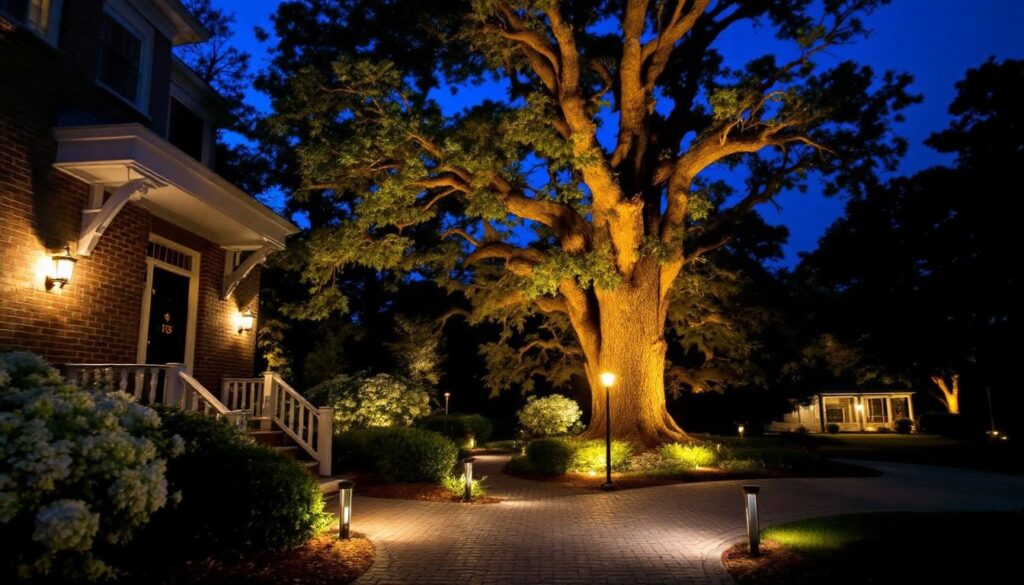
Uplighting works well for Charlotte’s signature elements: crape myrtles, magnolias, and brick or stone facades. Position fixtures 12-24 inches from the base of a tree, angled upward. Use a 20-30 watt equivalent LED to avoid washing out foliage. For brick homes, graze light across the surface at a 30-degree angle to emphasize texture.
Downlighting from tree branches or eaves creates a moonlight effect on patios and walkways. Mount fixtures at least 10 feet high to diffuse the beam. This technique requires careful aiming, poorly positioned downlights cast harsh shadows or glare into windows.
Path and step lighting should provide visibility without light pollution. Fixtures rated at 3-5 watts per unit, spaced 8-10 feet apart, typically suffice for a residential walkway. For steps, mount lights directly into risers or place low bollards at the top and bottom of stairways.
Many Charlotte homeowners now integrate lighting fixtures with smart controls, allowing schedules, dimming, and zoning from a phone app.
Best Fixtures for Charlotte’s Climate
Charlotte’s climate, hot, humid summers and mild but wet winters, demands durable materials. Avoid cheap plastic housings: they crack under UV exposure and temperature swings. Look for brass, copper, or powder-coated aluminum bodies with silicone gaskets rated IP65 or higher for water resistance.
Humidity accelerates corrosion on low-quality fixtures. Brass develops a patina over time but resists rust. Copper offers similar longevity and an evolving aesthetic. Powder-coated aluminum provides modern looks at a lower price point but inspect gaskets annually for degradation.
Lens materials matter. Tempered glass withstands impact better than acrylic, which yellows and hazes after 3-5 years of sun exposure. If you’re near a wooded lot, expect pollen and tree sap buildup, smooth glass lenses clean more easily than textured acrylic.
Charlotte sits in USDA hardiness zone 7b/8a, so freezing isn’t a major concern, but occasional ice storms and heavy rain are. Ensure all wire connections use direct-burial wire nuts filled with silicone grease or heat-shrink butt connectors rated for wet locations. Standard wire nuts will corrode within two seasons.
DIY vs. Professional Installation: What Charlotte Homeowners Need to Know
Low-voltage landscape lighting (12V or 24V systems) falls within DIY capability for most homeowners. These systems step down from 120V household current using a transformer, reducing shock risk and eliminating the need for an electrician in most cases. Charlotte’s residential code (adopting NEC Article 411) allows homeowners to install low-voltage outdoor lighting without a permit, but verify with Mecklenburg County if your project includes hardwired 120V fixtures or affects a historic district property.
A typical DIY setup includes a 300-600 watt transformer, 12-gauge or 14-gauge direct-burial landscape wire, and compatible LED fixtures. Budget $400-$800 for a basic 8-10 fixture system before labor. Install the transformer near an outdoor GFCI outlet, most Charlotte homes built after 1999 have these on exterior walls.
Wire gauge matters. For runs over 50 feet, use 12-gauge wire to minimize voltage drop. At 100 feet with 14-gauge wire, you’ll lose enough voltage that fixtures dim noticeably. Bury wire 6-12 inches deep in conduit or use direct-burial rated cable. Mark the wire path with landscape flags or photos, you’ll thank yourself when planting bulbs next spring.
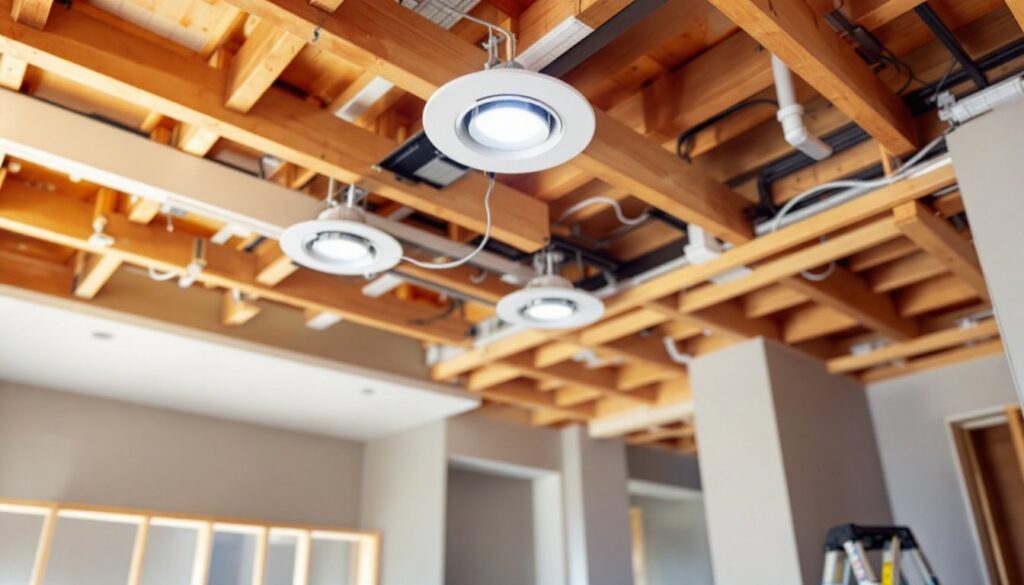
Professional installation makes sense for complex designs, 120V line-voltage systems, or properties with challenging terrain. Licensed electricians handle permits, trench around existing irrigation lines, and troubleshoot voltage drop across multiple zones. Expect to pay $2,500-$6,000 for a professionally designed system on a typical quarter-acre Charlotte lot, though costs vary with fixture quality and site conditions. Platforms like HomeAdvisor offer project cost calculators and contractor matching specific to the Charlotte market.
If you’re uncomfortable working with electricity or your project requires running new circuits from the breaker panel, hire a licensed electrician. Charlotte has no shortage of qualified pros, and top-rated exterior lighting specialists in the area can handle design, installation, and warranty service.
Top Areas to Illuminate in Your Charlotte Landscape
Prioritize function before aesthetics. Start with walkways, steps, and driveways, anywhere a guest might trip or misstep after dark. In Charlotte’s tree-heavy neighborhoods, roots and uneven pavement are common hazards.
Entryways and porches benefit from layered lighting: a ceiling-mount fixture for general illumination, plus smaller accent lights flanking the door or highlighting address numbers. Many Charlotte homes have deep front porches: consider downlights at column bases or step lights integrated into risers.
Driveways and parking areas need even, glare-free lighting. Bollards or low post lights along the edges work better than a single floodlight, which creates harsh shadows and blinds drivers. If your driveway curves or slopes, place fixtures at bends and grade changes.
Patios and decks see heavy use in Charlotte’s mild climate, outdoor spaces function nearly year-round. Combine overhead string lights or pergola-mounted fixtures with step lighting and low accent lights around planters. Avoid pointing lights directly into seating areas: indirect or diffused light feels more comfortable.
Water features and gardens offer creative opportunities. Submersible LEDs highlight fountains or ponds, while well lights tucked among hostas or hydrangeas create layered depth. Charlotte’s clay soil retains moisture, so ensure any in-ground fixtures have proper drainage and aren’t sitting in standing water.
Trees and architectural features serve as focal points. A well-lit live oak or brick chimney becomes a nighttime landmark. Use narrow beam angles (15-30 degrees) for vertical elements and wider floods (60+ degrees) for washing walls or broad canopies.
Energy-Efficient Lighting Options for North Carolina
LED fixtures are the default choice in 2026. They draw 75-80% less power than halogen equivalents, generate minimal heat, and last 25,000-50,000 hours (10-20 years at typical residential use). A 3-watt LED produces light equivalent to a 20-watt halogen, cutting energy costs and reducing transformer load.
Duke Energy, Charlotte’s primary utility, offers rebates and incentives for energy-efficient outdoor lighting upgrades through their commercial and residential programs, check current offers before purchasing equipment. While most rebates target commercial properties, residential customers benefit from lower overall energy rates when demand decreases during off-peak hours.
Solar-powered fixtures work in Charlotte’s climate but come with trade-offs. The city averages 215 sunny days per year, providing adequate charge for most solar lights from spring through fall. Winter months and heavily shaded lots reduce performance. Solar works well for accent lighting or path markers in areas distant from power sources, but expect shorter runtime (4-6 hours per charge) and dimmer output than low-voltage LEDs.
Quality varies dramatically in solar products. Look for fixtures with monocrystalline solar panels (more efficient than polycrystalline), lithium-ion batteries (outlast NiMH), and replaceable components. Cheap solar stakes from big-box stores rarely last more than two seasons.
For homeowners committed to LED lighting and long-term energy savings, low-voltage LED systems wired to timers or photocells deliver the best performance and reliability. Pair them with a smart transformer that adjusts output based on actual fixture load, reducing standby power waste.
Regular lighting maintenance extends system life and preserves energy efficiency. Clean lenses quarterly to maintain light output, check connections for corrosion, and replace any fixtures showing voltage drop or flickering.
Conclusion
Landscape lighting in Charlotte balances aesthetics with practicality, humid summers, occasional storms, and year-round outdoor living demand durable fixtures and thoughtful design. Whether tackling a DIY low-voltage install or hiring a licensed pro for a comprehensive system, start with a clear plan, prioritize safety and function, and invest in quality components that withstand the climate. The right outdoor lighting turns a Charlotte landscape into a usable, secure, and visually compelling space long after sunset.