Table of Contents
ToggleMesa’s desert environment presents unique challenges for outdoor lighting. Extreme heat, intense UV exposure, dust storms, and the region’s dramatic temperature swings, from 110°F summer days to near-freezing winter nights, demand fixtures and installation methods that can withstand serious stress. But when done right, outdoor lighting transforms desert landscapes into functional, safe, and visually stunning spaces after dark. Whether highlighting native xeriscaping, securing property perimeters, or creating usable patio zones, the right approach balances durability, energy efficiency, and Mesa’s specific environmental demands.
Key Takeaways
- Choose UV-stabilized, powder-coated aluminum LED fixtures rated for continuous outdoor exposure to withstand Mesa’s intense sun, extreme heat, and dust intrusion.
- Low-voltage path and landscape lighting systems (12V or 24V) are DIY-friendly, requiring no permits in most cases, with optimal spacing of 6 to 8 feet apart along walkways.
- Motion-activated LED floodlights can replace older 150-watt halogen models using only 20-40 watts per head, reducing annual energy costs from $31.50 to roughly $5.25 per fixture.
- Plan outdoor lighting installations around Mesa’s caliche layer and existing irrigation systems, using properly rated direct-burial cable buried 6 inches deep with silicone-filled wire nuts to prevent corrosion.
- Smart controls and dusk-to-dawn photocells optimize security lighting efficiency by automatically adjusting to sunset times and allowing homeowners to light only needed areas throughout the night.
- Select warm white color temperatures (2700K-3000K) to complement desert landscaping and native plants like palo verde and saguaro, avoiding cooler tones that wash out landscape colors.
Why Outdoor Lighting Matters in Mesa’s Unique Climate
Mesa homeowners face lighting challenges that wouldn’t make the list in Portland or Atlanta. UV degradation tops the list, Arizona’s intense sun breaks down plastic housings, fades finishes, and degrades rubber gaskets faster than in most regions. Choose fixtures rated for continuous UV exposure, typically labeled as UV-stabilized polycarbonate or powder-coated aluminum.
Heat buildup shortens bulb lifespan and stresses electronics. Summer ground temperatures can exceed 140°F, and wall-mounted fixtures absorb radiant heat from stucco and concrete. LED fixtures handle this better than halogens, but ventilation design still matters, look for models with heat sinks or perforated backs.
Dust intrusion clogs unsealed fixtures and dims output. Monsoon season kicks up fine particulate that works into lens seals and electrical connections. An IP65 rating (dust-tight, water-resistant) is the minimum for exposed desert installations. IP66 or IP67 ratings offer better protection for ground-level fixtures near landscaping.
Security becomes critical in sprawling desert neighborhoods where properties are larger and street lighting is sparse. Well-placed exterior lighting professionals can design systems that eliminate blind spots around garages, side yards, and perimeter walls without creating light pollution that annoys neighbors or violates Mesa’s dark sky considerations.
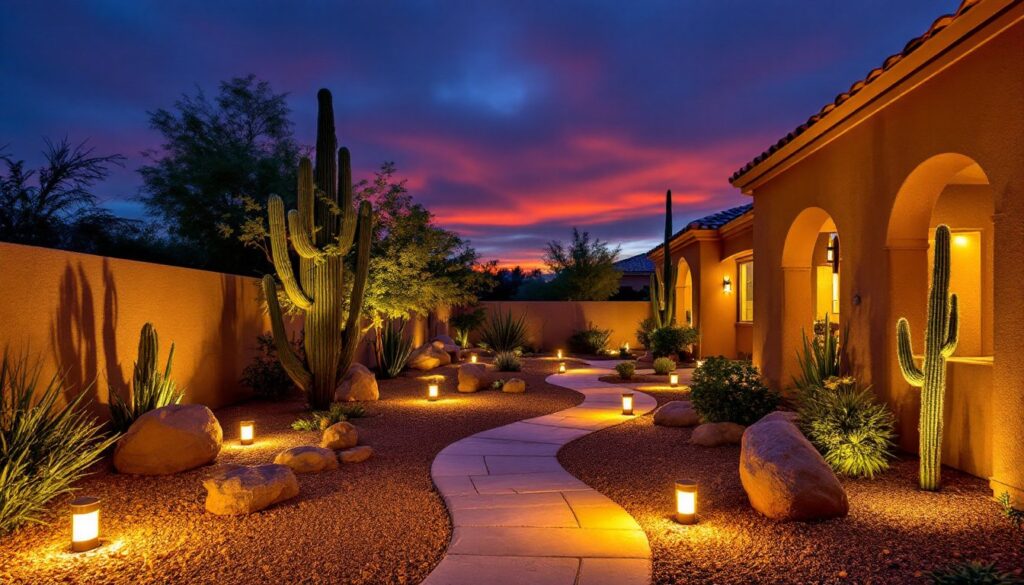
Finally, desert landscaping demands thoughtful accent lighting. Native plants like palo verde, ocotillo, and saguaro create dramatic shadows and textures that generic lighting misses. Up-lighting gravel beds or rock features adds depth without the maintenance headaches of traditional garden lighting.
Popular Outdoor Lighting Options for Mesa Homes
Path and Landscape Lighting
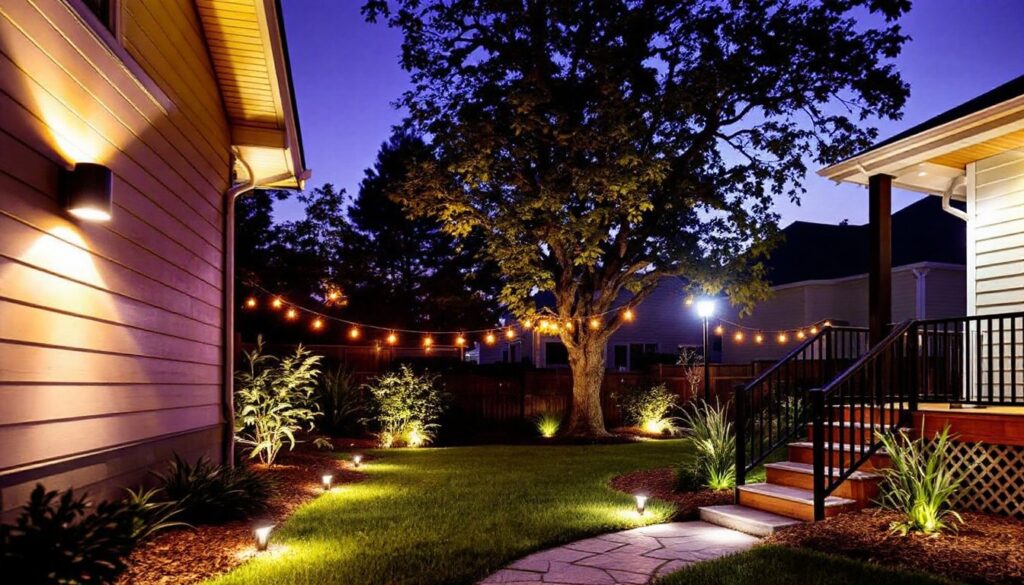
Low-voltage path lights (12V or 24V systems) dominate residential landscape lighting. They’re safer to install than 120V line-voltage systems, require no permits in most cases, and deliver enough light for walkways and plant accents. Typical spacing is 6 to 8 feet apart along paths, but adjust based on fixture output and desired ambiance.
Transformers for low-voltage systems should be rated for at least 25% above total wattage of connected fixtures to avoid overload. A 300-watt transformer can handle about 240 watts of lights with headroom for voltage drop over long runs. Place transformers in shaded, ventilated locations, garage walls or under eaves, not in direct sun.
Integrated LED fixtures eliminate bulb replacement hassle but commit you to the color temperature and output chosen at purchase. Look for 3000K warm white for traditional residential settings or 2700K for warmer tones that complement desert earth tones. Higher Kelvins (4000K+) feel clinical and wash out landscaping color.
Adjustable spotlight fixtures work well for up-lighting trees or architectural features. MR16 or PAR36 bulbs in low-voltage systems provide focused beams. Aim for narrow 15-25 degree beams for tall features like saguaro or palm trunks, and wider 40-60 degree floods for broader shrubs or wall washes.
Avoid cheap plastic stakes, they crack in Mesa’s heat and tip over in monsoon winds. Metal stakes with 8-inch or longer ground penetration hold better in compacted desert soil. If installing in decomposed granite or gravel, use flange-mount bases staked separately or weighted with buried pavers.
Security and Flood Lighting
Motion-activated floodlights serve dual purposes, security and utility. PIR (passive infrared) sensors detect heat signatures up to 40-70 feet depending on model and placement. Mount sensors 8 to 10 feet high and angle them to cover entry points, driveways, and side yards. Avoid aiming directly at streets or neighbors’ windows.
Adjustable sensitivity and timer settings prevent nuisance triggers from wildlife or windblown debris, common in desert settings. Set timers to 1 to 3 minutes for most applications: longer durations waste energy and attract bugs.
Dual-head LED floodlights (20-40 watts per head) replace older 150-watt halogen models while using a fraction of the energy. Look for models with independently adjustable heads to cover L-shaped coverage areas like garage corners.
Dusk-to-dawn photocell fixtures automate perimeter lighting without timers or smart controls. These work well for always-on security needs at gates, alleys, or detached structures. Choose 800-1500 lumen output for functional security lighting: higher outputs create harsh glare and light trespass issues.
For property perimeter walls, a Mesa staple, consider wall-mounted sconces with downward shields. These prevent glare while lighting the base of walls where intruders might approach. Spacing every 15 to 20 feet provides continuous coverage without excessive fixtures.
DIY Installation Tips for Mesa’s Desert Environment
Burial depth matters. Low-voltage cable should run 6 inches deep minimum in conduit or direct-burial rated cable (UF or UL-listed landscape wire). Deeper is better in areas with aggressive landscaping maintenance or monsoon runoff channels. Use schedule 40 PVC conduit for runs crossing driveways or high-traffic zones.
Caliche complicates trenching. Mesa’s notorious caliche layer, rock-hard calcium carbonate deposit, sits anywhere from surface level to 18 inches down. A standard trenching shovel won’t cut it. Rent a trenching machine for runs over 50 feet, or use a mattock and digging bar for shorter distances. Soaking trenches the night before softens caliche slightly.
Keep voltage drop in check. For 12V systems, #12 AWG wire handles runs up to 100 feet without significant voltage loss. Beyond that, step up to #10 AWG or split runs into multiple zones from the transformer. Voltage drop causes dim fixtures at the far end of runs, test with a multimeter before burying cable.
Splice connections properly. Use silicone-filled wire nuts or heat-shrink butt connectors rated for direct burial, not standard wire nuts. Moisture infiltration, from irrigation overspray or monsoon flooding, corrodes connections and causes intermittent failures.
Anchor fixtures before backfilling. Loose soil and gravel settle unevenly, tilting fixtures or exposing stakes. Tamp backfill in layers and test fixture stability. For flange-mounted fixtures in gravel beds, bury landscape fabric beneath mounts to prevent subsidence.
Wire management around irrigation. Coordinate with existing drip lines and emitters, accidentally severing these during trenching is common. Hand-dig within 12 inches of visible irrigation components. Mark cable runs with underground warning tape 3 inches above cables to alert future diggers.
Safety gear: wear UV-protective long sleeves, gloves, and safety glasses when working in Mesa sun. Afternoon temperatures make outdoor electrical work dangerous, work early morning or late evening during summer months. Keep a GFCI extension cord on hand for power tools: outdoor outlets should already have GFCI protection per NEC Article 210.8.
Consider hiring a licensed electrician for 120V line-voltage work. While low-voltage systems are DIY-friendly, anything tied directly to household circuits requires permits and inspection in most jurisdictions. Understanding project planning guides helps estimate whether professional help makes sense for larger installations.
Energy-Efficient Lighting Solutions for Arizona Homeowners
LED technology dominates energy-efficient outdoor lighting. LEDs use 75-80% less energy than incandescent bulbs and last 25,000 to 50,000 hours versus 1,000 for halogens. In Mesa’s high-usage environment, where security and landscape lighting run 10-12 hours nightly, the savings compound quickly.
Calculate operating costs using SRP or APS electric rates (averaging $0.12-$0.14 per kWh). A 10-watt LED running 12 hours daily costs about $5.25 annually. A 60-watt halogen in the same fixture costs $31.50, over six times more before factoring in bulb replacement costs.
Solar-powered fixtures suit low-demand applications like pathway markers or accent lights but struggle with Mesa’s power needs. Most solar path lights deliver only 5-15 lumens, adequate for decorative use but insufficient for functional lighting or security. Panel efficiency degrades with dust accumulation, requiring monthly cleaning.
For serious solar applications, consider separate solar panel arrays with battery backup feeding low-voltage LED systems. These require higher upfront investment but eliminate trenching and wiring costs. Size panels for Mesa’s 5.5-6 peak sun hours daily (annual average) and account for 15-20% efficiency loss from dust and heat.
Smart controls and timers add efficiency without sacrificing functionality. Astronomical timers adjust on/off times based on actual sunset/sunrise, preventing lights from running during extended summer daylight. Zoned control lets homeowners light only needed areas, front yard security might run all night while backyard accent lights shut off at 10 PM.
Motion sensors combined with dimming create adaptive efficiency. Lights idle at 20-30% brightness for ambient security, then ramp to full output when motion triggers them. This approach cuts energy use by 50-70% versus always-on floodlights.
Color temperature affects perceived brightness. Cooler 4000K LEDs appear brighter than 2700K warm whites at identical lumen output due to how human eyes perceive blue-spectrum light. This lets designers achieve security lighting goals with lower wattage, but cooler temps feel harsh in residential settings. Balance function and aesthetics with design trend research that highlights current preferences.
Rebates and incentives: Check SRP and APS utility programs for LED upgrade rebates. Some programs offer $2-5 per fixture for qualifying LED conversions. Municipal programs occasionally offer free or discounted smart controllers as part of energy conservation initiatives.
Conclusion
Outdoor lighting in Mesa requires more than standard solutions, it demands fixtures and methods proven against UV bombardment, extreme heat, and desert dust. Start with UV-stabilized, well-sealed LED fixtures rated for continuous outdoor exposure. Plan installations around caliche layers and existing irrigation, and always verify voltage drop on low-voltage runs before backfilling. Smart controls and zoned systems maximize efficiency without sacrificing safety or aesthetics, making desert landscapes functional and inviting after sundown.