Table of Contents
ToggleGold pendant lights are having a moment, and not just for their aesthetic appeal. When positioned above a kitchen island, they create a focal point that balances function with visual warmth. But hanging pendant lights isn’t about picking the prettiest fixture and wiring it in. The size of your island, ceiling height, fixture style, and spacing all dictate whether your pendants enhance the space or look awkwardly out of proportion. This guide breaks down everything from style selection to installation practicalities, so homeowners can tackle this upgrade with confidence.
Key Takeaways
- Gold pendant lighting for kitchen islands combines aesthetic warmth with functional task lighting, reflecting both natural and artificial light to brighten work surfaces without appearing industrial.
- Pendant fixture size should be proportional to your island—roughly one-third the width of the island in feet, converted to inches, while spacing two or three pendants using thirds or quarters of the island length ensures visual balance.
- Hang gold pendant lights 30 to 36 inches above the island surface to provide adequate task lighting while maintaining clear sightlines, with 36 inches preferred for bar seating and taller homeowners.
- Gold finishes like brushed brass, satin, and antique bronze are timeless choices that pair well with various kitchen styles, from modern with quartz countertops to vintage with exposed beams and natural wood tones.
- Before installation, confirm electrical boxes are ceiling-mounted above the island and verify they’re rated to support fixture weight; all wiring should comply with the National Electrical Code and be performed or inspected by a licensed electrician.
- Select warm white bulbs between 2700K to 3000K color temperature for gold pendant lighting, aiming for 800 to 1100 lumens per fixture in three-pendant setups or 1200+ lumens for two-pendant configurations.
Why Gold Pendant Lights Are Perfect for Kitchen Islands
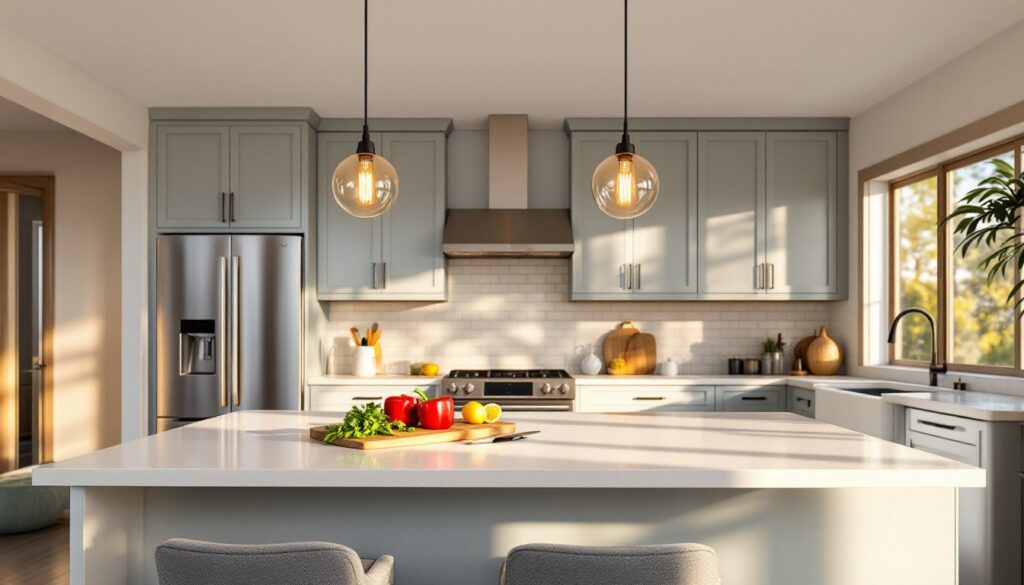
Gold finishes, whether brushed brass, antique bronze, or polished brass, bring a layer of sophistication that stainless steel and black fixtures can’t quite match. They reflect both natural and artificial light, which helps brighten work surfaces without adding extra bulbs. That reflective quality is especially useful above islands, where task lighting needs to be strong but not clinical.
From a design standpoint, gold acts as a neutral with warmth. It pairs well with white cabinetry, complements natural wood tones, and holds its own against bold backsplash tile. Unlike trendy finishes that date quickly, gold has been used in lighting for decades, it reads as classic rather than fleeting.
Functionality matters too. Pendant lights provide direct downlighting over the island surface, making them ideal for food prep, assignments sessions, or casual dining. Gold pendants soften that task lighting with a warmer tone compared to cool metal finishes, which can feel too industrial in a residential kitchen.
Many modern ceiling light designs incorporate gold accents to add versatility across open-concept spaces. Gold pendants can tie together adjacent dining or living areas without clashing with other metal finishes if the tones are chosen thoughtfully.
Choosing the Right Style of Gold Pendant Lighting
Modern and Contemporary Gold Pendants
Contemporary gold pendants lean toward clean lines, geometric shapes, and mixed materials. Think cone-shaped shades with brass sockets, globe pendants with gold caps, or drum-style fixtures with perforated metal. These styles work well in kitchens with flat-panel cabinetry, quartz countertops, and minimal hardware.
Look for finishes labeled as brushed brass or satin gold, they resist fingerprints and smudging better than polished versions. Matte gold finishes also photograph well and blend seamlessly with stainless appliances.
Glass shades paired with gold hardware are another go-to. Clear glass keeps sightlines open, while frosted or seeded glass diffuses light for a softer glow. For open shelving or two-tone cabinetry, globe pendants in smoked glass with gold fittings add contrast without overwhelming the space.
According to Remodelista, pairing metal and glass in pendant fixtures creates layered visual interest that keeps modern kitchens from feeling sterile. Mixing textures, like matte gold with ribbed glass, elevates the design without requiring pattern or color.
Traditional and Vintage-Inspired Options
For farmhouse, transitional, or traditional kitchens, vintage gold pendants offer character that newer designs can’t replicate. Schoolhouse pendants, cage-style fixtures, and lantern shapes all have roots in early 20th-century design. These fixtures often feature antiqued brass or oil-rubbed bronze finishes, which develop a subtle patina over time.
Seeded or ribbed glass shades are common in vintage-inspired pendants. They add texture and diffuse light while maintaining a handcrafted feel. Barn-style pendants with flared gold shades work especially well in kitchens with exposed beams, butcher-block counters, or apron-front sinks.
If the home’s architecture leans historic, look for Edison-bulb-compatible fixtures. The exposed filament bulb pairs beautifully with brass or antique gold cages, and the warm light temperature complements older wood finishes. Just be mindful of lumens, Edison bulbs tend to produce softer light, so you may need higher-wattage equivalents for task lighting.
Homeowners drawn to vintage lighting aesthetics should consider unlacquered brass fixtures, which age naturally and develop rich, warm tones over years of use.
How to Determine the Perfect Size and Spacing
Sizing and spacing pendant lights correctly is more math than guesswork. Start by measuring your island. A standard kitchen island ranges from 4 to 8 feet long and 2 to 4 feet wide. The pendant diameter should be proportional to the island length.
As a rule of thumb, pendant diameter (in inches) should be roughly one-third the width of the island (in feet), converted to inches. For example, a 3-foot-wide island works well with pendants around 12 inches in diameter. Larger islands can handle 14- to 18-inch fixtures, especially if you’re using only two pendants instead of three.
Spacing between pendants matters just as much as size. For two pendants, divide the island length into thirds and center each pendant over the outer third marks. For three pendants, divide the island into quarters and position the fixtures at the first, second, and third quarter marks. This creates even visual weight and avoids clustering.
Height is the other critical measurement. Hang pendants so the bottom of the shade sits 30 to 36 inches above the island surface. This range provides adequate task lighting without blocking sightlines across the kitchen. If the homeowner is particularly tall or the island includes bar seating, err toward 36 inches. For islands used primarily for food prep, 30 inches works well.
Ceiling height affects fixture choice too. In kitchens with 8-foot ceilings, stick with smaller, more compact pendants to avoid a cramped look. For 9- to 10-foot ceilings, larger fixtures or those with elongated profiles (like cylinder or cone shapes) help fill vertical space. Vaulted or cathedral ceilings may require adjustable-length downrods or cord kits, some fixtures include these, but many require separate purchases.
According to MyDomaine, mixing pendant sizes can work if the design is intentional, like pairing a larger central pendant with two smaller flanking fixtures, but it requires a confident eye and a cohesive finish to avoid looking accidental.
Installation Tips for Kitchen Island Pendant Lighting
Before buying fixtures, confirm that electrical boxes are already installed in the ceiling above the island. If they’re not, this job requires running new electrical cable through the ceiling, a task best handled by a licensed electrician, especially if it involves opening walls or working in finished spaces. Many jurisdictions require permits for new electrical runs, and improper wiring is both a safety hazard and a code violation under the National Electrical Code (NEC).
If junction boxes are already in place, verify they’re rated to support the weight of the pendant. Standard plastic boxes work for lightweight fixtures (under 5 pounds), but heavier glass or metal pendants require metal junction boxes or fan-rated boxes. Check the fixture’s installation manual for weight specifications.
Turn off power at the breaker before starting any wiring work. Use a non-contact voltage tester to confirm the circuit is dead. This is non-negotiable. Even experienced DIYers get complacent, and 120-volt circuits can cause serious injury.
Most pendant lights use straightforward wiring: black (hot) to black, white (neutral) to white, and bare copper or green (ground) to the grounding screw or wire. Twist connections should be secured with wire nuts rated for the gauge of wire you’re working with, typically 14- or 12-gauge for lighting circuits. Tuck the wired connections neatly into the junction box, then attach the fixture’s canopy or mounting bracket.
For adjustable-height pendants, set the cord or chain length before final installation. Most fixtures include excess cord that can be shortened by looping it inside the canopy. If you need to cut metal chain, use bolt cutters and count links carefully to ensure symmetrical lengths across multiple pendants.
Installing multiple pendants over a single island often means dealing with multiple junction boxes on the same circuit. If you’re adding a dimmer switch (highly recommended for kitchen islands), ensure it’s rated for the total wattage of all fixtures combined. LED-compatible dimmers are essential if you’re using LED bulbs, standard incandescent dimmers can cause flickering or buzzing.
Don’t skip the bulb choice. Gold fixtures look best with warm white bulbs in the 2700K to 3000K range. Higher color temperatures (4000K+) create a cooler, bluish light that clashes with warm metal tones. For task lighting over an island, aim for at least 800 to 1100 lumens per pendant if you’re using three fixtures, or 1200+ lumens per pendant for a two-pendant setup.
Safety gear for this job includes safety glasses (especially when working overhead), a sturdy stepladder, and possibly a headlamp or work light if the existing lighting is dim. If you’re working alone, consider using painter’s tape or a lightweight hook to temporarily support the fixture while you make wire connections, it beats trying to hold a 10-pound pendant with one hand while twisting wire nuts with the other.
Conclusion
Gold pendant lights offer both functional task lighting and a design anchor for kitchen islands. Success comes down to proportional sizing, thoughtful spacing, and proper installation. Whether the style leans modern or vintage, the math stays the same, measure twice, wire safely, and don’t rush the details. For homeowners ready to upgrade their lighting fixtures, pendants remain one of the highest-impact projects that can be tackled in a weekend.