Table of Contents
ToggleVisual Comfort has been a go-to name in the lighting world for decades, and their pendant offerings continue to set the bar for quality, design, and versatility. Whether someone’s renovating a kitchen, refreshing a dining room, or adding personality to an entryway, the right pendant can transform both function and feel. But with hundreds of styles, finishes, and sizes in the lineup, choosing and installing the right fixture takes more than scrolling through photos. This guide walks through what sets Visual Comfort pendants apart, how to match them to specific spaces, installation considerations, and styling strategies that make the investment shine.
Key Takeaways
- Visual Comfort pendant lighting stands out through designer collaborations, solid brass construction, and hand-applied finishes that deliver lasting quality over mass-market alternatives.
- Proper spacing and height are critical: hang kitchen island pendants 30–36 inches above countertops spaced 24–30 inches apart, and dining pendants 30–34 inches above the table to avoid obstruction.
- Always confirm ceiling box ratings (minimum 50 pounds for most fixtures) and shut off power at the breaker before installation to ensure safe, code-compliant electrical connections.
- Ensure dimmer compatibility by using ELV or TRIAC dimmers for LED and CFL bulbs in pendant fixtures, not standard incandescent dimmers, to prevent flickering and bulb damage.
- Layer light sources and choose glass finishes strategically—frosted or seeded glass reduces glare and adds character, while 2700K warm white LEDs create the ideal residential atmosphere.
- Scale dining room pendants to one-half to two-thirds the table width, and in entryways, use long-life LED bulbs rated for 25,000+ hours to avoid frequent ladder access for bulb changes.
What Makes Visual Comfort Pendant Lighting Stand Out?
Visual Comfort separates itself from big-box lighting through craftsmanship, designer collaborations, and material quality. The company partners with industry names like Kelly Wearstler, Thomas O’Brien, and Barbara Barry, resulting in fixtures that feel more like curated art pieces than off-the-shelf products. Each pendant is manufactured with attention to detail, hand-applied finishes, solid brass construction, and mouth-blown glass in many models.
The brand’s 50th anniversary collection introduced updated classics alongside modern silhouettes, showcasing the range from traditional lanterns to minimalist linear designs. Unlike mass-market fixtures that rely on thin stamped metal and plastic sockets, Visual Comfort pendants use solid brass hardware, ceramic sockets, and UL-listed components that meet strict electrical safety standards.
Another differentiator is the finish variety. Choices include aged iron, polished nickel, hand-rubbed antique brass, and gild finishes that hold up better than spray-applied coatings. The company also offers customization options, cord length, finish swaps, and glass shade variations, through authorized dealers, giving installers flexibility without requiring a full custom order.
For those integrating smart home systems, many Visual Comfort pendants accommodate LED retrofits and are compatible with ELV (electronic low-voltage) dimmers, which are essential for flicker-free dimming. This compatibility matters when pairing pendants with modern lighting controls or home automation platforms.
Choosing the Right Visual Comfort Pendant for Your Space
Kitchen Pendant Lighting: Function Meets Style
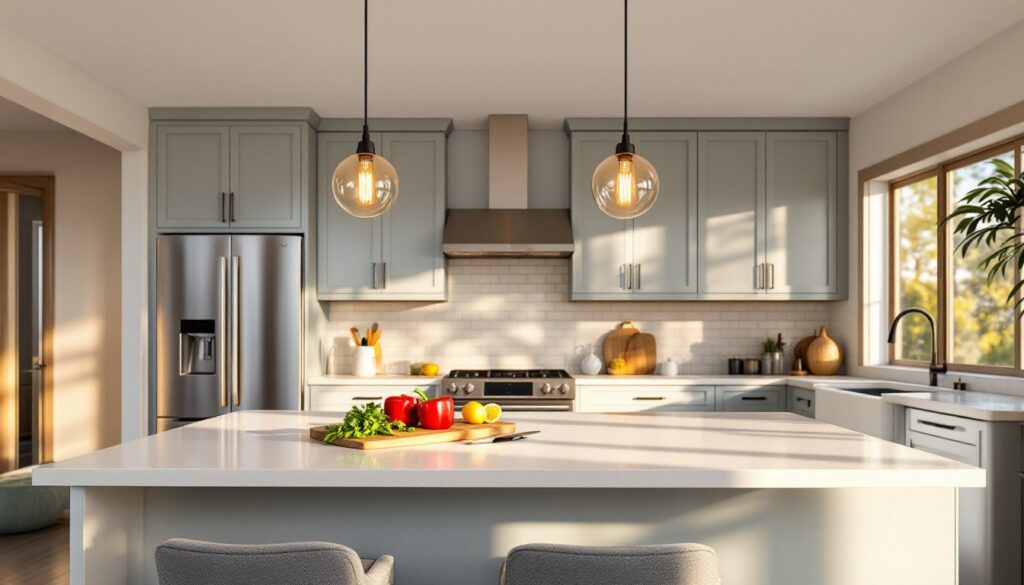
Kitchen islands demand task lighting with enough punch to illuminate prep surfaces, while complementing cabinetry and countertop tones. Visual Comfort’s mini pendants, typically 6 to 12 inches in diameter, work well in groups of two or three over standard 6- to 8-foot islands. Spacing them 24 to 30 inches apart and hanging them 30 to 36 inches above the countertop provides balanced light without head-bumping hazards.
For taller ceilings (above 9 feet), consider pendants with downrod extensions or adjustable cord systems to maintain proper hanging height. Glass shades with internal diffusers reduce glare, important when working with knives or reading recipes. Metallic finishes should coordinate with cabinet hardware and faucet finishes: mixing metals can work, but it’s easier to match polished nickel to stainless steel or aged brass to oil-rubbed bronze pulls.
Light output matters. A single pendant over an island should deliver 300 to 400 lumens per fixture using LED bulbs for task lighting. If the kitchen already has effective ambient lighting from recessed cans or ceiling lights, pendants can lean more decorative with lower-wattage bulbs (40-60W equivalent).
Dining Room and Entryway Options
Dining room pendants or chandeliers anchor the space and should scale to the table size. A good rule: the fixture diameter should be one-half to two-thirds the width of the table. For a 42-inch round table, an 18- to 28-inch pendant fits the proportion. Hang the bottom of the shade 30 to 34 inches above the tabletop to avoid sightline obstruction while seated.
Visual Comfort offers both single-drop statement pendants and multi-light chandeliers. In open-plan homes where the dining area flows into the living room, choose a style that complements adjacent interior lighting without competing. Lantern-style pendants in aged iron or bronze suit traditional and transitional interiors, while geometric caged designs or linear suspensions align with modern aesthetics.
Entryway pendants handle a different job, they set the tone and often operate on a two-way or three-way switch system. Code typically requires a minimum ceiling height of 7 feet at the lowest point of the fixture, but for drama in a two-story foyer, larger pendants (up to 36 inches tall) can hang from heights of 12 feet or more. Factor in bulb access: if the fixture requires a ladder to change bulbs, install long-life LED bulbs rated for 25,000 hours or more upfront.
Installation Tips for Visual Comfort Pendants
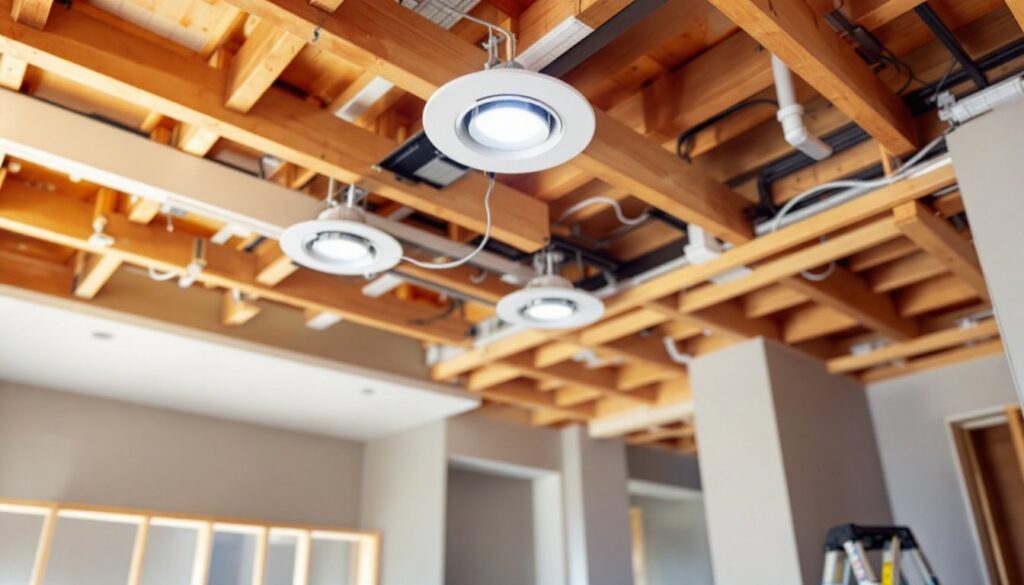
Before mounting any pendant, confirm the ceiling box rating. Most Visual Comfort fixtures weigh between 5 and 20 pounds, requiring a box rated for at least 50 pounds if supporting a ceiling fan or heavier chandelier. Retrofit-rated “old work” boxes that clamp to drywall won’t support heavier fixtures safely, locate the ceiling joist and fasten a metal pancake box or fan-rated box directly to framing.
Always shut off power at the breaker, not just the wall switch. Use a non-contact voltage tester to verify the circuit is dead before handling wires. Visual Comfort pendants typically include a canopy, mounting bracket, and pre-wired fixture leads. Connect black (hot) to black, white (neutral) to white, and bare copper or green (ground) to the ground screw on the box. Secure connections with twist-on wire connectors rated for the wire gauge (usually 14 or 12 AWG for lighting circuits).
Cord or chain length often ships longer than needed. Measure the desired hanging height, then remove excess carefully. For fabric-covered cord, avoid cutting near the canopy to prevent fraying inside the fixture. Metal chain can be shortened link by link: feed the slack wire through the canopy and secure it with the provided strain relief or cord grip.
Dimmer compatibility is crucial. Most Visual Comfort pendants using LED or CFL bulbs require an ELV or TRIAC dimmer, not a standard incandescent dimmer. Installing the wrong dimmer causes flickering, buzzing, or shortened bulb life. If unsure, consult the fixture’s spec sheet (available on Houzz’s Visual Comfort product listings) or an electrician.
Permit requirements vary by jurisdiction, but most areas do not require permits for replacing an existing light fixture on the same circuit. Adding a new circuit, moving a junction box, or altering structural framing (cutting ceiling joists to relocate a box) typically does require a permit and inspection per local codes based on the NEC (National Electrical Code).
Styling and Design Ideas to Maximize Impact
Layering light sources elevates any room beyond a single overhead fixture. Pair Visual Comfort pendants with under-cabinet strips in kitchens, table lamps in dining rooms, or sconces in entryways. This approach adds depth and allows flexibility, task lighting for cooking, LED lighting for efficiency, and decorative pendants for visual interest.
Mixing finishes within the same room can work, but stick to a two-finish maximum and ensure one is a neutral (black, white, polished nickel). For example, aged brass pendants over an island pair well with matte black cabinet hardware, especially if other lighting fixtures share the same tones.
Glass shade selection changes the quality of light dramatically. Clear glass offers a jewelry-like sparkle and showcases decorative filament bulbs, but it can create glare. Frosted or etched glass diffuses light evenly, reducing harsh shadows and softening the overall effect. Seeded or textured glass adds character and hides dust better than smooth finishes, helpful in kitchens where grease can settle.
For design inspiration, Design Milk regularly features Visual Comfort installations in contemporary interiors, showcasing how the same fixture can read differently depending on surrounding materials. A Hicks pendant in polished nickel feels crisp in a white-on-white kitchen, while the same design in aged iron grounds a rustic farmhouse space.
Bulb choice also affects mood. Warm white LEDs (2700K) mimic incandescent light and suit residential settings, while soft white (3000K) offers a slightly crisper tone for modern interiors. Avoid daylight (5000K+) bulbs in living spaces, they skew too clinical for most home environments. Opt for high CRI (Color Rendering Index) bulbs rated 90+ to render paint colors, wood tones, and finishes accurately.
Conclusion
Visual Comfort pendants deliver lasting quality, but they shine brightest when matched to the right space, installed correctly, and styled with intention. Measure twice, check the electrical specs, and don’t skip the dimmer compatibility step. With the right fixture in place, the transformation is immediate, better light, better function, and a space that finally feels finished.