Table of Contents
ToggleSilver Spring, Maryland homeowners know the value of a well-lit exterior. Whether it’s navigating the front walk after dark, deterring unwelcome visitors, or simply showcasing a thoughtfully landscaped yard, outdoor lighting does heavy lifting that goes far beyond aesthetics. Between Montgomery County’s mature tree canopy, variable weather patterns, and a mix of mid-century ranches and newer construction, Silver Spring presents unique opportunities, and challenges, for exterior illumination. This guide walks through the types, fixtures, installation considerations, and maintenance routines that keep outdoor lighting functional and attractive through all four seasons.
Key Takeaways
- Outdoor lighting in Silver Spring improves safety, security, and curb appeal while extending usable outdoor living into autumn and winter months.
- Choose fixtures rated for wet locations with durable materials like cast aluminum and powder-coated steel to withstand Maryland’s humidity, freeze-thaw cycles, and severe weather.
- LEDs with 2700K–3000K color temperature are the most energy-efficient choice, lasting 25,000–50,000 hours and using 75% less energy than halogen alternatives.
- Low-voltage landscape lighting (12V or 24V) is the most DIY-friendly option, requiring only basic tools and direct-burial-rated cable; hire a licensed electrician for line-voltage installations or projects requiring structural work.
- Regular seasonal maintenance—cleaning lenses, inspecting connections, and checking timer cycles—prevents moisture damage and extends fixture lifespan through Maryland’s variable weather.
Why Outdoor Lighting Matters for Silver Spring Homes
Safety ranks first. Unlit walkways, stairs, and driveways become trip hazards once the sun sets, especially during Maryland’s early-winter evenings. Motion-activated floods or low-voltage path lights reduce liability and give family members confidence moving around the property after dark.
Security follows close behind. Well-placed fixtures eliminate shadowy corners where intruders might hide. A combination of dusk-to-dawn wall sconces near entry doors and motion sensors along the garage or side yard creates a layered defense that many insurance carriers recognize with modest premium discounts.
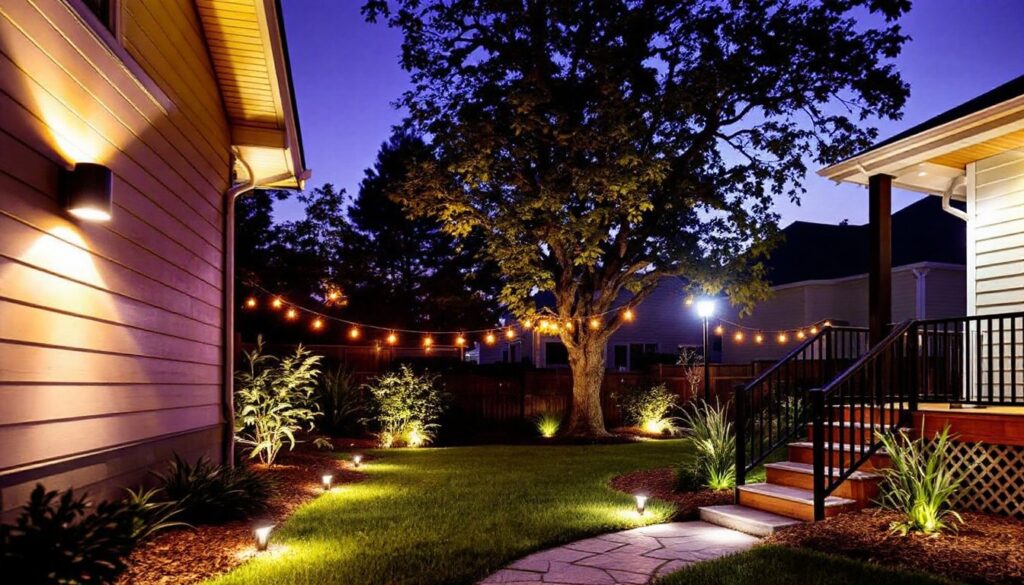
Curb appeal isn’t just for selling. Uplighting a mature oak, washing light across brick or siding, or highlighting architectural details makes a home feel intentional and cared-for. In neighborhoods where front porches and generous setbacks are common, thoughtful lighting distinguishes a property from the sea of builder-grade fixtures.
Usability extends outdoor living seasons. String lights over a patio or recessed LEDs under deck railings let families grill, entertain, or relax outside well into autumn. Given Silver Spring’s temperate springs and long summers, the return on investment is measured in extra evenings spent outdoors rather than retreating inside by 7 p.m.
Popular Outdoor Lighting Styles for Maryland Landscapes
Traditional lanterns suit Colonial Revival and brick-front homes common in older Silver Spring subdivisions. Black or bronze post lanterns with seeded glass pair well with shutters and painted trim, while wall-mounted carriage lights flank garage doors without looking dated if the proportions match the architecture.
Modern minimalism works for mid-century ranches and contemporary builds. Flush-mount cylinder fixtures in graphite or brushed nickel, strip lighting along horizontal siding lines, and cube-shaped bollards keep the look clean. These styles rely on even illumination rather than decorative flourishes, so beam angle and color temperature matter more than ornamental details.
Craftsman and Arts & Crafts lighting fits bungalows and Prairie-style homes with deep eaves and natural materials. Look for fixtures with warm bronze finings, amber or frosted glass, and geometric metalwork. Pendant lights under covered porches and low-profile step lights integrate into stonework or wood elements.
Coastal and transitional styles bridge traditional and modern aesthetics, a practical choice for homeowners who want flexibility or plan to update siding and trim colors over time. Lanterns with simple frames, mixed metal finishes, and clear glass adapt to evolving design trends without requiring a complete fixture replacement.
Regardless of style, landscape design principles emphasize layering: ambient light for general visibility, task light for functional areas like steps or keyholes, and accent light to highlight plants or architecture.
Best Outdoor Lighting Fixtures for Silver Spring’s Climate
Maryland’s humidity, freeze-thaw cycles, and occasional severe storms demand fixtures rated for wet locations, not just damp. Check the UL listing: “Wet” means the fixture can handle direct rain and snow, while “Damp” is suitable only for covered porches.
Material durability separates bargain-bin fixtures from those that last a decade or more. Cast aluminum and powder-coated steel resist rust better than thin stamped metal. Solid brass develops a natural patina but won’t corrode. Avoid cheap plastic housings, which crack in freezing temperatures and yellow under UV exposure.
LED vs. halogen: LEDs are the default choice now, offering 25,000–50,000 hours of life, minimal heat output, and 75% lower energy consumption than halogen. Color temperature matters, 2700K to 3000K mimics warm incandescent and flatters most home exteriors, while 4000K and higher skews cool and institutional. Dimming capability adds versatility if you wire to a compatible transformer or smart switch.
Low-voltage systems (12V or 24V) dominate landscape lighting for good reason. They’re safer to install, more forgiving if a wire gets nicked by a shovel, and easier to expand. A typical setup includes a transformer (150W to 300W capacity), buried 12-gauge wire, and path lights or spotlights with quick-connect fittings. Line-voltage (120V) fixtures require conduit, junction boxes, and often a permit, but they’re necessary for high-output floods or wall sconces tied into household circuits.
Weather seals and gaskets are non-negotiable. Look for silicone or EPDM rubber gaskets around lens plates and junction boxes. In Silver Spring’s spring storms, driving rain finds every gap. Fixtures with tool-free lens access simplify bulb changes but must still seal tightly.
According to project planning resources at HomeAdvisor, expect to replace fixture seals every five to seven years, even on quality models, as rubber degrades with temperature swings.
DIY vs. Professional Installation: What Silver Spring Homeowners Should Know
Low-voltage landscape lighting is the most DIY-friendly option. After mapping a layout and calculating total wattage, installation involves staking fixtures, burying wire 6–8 inches deep (or running it along fence lines), and connecting everything to a transformer mounted near an outdoor outlet. Tools needed: wire strippers, a trenching shovel or flat spade, and possibly a multi-meter to check voltage drop over long runs.
Common mistakes include daisy-chaining too many fixtures on one run (voltage drop dims lights farthest from the transformer), undersizing wire gauge, and failing to use direct-burial-rated cable. 14-gauge wire suffices for runs under 50 feet: bump up to 12-gauge for anything longer. Test the system before backfilling trenches, it’s easier to troubleshoot a loose connection when the wire is visible.
Line-voltage installations (120V) require more caution. If you’re adding a new circuit, pulling wire through conduit, or mounting fixtures that tie into existing junction boxes, verify local permit requirements. Montgomery County typically requires permits for new outdoor circuits, and inspections ensure GFCI protection, proper grounding, and conduit fill ratios meet NEC standards.
Hiring a licensed electrician makes sense when:
- The project involves a new circuit or service panel modifications
- Fixtures mount above 8 feet (ladder work near power lines)
- You’re integrating smart controls, timers, or photocells into existing home automation
- Structural drilling through brick, stone, or stucco is needed (improper flashing causes water intrusion)
Expect to pay $75–$150 per fixture for professional installation, though that varies with access difficulty and whether trenching or boring is required. A typical front-yard setup with six to eight low-voltage fixtures and a transformer runs $800–$1,500 installed.
Energy-Efficient Outdoor Lighting Options
Solar fixtures have improved dramatically but still lag hardwired LEDs in output and reliability. They work well for supplemental path lighting in sunny areas but struggle under tree canopy or during Maryland’s cloudy winter weeks. Budget $30–$80 per quality solar fixture: cheaper units dim noticeably after a year as batteries degrade.
Smart controls and timers cut energy waste. Programmable transformers turn lights on at dusk and off at midnight, or run on custom schedules. Motion sensors reserve high-output floods for actual activity rather than burning all night. Expect motion-activated LEDs to add $40–$100 per fixture over standard models, but the payback in energy savings and bulb life is measurable.
Zoned circuits let homeowners light only the areas in use. A front path and porch might stay on from dusk to bedtime, while backyard accent lights run only during gatherings. This requires running separate wire runs back to individual transformer taps or installing multiple transformers, adding upfront cost but delivering long-term flexibility.
Maintaining Your Outdoor Lighting Through Maryland’s Seasons
Spring brings pollen, tree debris, and rapid plant growth. Wipe down lenses with a microfiber cloth and mild detergent, cloudy lenses cut light output by 30% or more. Trim back shrubs and perennials that encroach on fixtures: overgrown plantings block light and trap moisture against housings. Seasonal outdoor decor updates often reveal fixtures that shifted over winter, re-stake path lights and adjust aim on spotlights.
Summer humidity accelerates corrosion on connections. Inspect wire nuts, crimp connectors, and terminal screws inside junction boxes. A light coating of dielectric grease on connections prevents oxidation. Check GFCI outlets: nuisance tripping during thunderstorms suggests moisture infiltration. If you have a photocell or timer, verify it’s cycling correctly, dust and insect nests inside the sensor can cause lights to stay on 24/7.
Fall leaf accumulation clogs fixtures and buries low-profile path lights. Clear debris before the first freeze: wet leaves against metal promote rust. This is also the time to test motion sensors and replace batteries in solar units. As daylight hours shrink, reprogram timers to match actual sunset times.
Winter freeze-thaw cycles stress everything. Water that seeps into housings expands when frozen, cracking lenses and loosening seals. If a fixture fills with water, drill a small weep hole at the lowest point to let moisture escape, it’s better than replacing the entire unit. Snow and ice buildup on fixtures should be gently brushed off, not chipped with hard tools. For homes with holiday lighting, avoid overloading outdoor circuits: a 15-amp circuit handles roughly 1,800 watts, and stacking multiple extension cords invites voltage drop or tripped breakers.
Bulb replacement is rare with quality LEDs, but when it happens, match the color temperature and beam angle to the original. Mismatched LEDs create an uneven, patchy appearance across the landscape. Keep spare wire nuts, connectors, and a length of 12-gauge burial cable on hand, rodents and shovel strikes happen, and a quick repair beats waiting for parts to arrive.
Conclusion
Outdoor lighting in Silver Spring isn’t a set-it-and-forget-it project. Climate, landscape maturity, and how a family uses their yard all shape what works. Start with a clear purpose, safety, security, or aesthetics, then choose fixtures and installation methods that align with skill level and budget. Whether running low-voltage path lights on a Saturday afternoon or hiring an electrician for a whole-home upgrade, the result is a property that’s safer, more welcoming, and genuinely usable after dark.