Table of Contents
ToggleOutdoor lighting does more than flip a switch on your yard after sunset. It extends living space, improves security, and keeps guests from face-planting on walkways. But choosing the right fixtures means navigating wattage, lumens, photocells, and weatherproof ratings, not to mention sorting through endless product listings that promise “commercial-grade” durability at bargain prices. This guide cuts through the noise with practical advice on fixture types, must-have features, and installation tips that’ll help homeowners make informed decisions without hiring a lighting designer.
Key Takeaways
- Best outdoor lighting combines safety, security, and curb appeal—well-placed fixtures reduce trip-and-fall hazards, deter burglary more effectively than alarm decals, and measurably boost property value during evening showings.
- Choose fixtures by lumens over watts: LED efficiency means a 10-watt fixture can deliver 800 lumens, with path lights needing 100–200 lumens and security floods requiring 700–1,300 lumens for effective coverage.
- Low-voltage LED systems (12–24V) offer DIY-friendly installation with simpler wiring than line-voltage options, while hardwired 120V installs require permits and licensed electricians but provide consistent, maintenance-free power.
- Select color temperature based on purpose: warm white (2700K–3000K) suits residential landscapes, while cool white (4000K–5000K) works for task areas like grilling stations or sheds.
- Plan your best outdoor lighting layout on paper first, mark fixture locations with stakes or spray paint, and always call 811 before digging to locate utilities and prevent costly damage.
- Regular maintenance—cleaning lenses annually, checking connections for corrosion, and trimming vegetation—keeps outdoor lighting systems running smoothly and extends fixture lifespan beyond 20,000 hours.
Why Outdoor Lighting Matters for Your Home
Safety tops the list for most homeowners. Unlit stairs, cracked pavement, and low-hanging branches become hazards after dark. Well-placed fixtures reduce trip-and-fall risk and make property boundaries visible to both guests and potential intruders.
Security follows closely. Motion-activated floodlights and dusk-to-dawn fixtures deter trespassing by eliminating hiding spots. According to law enforcement surveys, well-lit exteriors rank among the top deterrents for burglary, more effective than most alarm decals.
Curb appeal gets a measurable boost. Accent lighting on architectural features, mature trees, or garden beds creates depth and visual interest that daytime landscaping alone can’t achieve. Real estate agents consistently note that quality outdoor lighting adds perceived value during evening showings.
Functional benefits include extending usable outdoor hours. Patios, decks, and pathways become viable spaces for dining or conversation long after sunset. For DIYers tackling weekend projects, good task lighting in work zones means not racing the clock on fall evenings.
Types of Outdoor Lighting and Their Best Uses
Path and Landscape Lighting
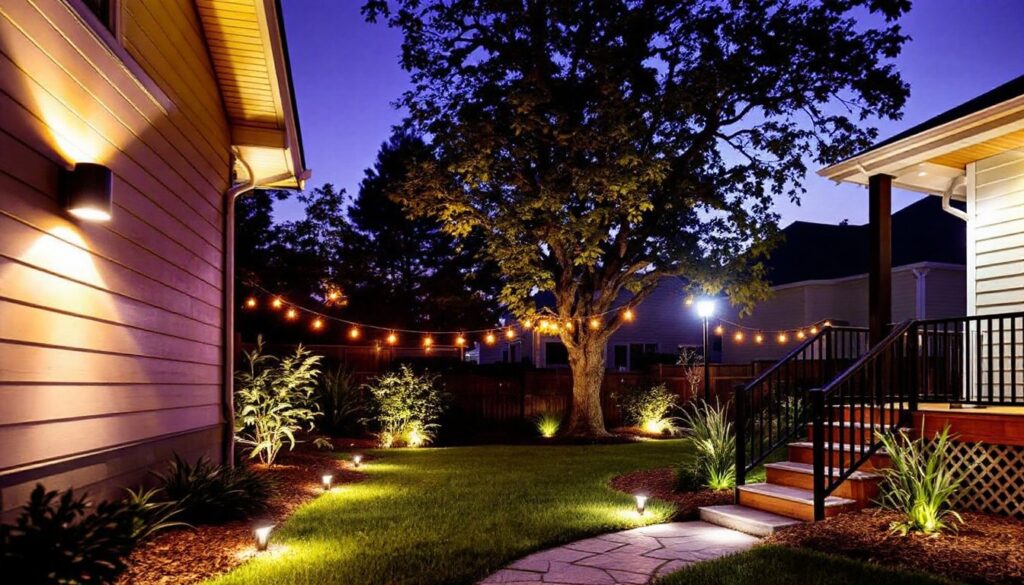
Path lights guide foot traffic along walkways, driveways, and garden borders. Most stand 18 to 24 inches tall and space 6 to 8 feet apart for even coverage. Low-voltage LED versions (typically 12V) draw minimal power and integrate with transformer systems that step down household 120V current.
Landscape spotlights highlight specimen plants, water features, or stonework. Adjustable stakes allow angle changes as plants grow. Look for fixtures with narrow beam spreads (15–25 degrees) for uplighting trees and wider floods (40–60 degrees) for washing walls or garden beds.
Deck and step lights mount flush to horizontal or vertical surfaces. Riser lights install directly into stair facings, critical for code compliance on deck stairs in many jurisdictions. Most require weatherproof junction boxes and GFCI-protected circuits per NEC Article 210.8.
Many homeowners integrate these fixtures with outdoor design ideas that emphasize layered lighting zones. Solar-powered path lights offer easy installation but provide 50–100 lumens at best, fine for ambiance, less so for true navigation. Wired LED fixtures deliver 200+ lumens and maintain consistent output regardless of weather.
Security and Floodlights
Motion-sensor floodlights cover 70 to 240 degrees with adjustable sensitivity and timer settings. Quality units allow separate control of detection range (typically 20 to 70 feet) and light duration (1 to 10 minutes). Install these 8 to 10 feet above grade for optimal coverage without blinding anyone who triggers the sensor.
Dusk-to-dawn fixtures use photocells to automate on/off cycles. They’re ideal for entryways, detached garages, and alleys where constant low-level lighting prevents fumbling for keys. Expect 800 to 1,500 lumens from LED units drawing 10 to 15 watts, comparable to old 75 to 100-watt incandescents.
Smart floodlights add scheduling, remote control, and integration with home security systems. Brands like Ring and Arlo bundle cameras with lighting, but standalone smart bulbs in standard fixture housings work fine if existing wiring is sound. Most connect via Wi-Fi or Zigbee protocols, so check compatibility with existing smart lighting ecosystems before buying.
Be honest about voltage: 120V line-voltage installs require pulling permits in most areas and working inside breaker panels. If you’re not comfortable with that, hire a licensed electrician. Low-voltage systems (12V or 24V) offer more DIY-friendly installation but still demand proper wire sizing, usually 12 or 14 AWG for runs over 50 feet.
Top Features to Look for in Outdoor Lighting
Lumens over watts. LED efficiency means a 10-watt fixture can output 800 lumens (roughly equivalent to a 60-watt incandescent). For path lighting, 100 to 200 lumens per fixture suffices. Security floods need 700 to 1,300 lumens to illuminate driveways or yards effectively.
Color temperature affects ambiance. 2700K to 3000K (warm white) suits residential landscapes and mimics incandescent glow. 4000K to 5000K (cool white) works for task areas like sheds or grilling stations. Avoid 5000K+ unless you want a hospital parking lot vibe.
IP ratings indicate weatherproofing. IP65 handles rain and dust: IP67 withstands temporary submersion (useful near ponds or low-lying areas prone to puddling). Coastal installations benefit from corrosion-resistant housings, aluminum or stainless steel, not painted steel that flakes after one winter.
Adjustability matters for spotlights and floods. Swivel mounts and hinged brackets let homeowners refine aim as plantings mature or seasonal needs change. Fixtures with tool-free adjustment save headaches during initial setup.
Energy source shapes installation complexity. Hardwired 120V offers consistent power but requires conduit, junction boxes, and often permits. Low-voltage wired systems need transformers (typically 150 to 300 watts) but use simpler burial-rated cable. Solar fixtures eliminate wiring entirely but depend on panel placement and regional sunlight, expect diminished performance during cloudy stretches or under tree canopies. High-quality solar units from sources like Tom’s Guide’s solar light reviews include replaceable batteries and efficient panels that outperform cheap big-box versions.
Smart features range from basic timers to full app control. Scheduling prevents lights from burning all night, saving energy. Dimming capability extends LED lifespan and reduces light pollution, appreciated by neighbors and astronomers alike. Geofencing can trigger lights when phones enter a perimeter, handy for households with irregular schedules. Digital Trends frequently covers new smart lighting platforms and compatibility updates worth checking before committing to a system.
Best Outdoor Lighting Options for Different Needs
For budget-conscious projects: Solar path lights deliver decent results for under $5 per fixture. Brands like Hampton Bay and Maggift provide 50 to 80 lumens per stake, adequate for decorative borders. Accept that cloudy weeks mean dimmer output and plan for battery replacements every 2 to 3 years.
For main walkways and high-traffic zones: Low-voltage LED path lights from manufacturers like FX Luminaire or Kichler offer 150 to 250 lumens, die-cast aluminum bodies, and 20,000+ hour rated lifespans. Expect $40 to $80 per fixture, plus transformer costs ($100 to $200 for quality units). The investment pays off in consistent brightness and minimal maintenance.
For security: Motion-sensor LED floods with dual lamp heads cover larger areas than single-head units. Look for models with separate sensor housings that can be aimed independently of the light heads. Lithonia Lighting and Heath-Zenith make contractor-grade options under $60. Hardwired installation is straightforward if existing junction boxes are present: otherwise, budget time for running 14/2 NM cable or schedule 40 PVC conduit if surface-mounted outdoors.
For landscape accents: Adjustable LED spotlights with ground stakes (often called bullet lights) deliver focused beams for uplighting trees or flagpoles. Units rated for 3 to 7 watts provide 200 to 500 lumens, more than enough for dramatic shadows on foliage. Brands like Volt and Lumien offer landscape-specific optics and lifetime warranties on LED modules.
Combining LED lighting efficiency with thoughtful fixture placement creates layered outdoor environments that rival professional designs.
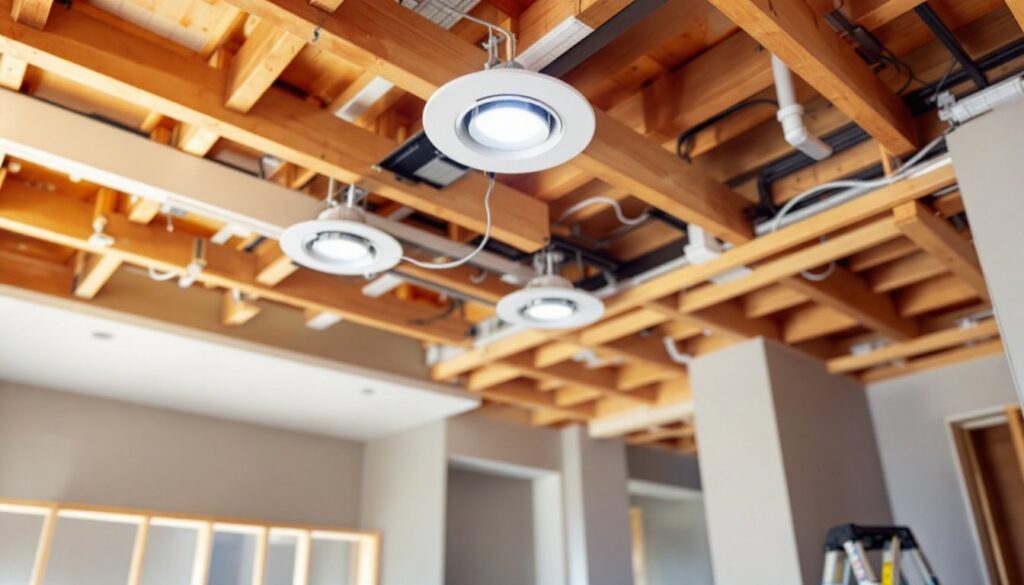
For decks and patios: Recessed step lights (also called riser lights) install flush with stair treads. Most use 1 to 2 watts and produce 30 to 50 lumens per fixture. Pair these with recessed deck lights positioned along railings or benches for ambient safety lighting. This approach works well alongside backyard accessories like pergolas and fire pits.
For seasonal flexibility: String lights (cafe lights) with Edison-style LED bulbs create casual ambiance for patios and dining areas. Commercial-grade sets use 14 or 16 AWG wire and replaceable sockets, worth the premium over flimsy big-box versions. Mount these on screw eyes or cup hooks attached to fascia boards or posts, ensuring runs don’t exceed manufacturer length specs (typically 48 feet per circuit to avoid voltage drop).
Installation Tips for DIY Success
Plan the layout on paper first. Sketch property lines, existing structures, and planting beds. Mark fixture locations with stakes or spray paint, then walk the yard after dark to confirm sight lines and coverage gaps. Adjust before digging trenches.
Respect burial depth codes. Low-voltage cable typically requires 6 inches minimum burial (check local amendments). 120V conduit demands 18 to 24 inches depending on location and conduit type (metal vs. PVC). Call 811 before digging to locate underground utilities, gas, water, and telecom lines don’t announce themselves until you hit them.
Size transformers correctly. Add fixture wattages, then choose a transformer rated for 20% more than the total load. A 150-watt transformer safely runs 120 watts of lights. Install transformers near GFCI outlets (required for outdoor receptacles per NEC) and inside weatherproof enclosures if not rated for direct exposure.
Wire gauge prevents voltage drop. Use 12 AWG for low-voltage runs over 50 feet or when fixture count exceeds ten per leg. 14 AWG works for shorter runs. Avoid daisy-chaining fixtures on a single wire past manufacturer specs, voltage drop dims fixtures farthest from the transformer.
Weatherproof all connections. Use silicone-filled wire nuts or heat-shrink connectors for low-voltage splices. 120V junctions require listed weatherproof boxes with gaskets and cable glands. Don’t rely on electrical tape alone: moisture infiltration causes corrosion and shorts.
Test before backfilling. Connect each fixture and verify operation before burying cable. Troubleshooting a dead fixture is easier when wire is still exposed. Check photocells and timers during daylight by covering sensors with tape to simulate darkness.
Regular lighting maintenance keeps systems running smoothly. Clean lenses annually, check connections for corrosion, and trim vegetation that blocks fixtures or sensors.
Safety gear matters. Wear eye protection when drilling mounting holes (metal shavings and masonry dust both find eyes). Use gloves when handling fixtures with sharp edges. If working near live circuits, shut off breakers and use a non-contact voltage tester to confirm power is off.
Consider permits. 120V outdoor lighting additions usually require electrical permits. Inspectors verify proper conduit fill, box placement, and GFCI protection. Low-voltage landscaping installs typically don’t need permits, but call your local building department to confirm.
Coordinate with landscaping. If pairing new lighting with modern outdoor decor or seasonal refreshes like spring outdoor decor, sequence work so trenching happens before mulching or planting. Cable laid after fresh landscaping means disturbing beds you just finished.
For design inspiration and fixture placement ideas, resources like Gardenista showcase professional installations that translate well to DIY projects. Look for layouts that balance function with aesthetics, security lighting doesn’t have to look institutional, and decorative fixtures can still provide useful illumination.