Table of Contents
ToggleA covered deck extends living space outdoors, but without proper lighting, it becomes unusable after sunset. The right lighting transforms a dark overhead structure into a welcoming evening retreat for dining, entertaining, or unwinding. Whether upgrading an existing deck or planning a new build, understanding the layers of lighting, ambient, task, and accent, helps create a balanced, functional space. This guide covers proven lighting strategies, fixture types, installation considerations, and smart solutions for covered decks of all sizes.
Key Takeaways
- Covered deck lighting transforms an unusable outdoor space after sunset by combining ambient, task, and accent lighting layers to create a welcoming and functional environment.
- String lights and bistro bulbs offer the most affordable and DIY-friendly covered deck lighting solution, requiring only secure ceiling mounts in solid framing with proper weatherproofing.
- Low-voltage LED systems (12V or 24V) are safer for DIY installation than 120V line-voltage circuits and reduce energy consumption by 75% compared to incandescent fixtures.
- Task lighting over dining areas and cooking zones should be mounted 30–36 inches above surfaces to prevent glare, while accent lighting on posts and stairs enhances both safety and visual appeal.
- Smart lighting controls with motion sensors and dusk-to-dawn photocells automate covered deck lighting, reducing energy costs to just $2–$4 monthly for a 100W LED system.
Why Proper Lighting Matters for Your Covered Deck
Lighting on a covered deck serves three critical roles: safety, functionality, and ambiance. Poor visibility on stairs, edges, and transitions between the deck and yard creates trip hazards, especially for guests unfamiliar with the layout. Task lighting ensures cooking, dining, and reading remain comfortable after dark. Ambient and accent lighting set the mood and highlight the deck’s architectural features.
From a code perspective, the International Residential Code (IRC) doesn’t mandate specific lighting for decks, but local jurisdictions may require illumination at entries, stairs, or landings. Even without a code requirement, weatherproof fixtures rated for wet or damp locations are essential. Covered decks typically qualify as damp locations (protected from direct rain but subject to moisture), while exposed areas require wet-rated fixtures.
Electrical work for new circuits or junction boxes often requires a permit and must comply with the National Electrical Code (NEC). Running low-voltage (12V or 24V) LED systems is more DIY-friendly than 120V line-voltage installations, but transformers must still be sized correctly and wired safely. If the project involves adding circuits or modifying existing electrical panels, consult a licensed electrician.
Ambient Lighting Options for a Cozy Atmosphere
Ambient lighting provides overall illumination without harsh shadows. It’s the foundation layer that makes the deck comfortable for conversation and movement.
String Lights and Bistro Bulbs
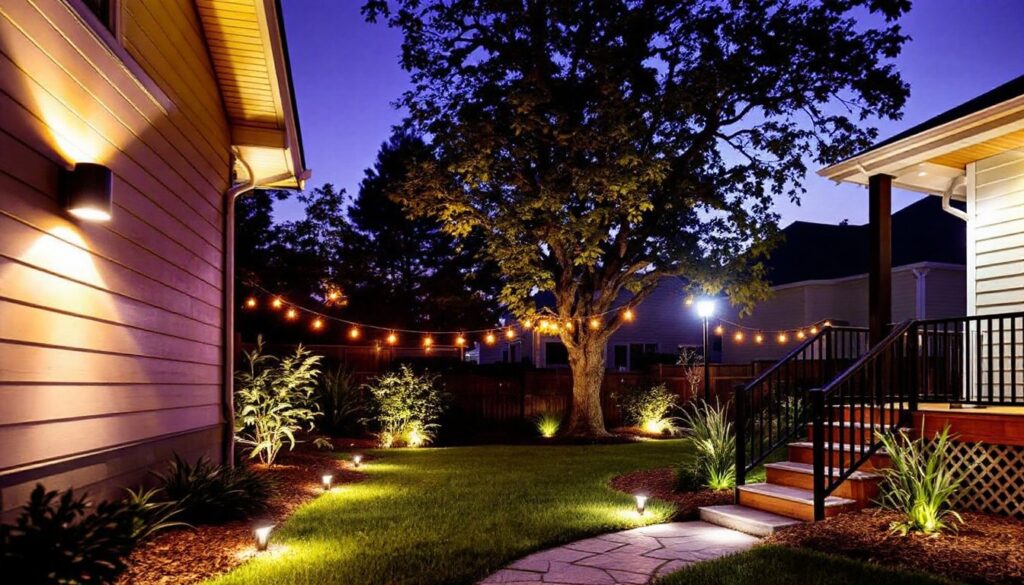
String lights remain one of the most popular outdoor lighting solutions for covered decks, and for good reason, they’re affordable, easy to install, and create instant warmth. Commercial-grade Edison-style bistro bulbs (E26 base, typically 5–15W LED) offer better durability than residential strands. Look for weatherproof sockets (IP65 or higher) and shatter-resistant bulbs.
Installation is straightforward: mount screw hooks or eye bolts into ceiling joists (not just decking) at intervals matching the strand length. Use a stud finder to locate solid framing. For spans longer than 15 feet, add mid-point supports to prevent sagging. If drilling into exposed beams, predrill pilot holes to avoid splitting.
Voltage matters: 120V plug-in strands require GFCI-protected outlets and weatherproof covers. Low-voltage LED strands (often 24V) run off transformers and are safer for DIY installation but may produce dimmer light. For larger decks, connect multiple strands end-to-end, but don’t exceed the manufacturer’s max run (usually 3–5 strands).
Recessed Ceiling Fixtures
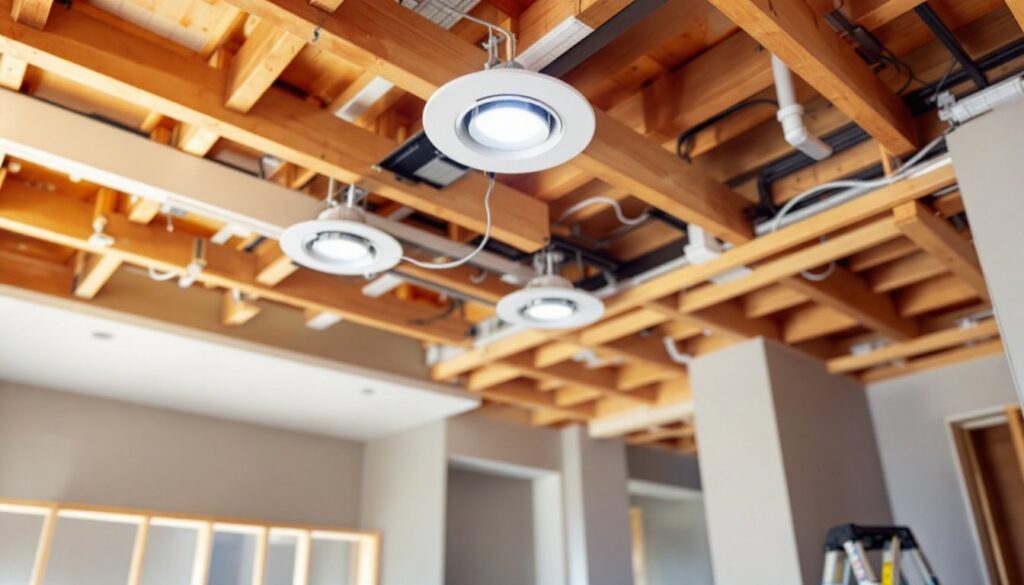
Recessed can lights (also called downlights or pot lights) provide clean, unobtrusive ambient lighting. Standard 4-inch or 6-inch housings fit between ceiling joists spaced 16 or 24 inches on center. Use damp-rated or wet-rated housings depending on exposure.
Installation requires access above the ceiling (often easier during deck construction). Cut holes with a hole saw matched to the housing diameter. Run 14/2 or 12/2 NM-B cable (or UF-B for exposed outdoor runs) from the power source to each fixture. Junction boxes must be accessible and weatherproof.
LED retrofit kits simplify upgrades: they screw into existing can housings and offer adjustable color temperature (2700K warm white to 5000K daylight). For ambient lighting, stick with 3000K to 3500K, warm enough for relaxation but bright enough for safety. Space fixtures 4–6 feet apart for even coverage. Dimmer compatibility varies, so check the LED driver specs before purchasing.
For those looking to explore more lighting fixtures options for their home, there are countless styles that can complement both indoor and outdoor spaces.
Task Lighting for Dining and Entertaining
Task lighting focuses on specific activities, grilling, cooking, dining, or reading. It requires higher lumens and directional control.
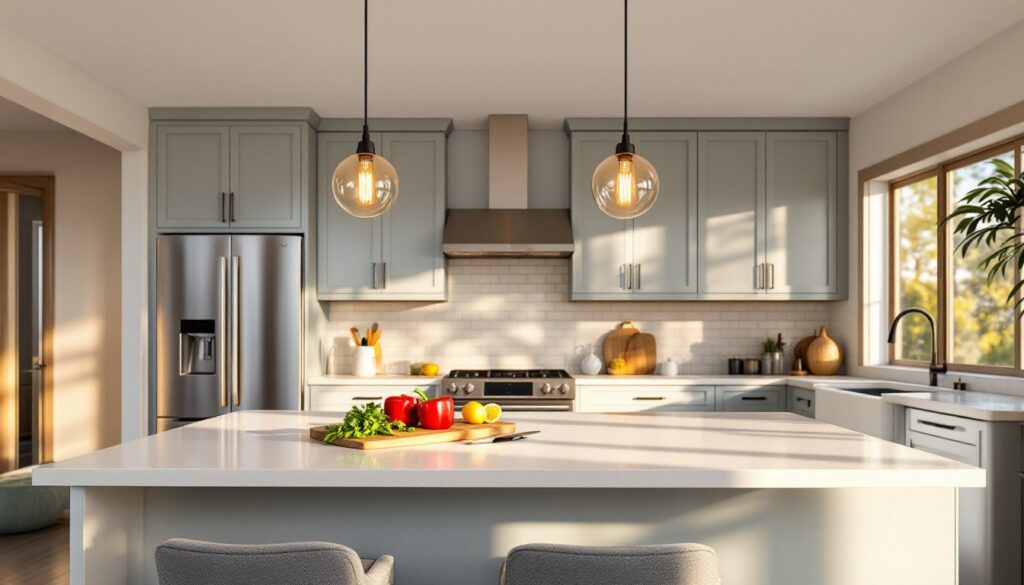
Pendant lights work well over dining tables or kitchen islands. Mount them 30–36 inches above the table surface to avoid glare while seated. Use adjustable-height pendants or chain/cable systems for flexibility. Wet-rated pendants are necessary if the area sees wind-driven rain: damp-rated works for well-protected zones.
Track lighting offers adjustable task coverage. Surface-mount or suspended tracks install along ceiling joists, and individual heads swivel to target grills, buffets, or seating areas. Low-voltage (12V) track systems are safer for DIYers and easier to install than line-voltage systems.
For built-in grills or outdoor kitchens, mount stainless steel range hoods with integrated LED lights or install dedicated grill lights on articulating arms. Position lights to eliminate shadows on the cooking surface without shining into the cook’s eyes.
Dimmer switches improve task lighting versatility. Use a compatible LED dimmer (standard incandescent dimmers cause LED flicker). Install dimmers indoors or use weatherproof outdoor-rated models. For 120V circuits, a single-pole dimmer handles most deck lighting loads: for 3-way switching (control from two locations), install a 3-way dimmer on one end and a standard 3-way switch on the other.
Accent Lighting to Highlight Architectural Features
Accent lighting adds depth and visual interest by highlighting posts, beams, railings, or decorative elements. It’s the finishing layer that separates a basic deck from a thoughtfully designed outdoor room.
Uplighting uses ground-mounted or recessed fixtures to wash light upward along posts or columns. Bullet-style landscape lights (low-voltage, 3–5W LED) work well for this. Bury direct-burial cable (UF-B or low-voltage landscape wire) in conduit or trenches at least 6 inches deep. Position fixtures 6–12 inches from the post base for dramatic shadows.
Recessed step lights improve safety and aesthetics on stairs. Install 3-inch round or rectangular housings into stair risers or adjacent skirting. Use IP67-rated fixtures to handle moisture and debris. Run wiring through hollow risers or surface-mount in weatherproof conduit. Space lights on every step or every other step, depending on visibility needs.
Rope lights and LED strip lighting outline railings, soffits, or ceiling perimeters. Silicone-coated RGB or tunable-white LED strips offer color-changing effects and dimming. Mount strips in aluminum channels with diffusers for a polished look and heat dissipation. Use outdoor-rated power supplies (IP67) and weatherproof connectors.
Post cap lights fit atop 4×4 or 6×6 deck posts. Solar versions require no wiring but depend on sun exposure for charging. Hardwired low-voltage post caps provide consistent brightness and integrate with the main lighting system. Choose caps sized for the actual post dimension (a nominal 4×4 post measures 3.5×3.5 inches).
Many of these creative approaches are also featured in inspiring garden design resources that focus on enhancing outdoor spaces with thoughtful lighting.
Smart and Energy-Efficient Lighting Solutions
Smart controls and LED technology reduce energy costs and add convenience. Most covered deck lighting draws 50–200W total: switching to LEDs cuts consumption by 75% or more compared to incandescent.
Smart switches and dimmers (Wi-Fi or Zigbee/Z-Wave) allow scheduling, dimming, and voice control via Alexa, Google Assistant, or Apple HomeKit. Install a smart switch at the circuit breaker or use smart plugs for plug-in string lights. Ensure the switch’s load rating exceeds total fixture wattage.
Smart bulbs in standard E26 sockets offer per-bulb control and color-changing (RGBW) options. They’re ideal for string lights or pendants. Look for outdoor-rated bulbs (IP65 minimum) if exposed to moisture.
Motion sensors and photocells automate lighting. A dusk-to-dawn photocell turns lights on at sunset and off at sunrise. Motion sensors (passive infrared or PIR) activate lights when someone steps onto the deck. Combo units offer both functions. Mount sensors to avoid triggering from passing cars, pets, or wind-blown foliage.
Solar-powered fixtures suit low-voltage accent or path lighting but lack the brightness and reliability of hardwired systems. They work best in sun-exposed areas and require periodic battery replacement.
Low-voltage DC systems (12V or 24V) dominate modern deck lighting for safety and efficiency. A 300W transformer powers 25–30 fixtures (assuming 10–12W per fixture). Mount the transformer near a GFCI outlet, ideally under the deck for weather protection. Use a timer or photocell on the transformer for automated control.
For DIYers eager to learn installation techniques, step-by-step tutorials offer detailed guidance on wiring, fixture mounting, and troubleshooting.
Energy costs: A 100W LED deck lighting system running 5 hours nightly costs roughly $2–$4 per month (at $0.13/kWh). Compare that to older halogen systems at 400–500W, which could run $8–$12 monthly.
Safety reminder: Always wear safety glasses when drilling overhead, use insulated tools for electrical work, and test circuits with a non-contact voltage tester before touching wires. Turn off power at the breaker before installing or modifying fixtures. If unfamiliar with electrical codes or working with 120V circuits, hire a licensed electrician.