Table of Contents
ToggleOutdoor lighting transforms how homeowners use their property after dark, but the difference between a well-lit landscape and a safety hazard often comes down to who does the installation. While low-voltage LED strips might seem DIY-friendly, most outdoor lighting projects involve line-voltage wiring, weatherproof boxes, and local electrical codes that require a licensed professional. Hiring an electrician isn’t just about compliance: it’s about getting a system that lasts, protects your home, and delivers the light exactly where needed. This guide walks through what electricians actually do for outdoor lighting, what installations cost, and how to find someone who won’t leave you with half-buried junction boxes and flickering fixtures.
Key Takeaways
- Most outdoor lighting requires line-voltage wiring, GFCI protection, and permit compliance—professional electrician installation ensures code adherence and prevents shock hazards.
- An electrician outdoor lighting installation includes site assessment, proper circuit sizing, trench routing, weatherproof fixture mounting, and final inspection to guarantee system durability.
- Costs range from $300–$600 for motion-sensor fixtures on existing circuits to $2,500–$6,000+ for full landscape systems, with labor at $75–$150/hour and permits adding $50–$200.
- Choose a licensed, insured electrician with documented outdoor lighting experience, detailed quotes, and references rather than selecting based on lowest price to avoid corners cut on safety and warranty support.
- Smart outdoor lighting integration with Wi-Fi transformers and automation controls adds $200–$400+ but enables centralized home control and enhances property value.
- Proper burial depth (18 inches for conduit), voltage drop management (below 10%), and dusk-to-dawn photocells ensure long-lasting performance and reliable security lighting.
Why Hire an Electrician for Outdoor Lighting Projects
Most outdoor lighting runs on 120-volt line power, not the plug-and-play 12V systems sold at big-box stores. That means pulling permits, installing GFCI-protected circuits, and mounting weatherproof fixtures that meet National Electrical Code (NEC) Article 210.8 requirements for outdoor receptacles and lighting.
Electricians ensure your outdoor circuits are properly grounded and protected. Exterior wiring buried in conduit needs to meet depth requirements, 18 inches for PVC conduit, deeper for direct-burial cable, and any junction box exposed to weather must carry a wet-location rating. Miss these details and you’re looking at tripped breakers, corroded connections, or worse, shock hazards near pools, patios, and walkways.
Professionals also size circuits correctly. A typical 15-amp branch circuit can handle roughly 1,800 watts, but outdoor lighting often shares that load with receptacles, so electricians calculate total draw and add dedicated circuits when needed. They know which fixtures need separate switches, where to place timers or photocells, and how to route wiring without puncturing irrigation lines or landscape fabric.
Finally, many municipalities require permits for new outdoor circuits. Licensed electricians pull those permits, schedule inspections, and ensure the work meets local amendments to the NEC. DIY installs that skip permitting can complicate home sales and void homeowner’s insurance if a fault causes a fire.
Types of Outdoor Lighting Electricians Install
Pathway and Landscape Lighting
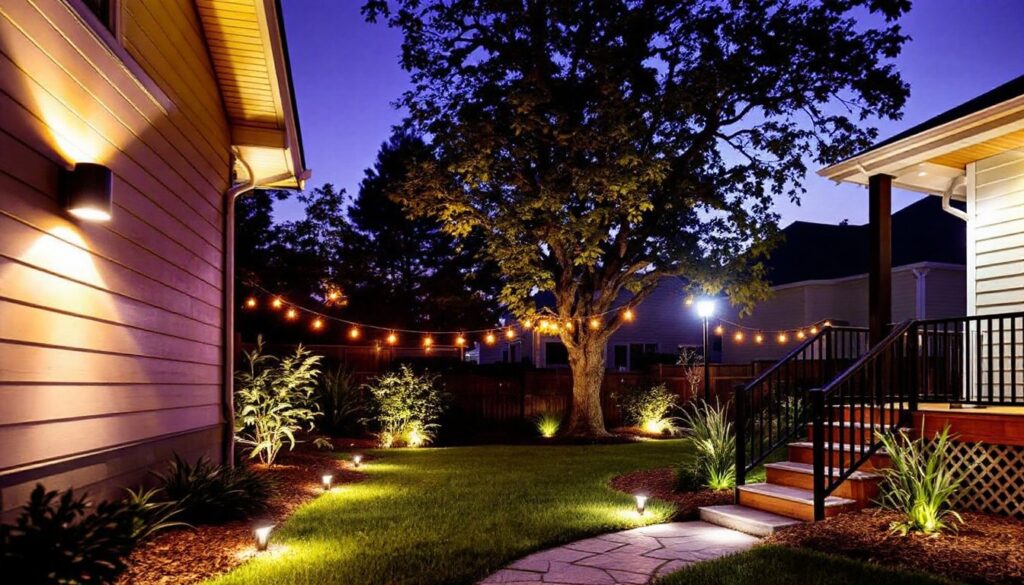
Pathway lights guide foot traffic and highlight landscaping. Electricians typically install 12V AC or DC systems fed by a weatherproof transformer mounted near the house. The transformer steps down 120V to safer low voltage, and wiring runs underground in shallow trenches, usually 6 inches deep for low-voltage cable.
Landscape uplights, downlights, and well lights use LED fixtures rated for wet locations (look for IP65 or IP67 ratings). Electricians space fixtures based on lumens and beam angle: pathway lights every 8-10 feet for even coverage, uplights 2-3 feet from tree trunks to avoid harsh shadows. They’ll also install inline splitters or hub systems to keep voltage drop below 10%, which prevents dim lights at the end of long runs.
Smart landscape lighting integrates with home automation. Electricians wire low-voltage systems to Wi-Fi-enabled transformers or install line-voltage smart switches compatible with platforms like Lutron or Control4. Homes exploring connected systems often benefit from smart home technology to centralize lighting control.
Security and Motion Sensor Lights
Security lighting runs on 120V line power and requires GFCI protection. Floodlights, wall packs, and motion-sensor fixtures mount to exterior junction boxes anchored into siding, brick, or stucco. Electricians ensure boxes are properly sealed with foam gaskets and that fixture canopies overlap siding to prevent water intrusion.
Motion sensors use passive infrared (PIR) or microwave detection. PIR sensors trigger on heat changes and work well for entryways and driveways: microwave sensors detect movement through walls and suit larger areas like backyards. Electricians adjust sensitivity and timer settings during installation, most sensors default to 1-minute shutoff, but homeowners often want 5-10 minutes for practical use.
Dusk-to-dawn photocell fixtures stay off during daylight and switch on automatically at sunset. These work best for always-on security lighting at garage doors, side gates, and back porches. Electricians wire photocells to override switches so homeowners can manually control lights when needed.
For projects requiring electrical work beyond just lighting, understanding when to hire a licensed professional helps ensure code compliance and safety.
What to Expect During Professional Outdoor Lighting Installation
The process starts with a site visit. The electrician maps out fixture locations, identifies the nearest power source (usually an exterior receptacle or interior panel), and checks whether the existing circuit can handle added load or if a new dedicated circuit is necessary.
Next comes permitting. The electrician submits plans to the local building department and waits for approval, typically 1-2 weeks depending on jurisdiction. Some areas allow same-day permits for simple additions: others require stamped drawings for anything involving new circuits.
Installation begins with trenching and conduit runs. For line-voltage systems, electricians dig 18-24 inch trenches and lay Schedule 40 PVC conduit or direct-burial UF cable. Low-voltage systems need shallower trenches but still require careful routing to avoid sprinkler heads and tree roots. Conduit sweeps and junction boxes go in before wire is pulled.
Fixtures mount to weatherproof boxes using stainless hardware. Electricians caulk around box edges, apply silicone to wire entry points, and ensure gaskets seal properly. Each connection inside the box uses waterproof wire nuts or push-in connectors rated for wet locations.
Once wiring is complete, the electrician tests circuits with a multimeter, checks GFCI function, and adjusts fixture aim. Motion sensors get calibrated for range and sensitivity. Timers and photocells are programmed or tested for proper operation. Maintaining these systems over time, including bulb replacement and fixture cleaning, becomes part of regular lighting maintenance to preserve performance.
Final inspection follows. The inspector verifies proper grounding, correct burial depth, GFCI protection, and compliance with local codes. After approval, trenches are backfilled and landscaping is restored. The electrician provides a circuit map showing fixture locations and wire routes for future reference.
Cost Factors for Electrician Outdoor Lighting Services
Electrician labor typically runs $75-$150 per hour depending on region and license level. Simple fixture swaps on existing circuits might take 1-2 hours: new circuit installs with trenching can stretch to a full day or more.
Permits add $50-$200 depending on scope and municipality. Some areas charge flat fees: others calculate based on circuit count or estimated project value.
Materials vary widely. A basic motion-sensor floodlight costs $30-$80, while a commercial-grade LED wall pack runs $150-$300. Low-voltage landscape lighting kits (transformer, fixtures, wire) start around $200 for six lights and scale up to $1,000+ for premium brass or copper fixtures with lifetime warranties.
Trenching costs climb if the yard has rocky soil, extensive hardscaping, or needs horizontal boring under driveways. Electricians charge $3-$8 per linear foot for shallow trenching: boring can hit $15-$25 per foot.
Smart controls and automation add another layer. A Wi-Fi-enabled transformer for low-voltage lighting costs $200-$400. Line-voltage smart switches and dimmers range from $50-$150 per switch, plus installation time.
Typical project costs:
- Six low-voltage pathway lights with transformer: $600-$1,200 installed
- Two motion-sensor floodlights on existing circuit: $300-$600
- New dedicated 20-amp circuit with four fixtures: $800-$1,800
- Full landscape lighting system (12-20 fixtures, automation): $2,500-$6,000+
Prices fluctuate with copper costs, regional labor rates, and fixture quality. Always get itemized quotes. General project planning, including budgeting for outdoor improvements, benefits from tools available through home improvement cost guides to set realistic expectations.
How to Choose the Right Electrician for Your Outdoor Lighting
Start with licensing and insurance. Verify the electrician holds a current state or local electrical license (requirements vary, some states license at the journeyman level, others require a master electrician for certain work). Confirm they carry general liability insurance and workers’ compensation if they employ helpers. Don’t skip this: unlicensed work can void permits and insurance claims.
Ask about outdoor lighting experience specifically. Not all electricians specialize in landscape or security lighting. Request photos of previous installs, especially if you’re planning low-voltage systems or smart integration. An electrician comfortable with only service panels and interior circuits may not know the nuances of burial depth, voltage drop calculations, or photocell wiring.
Get multiple quotes, but don’t default to the cheapest. Low bids often mean corners cut, thinner wire, fewer junction boxes, skipped permits. A detailed quote should list fixture models, wire gauge (14 or 12 AWG for line voltage, 12 or 10 AWG for low-voltage runs over 100 feet), conduit type, and permit fees.
Check references and online reviews. Look for mentions of cleanup, punctuality, and post-installation support. Outdoor lighting needs occasional adjustments, fixtures settle, timers drift, sensors need recalibration. An electrician who ghosts after the final invoice isn’t worth the savings.
Ask how they handle landscape damage. Trenching tears up sod, mulch, and sometimes sprinkler lines. Reputable electricians either restore landscaping themselves or coordinate with a landscaper and include that cost upfront. Integrating outdoor lighting with broader landscape plans, such as those involving outdoor house decor projects, ensures cohesive design and minimizes rework.
Finally, confirm warranty coverage. Quality electricians warranty their labor for at least one year and help homeowners navigate manufacturer warranties on fixtures and transformers. If a fixture fails six months after install, you want someone who’ll come back without charging a second service call.