Table of Contents
ToggleOutdoor lighting isn’t just about flipping a switch when you come home after dark. It’s about turning your garden into a functional, inviting extension of your living space, one that’s usable well past sunset. Done right, landscape lighting highlights architectural features, improves safety along walkways, and adds depth to plantings that disappear into shadows at dusk. Whether you’re working with a postage-stamp yard or a sprawling garden, strategic lighting placement can reshape how you experience your outdoor space after dark.
Key Takeaways
- Garden landscape lighting enhances safety, security, and property value while creating functional outdoor spaces usable well past sunset.
- Use warm white LEDs (2700–3000K) for pathways and cool white (3500–4500K) for water features to match the environment and avoid harsh, clinical effects.
- Strategic uplighting of trees and shrubs with fixtures placed 12–18 inches from the trunk creates drama and depth, while limiting light to select focal points prevents overlighting.
- Low-voltage wired systems (12V or 24V) provide more consistent brightness and support smart controls, making them superior to solar lights for most landscape lighting applications.
- Effective pathway lighting uses bollard lights spaced 8–10 feet apart or recessed paver lights, always ensuring fixtures illuminate the ground rather than blinding pedestrians.
- Patio and deck lighting requires both task and ambient layers—combine overhead string lights with dimmer-controlled pendant fixtures and recessed step lights for versatile entertaining and dining.
Why Garden Landscape Lighting Matters
Garden lighting serves multiple practical roles beyond aesthetics. Safety is the first concern, well-lit pathways, steps, and grade changes reduce trip hazards, especially for guests unfamiliar with your yard layout. Security gets a boost too: motion-activated fixtures near entry points and dark corners deter unwelcome visitors without leaving lights burning all night.
From a design perspective, lighting creates layers of visual interest. Uplighting a specimen tree or washing a stone wall with light adds drama that’s impossible to achieve during daylight hours. It also extends the usable hours of patios, decks, and outdoor kitchens, turning your backyard into a viable space for evening entertaining or quiet relaxation.
Property value gets a subtle bump as well. Professionally designed landscape lighting signals that a home is well-maintained and thoughtfully improved. Just remember: more isn’t always better. Overlighting creates glare and washes out the very features you’re trying to highlight. Aim for contrast and shadow play, not a floodlit stadium effect.
Pathway and Walkway Lighting Ideas
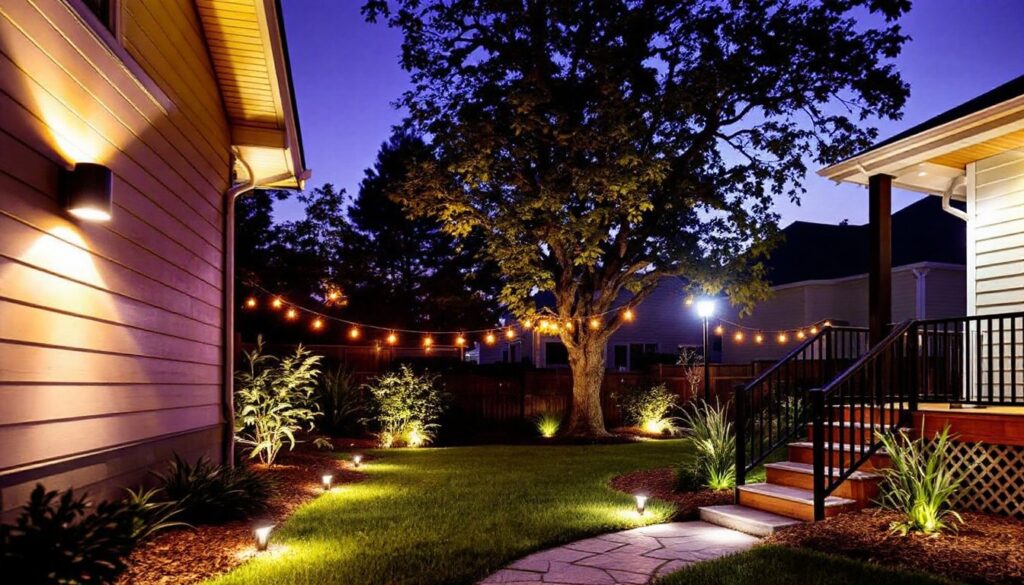
Pathway lighting prevents twisted ankles and guides visitors from the driveway to your front door or from the patio to the garden shed. The most common approach is bollard lights (post-style fixtures, typically 18–24 inches tall) spaced 8–10 feet apart along the path edge. They work well for wider walkways but can feel institutional if overused.
For a softer look, try recessed step lights or flush-mount paver lights. These sit nearly level with the walking surface and cast a low, unobtrusive glow. They’re excellent for stone or brick pathways where you don’t want fixtures interrupting sightlines. Installation requires cutting into pavers or pouring concrete, so factor in extra prep time.
Downlighting from overhead structures, pergolas, arbors, or tree branches, creates a moonlighting effect that feels organic and elegant. Use shielded fixtures to avoid glare, and position them high enough (8+ feet) that the light source stays out of direct view. Path lights should illuminate the ground, not blind people walking toward them.
Always use warm white LEDs (2700–3000K) for pathways. Cooler color temperatures feel clinical and clash with natural materials like stone and wood. And if you’re trenching for low-voltage wiring, lay conduit (even flexible PVC) to protect cables from shovel strikes during future garden work.
Accent Lighting for Trees and Shrubs
Uplighting is the go-to technique for trees and tall shrubs. Place a well light (a recessed or shielded fixture) at the base of the trunk, aimed upward to graze the bark and illuminate the canopy. For deciduous trees, this creates striking branch silhouettes in winter. Evergreens like spruce or arborvitae reveal texture and depth that disappears under overhead lighting.
Position fixtures 12–18 inches from the trunk for narrow, columnar trees: move them 2–3 feet out for wider canopies. Use a narrow beam spread (10–25 degrees) for tall trees to keep light focused. Wider beams work better for multi-stemmed shrubs or ornamental grasses.
Silhouette lighting (or backlighting) reverses the approach: place the fixture behind the plant, aimed at a wall or fence. The plant becomes a dark cutout against an illuminated background. This works beautifully with Japanese maples, yuccas, or other plants with distinctive forms. Just make sure the wall surface is clean and in good repair, uplighting highlights every crack and stain.
Many homeowners incorporate outdoor design ideas that blend hardscape and plantings, and lighting ties these elements together after dark. Avoid lighting every plant: select a few focal points and let the shadows create depth. Overlighting flattens the landscape and kills the sense of mystery.
For wiring, low-voltage systems (12V or 24V) are safer and easier to install than line-voltage (120V) setups. Most local codes allow homeowners to install low-voltage landscape lighting without a permit, but always verify. If you’re adding more than 6–8 fixtures on a single run, calculate voltage drop, wire gauge and run length affect brightness at the end of the line.
Water Feature and Pond Lighting
Water features benefit from both submersible lights and external uplighting. Submersible LED fixtures rated for wet locations (look for an IP68 rating) can sit directly in ponds, fountains, or waterfalls. They highlight moving water beautifully, backlit spray from a fountain or the cascade of a waterfall.
Use cool white or neutral white LEDs (3500–4500K) for water features: they mimic natural daylight and make water appear clearer. Warmer tones can give ponds a murky, tea-stained look. Color-changing RGB fixtures are tempting, but they often read as gimmicky after the novelty wears off. If you want color, stick with a single hue (like blue or green) rather than cycling through the rainbow.
For ponds, place submersible lights at varying depths to create layers. A shallow uplighting near lily pads or aquatic plants adds dimension, while deeper lights illuminate the water column itself. External fixtures, positioned on the bank, aimed across the surface, create reflections and highlight the pond’s edge without disturbing aquatic life.
Safety note: All wet-location fixtures must be GFCI-protected. If you’re running line-voltage (120V) wiring to a pond, hire a licensed electrician. Most DIYers are better off with low-voltage submersible kits that plug into a weatherproof transformer.
Keep fixtures accessible for cleaning. Algae and mineral buildup dim output fast, especially in hard-water areas. Quarterly cleanings with a soft brush and vinegar solution keep them running bright. And if you have koi or other fish, avoid placing lights where they’ll stress the animals, fish need dark zones to rest.
Patio and Seating Area Lighting Solutions
Patios and decks demand task lighting for cooking and dining, plus ambient lighting for mood. Overhead string lights (café lights) are hugely popular for a reason, they provide diffuse, warm light without harsh shadows. Hang them 8–10 feet overhead on a catenary cable or suspended between posts. Use commercial-grade string lights with replaceable bulbs and weatherproof sockets: bargain sets fail within a season.
Recessed deck lights fit into post caps, stair risers, or deck boards themselves. They’re subtle and stay out of the way during daytime use. Space them every 4–6 feet along railings or steps, and use shielded fixtures to prevent upward light spill, glare from recessed lights can be worse than no light at all.
For dining areas, consider a pendant or chandelier rated for wet or damp locations (depending on overhead coverage). Hang it 30–36 inches above the table surface for balanced task lighting. Pair it with a dimmer switch so you can adjust brightness, full output for grilling and prep, dialed down for dinner conversation.
Sconces mounted on exterior walls provide another layer. Place them 60–66 inches above the finished floor (standard interior height works outdoors too). Downward-facing sconces minimize glare and keep light where it’s needed. Many projects that involve LED lighting benefit from dimmable drivers or smart controls for flexible output.
Don’t forget about portable or plug-in options. Battery-powered LED lanterns, solar table lamps, and rechargeable accent lights add flexibility without running new wiring. They’re excellent for renters or anyone testing layouts before committing to permanent fixtures.
Solar vs. Low-Voltage Landscape Lighting
Solar landscape lights have come a long way, but they’re still not a one-size-fits-all solution. Modern panels and batteries deliver better runtime and brightness than early models, but performance depends entirely on sun exposure. If your yard is heavily shaded or you live in a northern latitude with short winter days, solar output drops significantly.
Solar works well for pathway markers and accent lights in sunny spots. Expect 4–8 hours of runtime after a full charge, with output fading as the battery drains. They’re dead simple to install, no wiring, just stake them in place, but maintenance involves cleaning panels and replacing batteries every 1–2 years. Cheap units use NiCad batteries, which perform poorly in cold weather: look for lithium-ion versions for better longevity.
Low-voltage wired systems (12V or 24V) deliver consistent brightness and reliability. A single transformer plugs into a standard outdoor outlet (GFCI-required) and powers multiple fixtures via buried landscape wire. Installation involves trenching 6–8 inches deep, laying wire in direct-burial cable or conduit, and connecting fixtures with waterproof wire nuts or quick-connect hubs.
Low-voltage setups handle larger loads better, you can run 150–300 watts off a single transformer, powering a dozen or more fixtures. They also support photocell timers and smart controls for automated scheduling. Uplighting techniques, such as those recommended by landscape professionals, often rely on low-voltage systems for controllable, focused beams.
Cost-wise, solar has a lower upfront investment but higher long-term maintenance. Low-voltage requires more initial labor and materials but runs cheaper over time, especially with LEDs that last 25,000+ hours. If you’re serious about lighting maintenance, low-voltage gives you more control and fewer component replacements.
For a hybrid approach, use solar for supplemental pathway lights and low-voltage for primary accent and task lighting. This balances installation effort with performance where it matters most.
Conclusion
Effective garden lighting isn’t about flooding every square foot with lumens, it’s about creating contrast, guiding movement, and highlighting what deserves attention. Start with a clear purpose for each fixture, whether that’s safety, security, or visual impact. Invest in quality components (transformers, wire, and fixtures rated for outdoor use), and don’t skip the planning phase. A rough layout sketched on graph paper or mapped with stakes and string saves time and materials once you start digging.