Table of Contents
ToggleThe right outdoor lighting doesn’t just illuminate a front yard, it defines how a home presents itself after dark, adds layers of security, and can boost property value by 7-10% according to real estate studies. But too many homes still rely on builder-grade fixtures that do little more than keep visitors from tripping on the porch steps. Modern outdoor lighting for the front of a house has evolved well beyond basic porch lights. Today’s fixtures combine architectural presence, energy efficiency, and smart technology to create a layered, intentional look that works just as hard as interior design. Whether updating a mid-century entryway or adding polish to a contemporary build, these modern lighting strategies offer practical ways to elevate curb appeal.
Key Takeaways
- Modern outdoor lighting for the front of a house enhances curb appeal while improving safety, security, and property value by up to 10% according to real estate studies.
- Layered lighting combining wall sconces, path lights, and accent fixtures eliminates dark zones and creates a cohesive design that works harder than traditional builder-grade fixtures.
- LED outdoor lighting uses 75–80% less energy than incandescent bulbs and lasts 25,000–50,000 hours, delivering significant long-term savings for dusk-to-dawn fixtures.
- Wall sconces should mount 66–72 inches from the ground flanking the front door, while pendant lights require a 7-foot minimum clearance and sizing based on porch dimensions.
- Space pathway lights 8–10 feet apart on alternating sides of walkways, and use low-voltage systems (12V or 24V) for safer, easier installation than line-voltage alternatives.
- Mixing finishes by limiting your palette to 2–3 finishes (matte black, brushed nickel, or aluminum) and pairing fixtures with compatible design language creates visual depth without chaos.
Why Modern Outdoor Lighting Matters for Your Home’s Exterior
Outdoor lighting serves three distinct functions: safety, security, and aesthetics. Modern fixtures address all three without looking like afterthoughts bolted to the siding.
From a safety standpoint, proper illumination reduces trip hazards on steps, walkways, and uneven pavers. The IRC (International Residential Code) doesn’t mandate specific lighting levels for residential exteriors, but standard practice calls for at least 50-100 lumens at entryways and stairs. Motion-sensor fixtures add another layer by alerting homeowners to movement near doors or garages.
Security lighting has shifted away from harsh floodlights that blast the entire yard. Contemporary designs use targeted placement and adjustable color temperatures (typically 2700K-3000K) to create visibility without the prison-yard aesthetic. Layered lighting, combining wall sconces, path lights, and accent fixtures, eliminates dark pockets where intruders might hide.
Aesthetically, modern outdoor lighting highlights architecture, landscaping, and entryways in ways that traditional coach lanterns never could. Clean lines, mixed materials like brushed aluminum or matte black steel, and minimalist profiles complement current home styles from modern farmhouse to sleek contemporary. Lighting design has become as important as paint color or roofing material in defining a home’s curb appeal.
Architectural Wall Sconces and Up-Lighting
Wall sconces remain the workhorse of exterior lighting, but modern versions have shed the fussy details of traditional fixtures. Look for geometric shapes, cylindrical or rectangular housings, and integrated LED modules that eliminate bulb changes for years.
For vertical siding or stucco homes, sconces should mount 66-72 inches from the ground, roughly eye level, flanking the front door. This creates balanced illumination without glare. On homes with horizontal lap siding, verify stud locations before drilling: most exterior walls have studs at 16-inch centers, and sconces need solid backing to support their weight and resist wind load.
Up-lighting transforms architecture after dark by washing exterior walls with light. Ground-mounted well lights or small bullet-style fixtures work well for highlighting columns, stone facades, or textured surfaces. Aim for 3-5 watts per linear foot of wall when using LED fixtures, more than that risks over-lighting and washing out detail. Fixtures should sit 12-18 inches from the wall base to create the right spread.
Wiring for wall sconces typically ties into existing porch light circuits, but adding up-lighting often requires trenching and low-voltage landscape wire (usually 12- or 14-gauge for runs under 100 feet). If the project involves new circuits or modifications to the main panel, most jurisdictions require a permit and inspection. Homeowners comfortable with basic electrical work can handle fixture swaps, but new circuit installation is best left to a licensed electrician.
Statement Pendant Lights for Covered Porches and Entryways
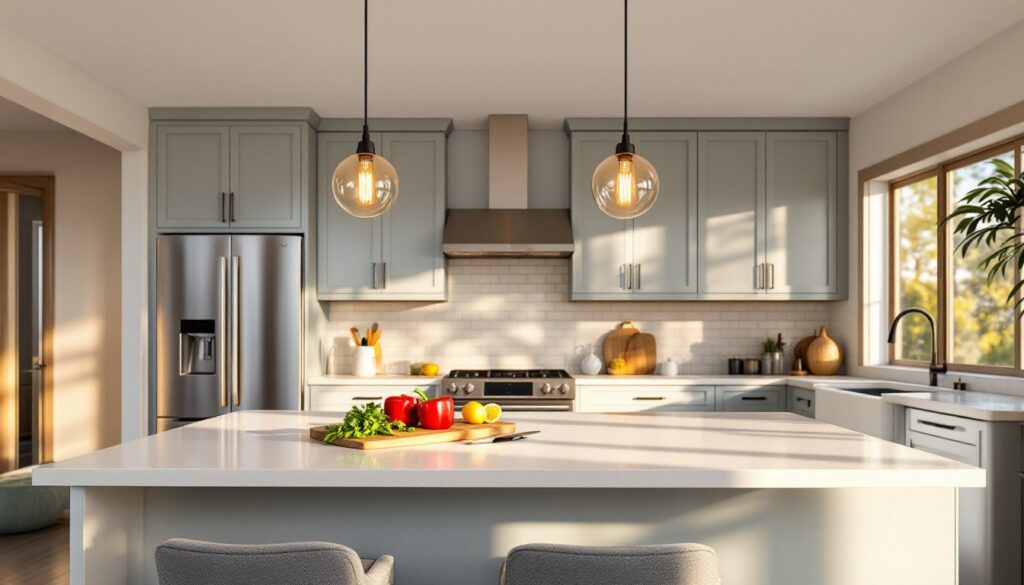
Covered porches and entryways offer an opportunity to install pendant lights, fixtures that hang from the ceiling and act as both functional lighting and sculptural elements. Modern pendants range from minimalist drum shades to industrial cage designs and sleek glass globes.
When selecting a pendant, size matters. A general rule: measure the porch width and depth in feet, add those numbers, and convert to inches for the pendant diameter. A porch that’s 8 feet wide and 6 feet deep suggests a pendant around 14 inches in diameter. For exceptionally large covered entries, consider two smaller pendants rather than one oversized fixture.
Ceiling height dictates hang length. The bottom of the pendant should clear head height by at least 6 inches, standard practice is 7 feet minimum clearance from the porch floor. On porches with 8-foot ceilings, shorter pendants or semi-flush mounts work better than long drops.
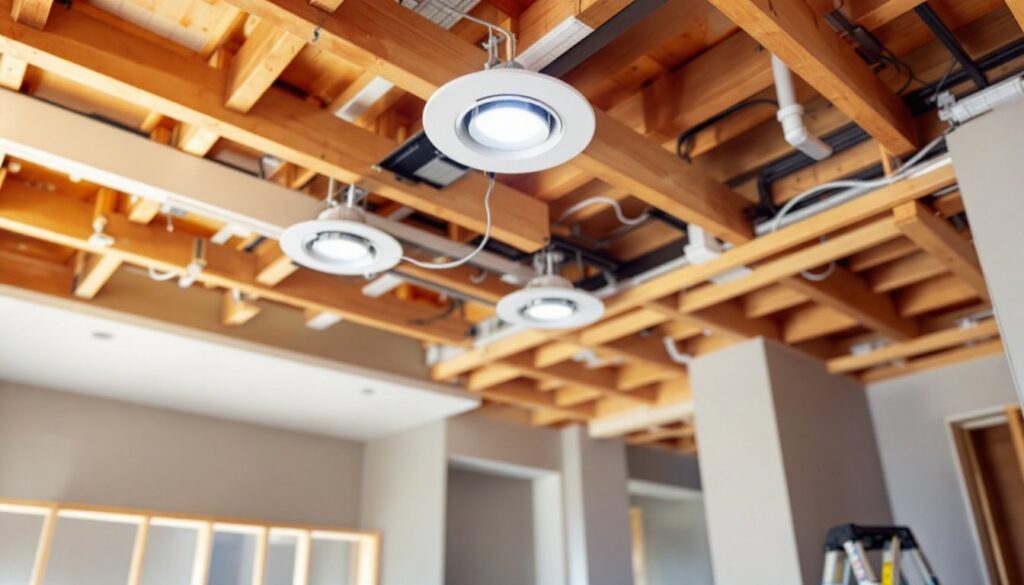
Installation requires access to ceiling joists (typically 16 or 24 inches on center depending on porch framing). Heavy pendants, anything over 10 pounds, need a fan-rated electrical box or reinforced mounting hardware. If replacing an existing porch light, the electrical box is already in place, but verify its rating before hanging a weighty modern fixture. Porches without existing wiring require fishing cable through the ceiling, which may mean cutting drywall or working in tight attic spaces. Modern outdoor house decor trends emphasize cohesive design, and a well-chosen pendant ties together the porch aesthetic.
Pathway and Landscape Lighting with Contemporary Fixtures
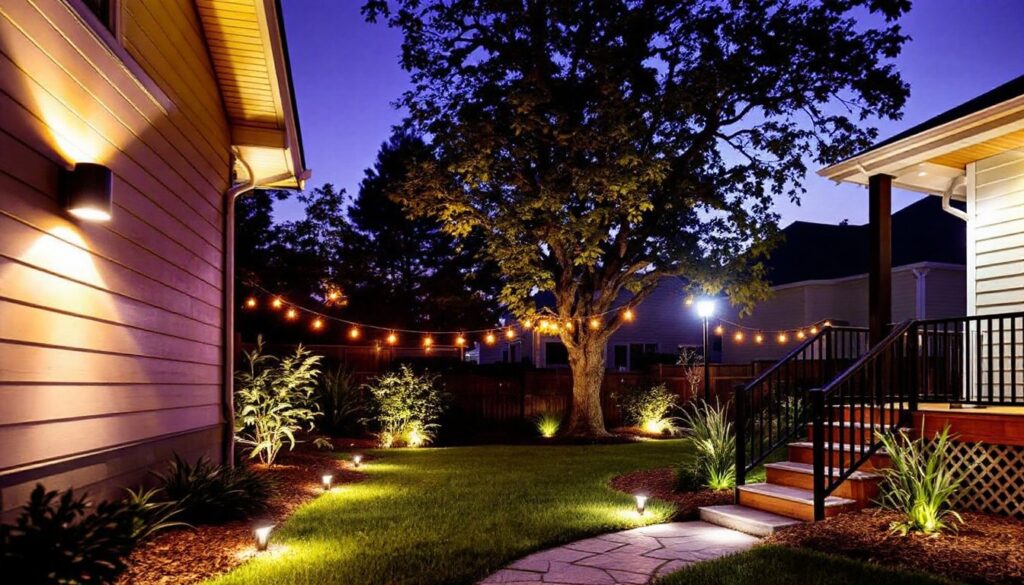
Pathway lighting guides visitors from the driveway or sidewalk to the front door while adding visual interest after dark. Modern path lights ditch the plastic mushroom fixtures of the 1990s in favor of sleek metal stakes, integrated bollards, or low-profile disc lights.
Spacing depends on fixture brightness and beam angle, but a general guideline is 8-10 feet apart for standard LED path lights (around 3-5 watts each). Stagger them on alternating sides of the path rather than lining them up like runway lights, this creates a more natural, less regimented look. For curved walkways, place fixtures on the outside of curves to emphasize the path’s shape.
Most pathway lighting runs on low-voltage systems (12V or 24V), which are safer and easier to install than line-voltage fixtures. A typical setup includes a transformer (usually 120-300 watts) mounted near an outdoor outlet, low-voltage cable buried 6-12 inches deep, and fixtures connected via wire nuts or proprietary connectors. Use direct-burial cable rated for wet locations, standard landscape wire with UV-resistant insulation.
Contemporary designs often incorporate landscape lighting to highlight trees, shrubs, or architectural features. Spotlights and well lights work for accent lighting, while wash lights create softer, broader coverage. For highlighting a specimen tree, place a 10-15 watt LED uplight at the base, aiming upward through the canopy. This technique works especially well with textured bark or branching patterns.
One common mistake: over-lighting the front yard. Subtlety wins. The goal is to create layers of light that guide the eye, not replicate daylight. Start with fewer fixtures than planned, test the layout over a few nights, and add more only if gaps or dark zones appear. Recent outdoor design ideas lean toward understated, targeted lighting rather than flooding every corner.
Smart Lighting Systems and Energy-Efficient LED Options
Smart lighting has moved beyond novelty into genuine utility for outdoor fixtures. Systems like Philips Hue Outdoor, Ring Smart Lighting, or Lutron Caseta allow homeowners to control brightness, color temperature, and scheduling from a smartphone, or integrate with voice assistants and home automation platforms.
Smart bulbs fit standard E26 sockets, making them an easy retrofit for existing sconces or pendants. For low-voltage landscape systems, smart transformers offer dimming and scheduling without replacing individual fixtures. Some systems include motion sensors that trigger lights only when needed, reducing energy waste and extending bulb life.
LED technology has become the default for outdoor lighting, and for good reason. LEDs use 75-80% less energy than incandescent bulbs, last 25,000-50,000 hours, and generate far less heat. A typical 9-watt LED produces the same light output as a 60-watt incandescent, which translates to significant savings over time, especially for fixtures that run dusk-to-dawn.
When selecting LEDs for outdoor use, verify the fixture is rated for wet or damp locations (depending on exposure). Wet-rated fixtures handle direct rain and snow, while damp-rated versions work for covered porches or overhangs. Also check the color rendering index (CRI), a CRI of 80 or higher ensures that exterior colors (paint, brick, stone) look natural rather than washed out.
Photocell sensors and timers automate lighting schedules. A built-in photocell turns lights on at dusk and off at dawn, while programmable timers allow customization (e.g., lights off at midnight to save energy). Some homeowners combine both: photocell activation with a timer shutoff.
Energy-efficient LED lighting not only cuts utility costs but also reduces the frequency of bulb changes, a real advantage for hard-to-reach fixtures like high wall sconces or overhead pendants.
Mixing Finishes and Styles for a Cohesive Modern Look
Modern design doesn’t demand identical fixtures across the entire front elevation. In fact, mixing finishes and styles, when done deliberately, adds depth and interest. The key is maintaining a visual thread that ties everything together.
Finish consistency matters more than matching every detail. If the front door hardware is matte black, echo that finish in wall sconces or house numbers. If the garage door has brushed nickel handles, consider path lights or overhead pendants in a similar tone. Limiting the palette to two or three finishes prevents the front of the house from looking chaotic.
Style mixing works when the fixtures share a common design language. A linear sconce pairs well with a cylindrical pendant if both have clean lines and minimal ornamentation. Geometric shapes, squares, rectangles, circles, can coexist as long as they avoid competing for attention. For example, bold statement sconces might pair with understated path lights, allowing each to serve its role without visual clutter.
Contrast also plays a role. Dark fixtures (black, bronze, charcoal) pop against light siding, while light fixtures (white, brushed aluminum) stand out on dark brick or stone. Regional design trends influence choices, Southern Living showcases how traditional Southern homes increasingly blend modern lighting with classic architecture, creating a transitional look that respects history while embracing contemporary function.
Material choices affect both durability and aesthetics. Powder-coated aluminum resists rust and holds up in coastal environments, while solid brass develops a natural patina over time (desirable for some, less so for others). Stainless steel works well in modern settings but can show fingerprints and water spots. Homeowners in areas with harsh winters should prioritize fixtures rated for temperature extremes and UV resistance.
Layering light sources, combining sconces, pendants, path lights, and accent lighting, creates a cohesive modern look that adapts to different needs. Task lighting (e.g., sconces at the door) ensures safety. Ambient lighting (e.g., pendants on the porch) sets the mood. Accent lighting (e.g., up-lighting a feature wall) adds drama. When all three layers work together, the result feels intentional rather than haphazard. For inspiration, Design Milk regularly features contemporary homes where lighting plays a starring role in curb appeal.
Conclusion
Modern outdoor lighting for the front of a house isn’t just about swapping out old fixtures, it’s about rethinking how light shapes architecture, safety, and curb appeal. From wall sconces that frame an entryway to pathway lights that guide visitors with precision, every choice contributes to a cohesive design. Smart technology and LED efficiency make these upgrades more practical than ever, while thoughtful mixing of finishes and styles ensures the result feels custom rather than cookie-cutter. Whether tackling a full exterior refresh or updating one fixture at a time, the right lighting transforms a house into a home that stands out after dark.