Table of Contents
ToggleSolar pathway lights have come a long way from the dim plastic stakes of the early 2000s. Today’s options offer reliable brightness, weather-resistant construction, and designs that complement everything from cottage gardens to modern hardscapes. They’re one of the few outdoor projects that require zero electrical knowledge, no trenching, and no permit, just a sunny spot and a little planning. Whether a homeowner is lighting a front walk for safety or adding ambiance to a backyard patio, solar lights deliver results without the electrician’s bill or the hassle of running low-voltage cable.
Key Takeaways
- Solar outdoor pathway lighting requires zero electrical knowledge, no wiring, and no permits, making it ideal for DIYers and renters seeking a hassle-free installation.
- Modern solar pathway lights offer 6 to 12 hours of runtime per charge and eliminate ongoing electricity costs compared to low-voltage LED systems.
- When choosing between stake lights, bollard lights, and flush-mount options, prioritize battery capacity of 600mAh to 800mAh and lumen output of 20 to 30 for functional safety lighting.
- Proper placement on both sides of steps and grade changes, combined with staggered positioning 6 to 8 feet apart, ensures both safety and aesthetic ambiance.
- Regular maintenance—including monthly panel cleaning, biannual battery inspections, and vegetation trimming—extends the lifespan of solar pathway lights to years of reliable performance.
- Battery replacement is the most common troubleshooting fix, as NiMH batteries degrade after 500 to 1,000 charge cycles, typically lasting two to three years of daily use.
Why Choose Solar Pathway Lights for Your Outdoor Spaces
Solar pathway lights operate independently of the home’s electrical system, which eliminates the need for wiring, junction boxes, or GFIP outlets. This makes them ideal for renters, DIYers without electrical experience, or anyone looking to avoid the permitting process required for permanent low-voltage landscape lighting in many jurisdictions.
Modern solar lights use photovoltaic panels (typically monocrystalline or polycrystalline silicon) to convert sunlight into electricity, storing it in rechargeable NiMH or lithium-ion batteries. At dusk, a light sensor triggers the LED, which can run anywhere from 6 to 12 hours depending on battery capacity and the day’s sun exposure.
The upfront cost is higher than basic wired pathway lights, expect to pay $15 to $50 per fixture for quality units, but there’s no ongoing electricity cost. A set of eight solar lights uses zero kilowatt-hours, while an equivalent low-voltage LED system might add $20 to $40 annually to the electric bill, depending on local rates and runtime.
Solar lights also offer flexibility. If the homeowner changes the landscape design or realizes a light is poorly placed, they can simply pull the stake and relocate it. No need to reroute cable or cap off a transformer line. For phased projects, like a new garden bed or a gravel path that won’t be finished until next season, solar lights can be added incrementally without planning an entire circuit.
Types of Solar Pathway Lights and How to Choose the Right One
Not all solar pathway lights are created equal. The three main categories are stake lights, bollard lights, and flush-mount/in-ground lights.
Stake lights are the most common. They feature a ground spike, a solar panel (usually on top), and a light head. They’re fast to install and easy to reposition. Look for models with at least a 2-inch diameter stake for stability in soft soil or mulch. Plastic stakes can crack in freeze-thaw cycles: aluminum or stainless steel holds up better in northern climates.
Bollard lights stand taller, typically 18 to 24 inches, and cast light from a higher point, which helps with uneven terrain or taller plantings. They’re more visible during the day, so choose a finish and style that complements the home’s exterior. Bronze or black powder-coated aluminum suits traditional homes: brushed nickel or matte graphite fits modern outdoor decor schemes.
Flush-mount or in-ground lights sit level with the walkway surface and are often used in pavers, decking, or gravel. They’re more labor-intensive to install, requiring a hole saw or masonry bit, but they’re nearly invisible during the day and provide subtle uplighting. Make sure the housing is rated IP67 or higher for water and dust resistance, especially if the path floods during heavy rain.
When selecting lights, pay attention to lumen output. A typical solar pathway light emits 5 to 15 lumens, which is enough for decorative accent lighting. For functional safety lighting along stairs or a sloped driveway, look for 20 to 30 lumens per fixture. Experts at The Spruce recommend spacing lights 6 to 8 feet apart for consistent coverage, though this varies with fixture height and beam angle.
Battery capacity matters, too. Lights with 600mAh to 800mAh batteries will run longer and recover faster after cloudy days. Cheaper models with 300mAh cells often dim noticeably after a few hours or fail to turn on after a week of overcast weather.
Installation Tips for Maximum Performance and Longevity
Solar lights are plug-and-play, but a little forethought prevents frustration. Start by confirming the solar panel will receive at least 6 to 8 hours of direct sunlight daily. Panels shaded by eaves, fences, or tree canopies won’t charge fully, leading to dim or short-lived illumination. If partial shade is unavoidable, consider models with a separate solar panel connected by a low-voltage cable, allowing the panel to be positioned in a sunnier spot.
Before staking, turn on each light indoors to confirm it works. Some models ship with a plastic tab between the battery terminals to prevent discharge during shipping, remove it first. Charge the lights in full sun for 24 to 48 hours before expecting a full night’s runtime. This initial charge conditions the battery and ensures the light sensor is calibrated.
When driving stakes, avoid forcing them into hard-packed soil or clay. Pre-drill a pilot hole with a 3/8-inch or 1/2-inch auger bit to prevent the stake from bending or the housing from cracking. In loose sand or mulch, stakes can lean or topple. Bury the stake at least 4 to 5 inches deep, and pack soil or mulch firmly around it. For in-ground lights in pavers, use a hole saw matched to the fixture diameter and follow the manufacturer’s depth specs, too shallow and the light sits proud: too deep and water pools.
Placement Strategies for Safety and Aesthetics
Safety first: place lights on both sides of steps, grade changes, and path intersections. A single light at a step riser isn’t enough, flanking the tread with two fixtures provides better depth perception at night.
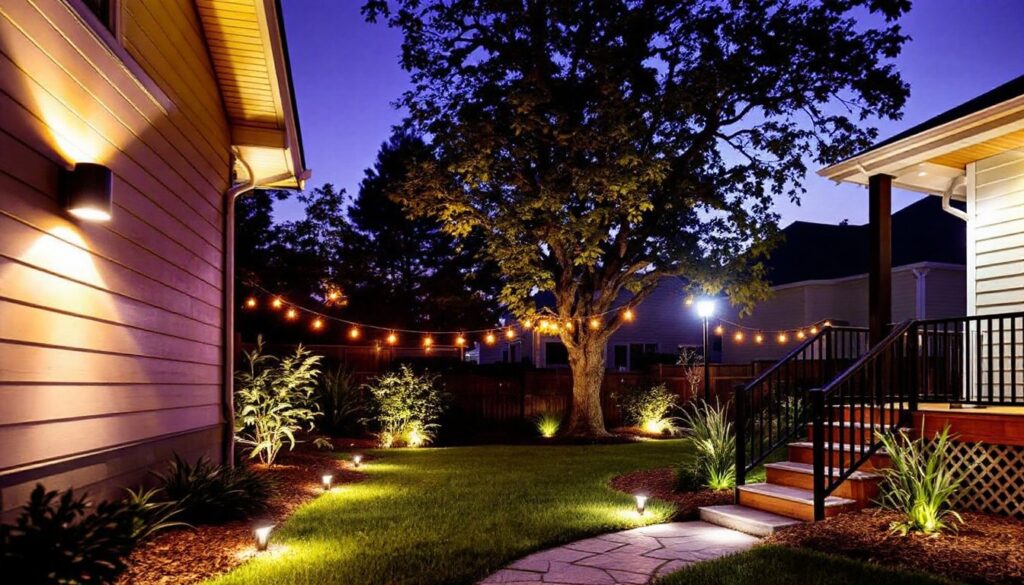
For aesthetic impact, consider the sightline. Lights should guide the eye along the path without creating a runway effect. Stagger placement slightly, offset lights by 6 to 12 inches on alternating sides rather than lining them up like soldiers. This works especially well on outdoor house decor projects where the goal is ambiance, not airport-grade visibility.
Avoid placing lights directly under downspouts or in low spots where water pools. Even weatherproof housings can develop condensation or corrode over time if constantly submerged. If the path drains poorly, grade the area or add a dry creek bed to redirect runoff before installing lights.
Common Problems and How to Troubleshoot Solar Pathway Lights
Dim or flickering light is usually a battery issue. NiMH batteries degrade after 500 to 1,000 charge cycles, roughly two to three years of daily use. Most solar lights use AA or AAA rechargeable batteries: replacement is straightforward. Unscrew the light head or panel housing, swap in a fresh NiMH cell (avoid alkaline batteries, they’re not designed for solar charging), and reassemble. Match the voltage and capacity to the original spec.
Lights that won’t turn on may have a dirty solar panel. Dust, pollen, and bird droppings reduce efficiency. Wipe the panel monthly with a damp microfiber cloth. For stubborn grime, use a 50/50 mix of water and white vinegar. Avoid abrasive cleaners or scouring pads, they’ll scratch the protective coating.
If the light still won’t activate, test the sensor. Cover the solar panel with a hand or cloth during daylight. If the LED turns on, the sensor works and the issue is likely insufficient charge. If it doesn’t, the sensor or circuit board may be faulty. Some models have a manual override switch: consult the instructions.
Corrosion on battery terminals is common in humid climates. Remove the battery, scrub the terminals with a small wire brush or sandpaper, and wipe with rubbing alcohol. Apply a thin layer of dielectric grease to prevent future corrosion, it’s sold in the automotive section and works for any outdoor electrical connection.
Cracked or fogged lenses let moisture into the housing, which can short the LED or damage the circuit board. Some high-end lights have replaceable lenses: budget models do not. If the crack is small, a bead of clear silicone sealant (exterior-rated) can buy a season or two. For fogging, disassemble the light, dry all components, and check the gasket. Replace it if it’s compressed or torn.
Maintenance Best Practices to Keep Your Lights Shining Bright
Solar pathway lights aren’t set-and-forget, but they’re low-maintenance. Clean the solar panels every 4 to 6 weeks during pollen season or after storms. A dirty panel can lose 30% of its charging capacity, shortening runtime and dimming the LED.
Inspect the battery compartment twice a year, spring and fall are good milestones. Look for corrosion, moisture, or swelling in the battery. If the battery is more than three years old, replace it preemptively. NiMH cells are inexpensive (typically $5 to $10 for a four-pack) and swapping them before they fail prevents the frustration of a dark path.
Trim back vegetation that grows over or around the lights. Shrubs, perennials, and ornamental grasses can block the panel or create shade as they mature. A light that worked fine at planting time may underperform a season later if a nearby boxwood has doubled in size. Design experts at Gardenista suggest planning for mature plant sizes when spacing lights, a good rule is to keep fixtures at least 12 inches clear of foliage.
In winter, remove snow and ice from the solar panels. Even a thin layer blocks light. For regions with heavy freeze-thaw cycles, consider pulling lights and storing them indoors until spring. This prevents housing cracks and extends the life of plastic components. If leaving them in place, apply a coat of UV-protectant spray (like 303 Aerospace Protectant) to plastic housings and lenses in early spring. UV degradation is the leading cause of yellowing and brittleness.
Check the stakes and mounts annually. Frost heave can push lights out of the ground: soil settling can cause them to lean. Re-stake as needed and tamp soil firmly. For bollard-style lights with a threaded ground sleeve, make sure the threads haven’t stripped. If they have, swap the sleeve or switch to a concrete footing for a permanent fix.
Conclusion
Solar pathway lights offer a rare combination of simplicity, flexibility, and energy efficiency. They’re well-suited to DIYers who want immediate results without running cable or hiring an electrician. With proper placement, routine cleaning, and occasional battery swaps, they’ll provide years of reliable illumination. For homeowners ready to enhance safety and curb appeal without the complexity of wired systems, solar pathway lights are a practical, proven solution.