Table of Contents
ToggleRecessed lighting has evolved beyond the standard 6-inch cans that dominated kitchens and hallways for decades. The 3-inch fixture, sometimes called a “compact” or “slim” can, has become a go-to solution for modern homes, especially where ceiling space is tight or a cleaner, more refined look is the goal. These smaller fixtures pack serious output thanks to LED technology, fitting into spaces where traditional cans simply won’t work. They’re ideal for shallow ceiling cavities, retrofit projects, and areas where you want light without the visual clutter of a large trim ring. This guide walks through what makes 3-inch recessed lights different, where they shine brightest, and how to install them without punching unnecessary holes in your ceiling.
Key Takeaways
- 3-inch recessed lighting fixtures offer a compact profile with minimal housing depth (1-2 inches), making them ideal for shallow ceiling cavities and retrofit projects where traditional 6-inch cans won’t fit.
- LED-powered 3-inch wafer lights deliver 600-900 lumens while using only 7-12 watts, providing superior energy efficiency compared to older 65-watt halogen alternatives.
- 3-inch recessed lighting can be placed 3-4 feet apart in hallways, closets, bathrooms, and kitchens without creating visual clutter, allowing for flexible placement and a cleaner aesthetic than larger fixtures.
- Proper installation requires checking local fire codes, using a stud finder to locate joists, cutting a 3.25-inch hole, and daisy-chaining fixtures to ensure total wattage stays within 80% of circuit capacity.
- Most 3-inch fixtures feature integrated LEDs rated for 25,000-50,000 hours of use, and choosing the correct color temperature (2700K for warm spaces, 3000-4000K for task areas) ensures optimal lighting performance.
- Verify dimmer compatibility before installation, as LED fixtures typically require ELV or TRIAC dimmers to avoid flickering, buzzing, or premature failure with standard incandescent dimmers.
What Is 3 Inch Recessed Lighting?
A 3-inch recessed light refers to the diameter of the fixture’s trim opening, the visible part you see from below once it’s installed. The actual housing (the canister that sits above the ceiling) is typically slightly larger to accommodate wiring, clips, and thermal protection.
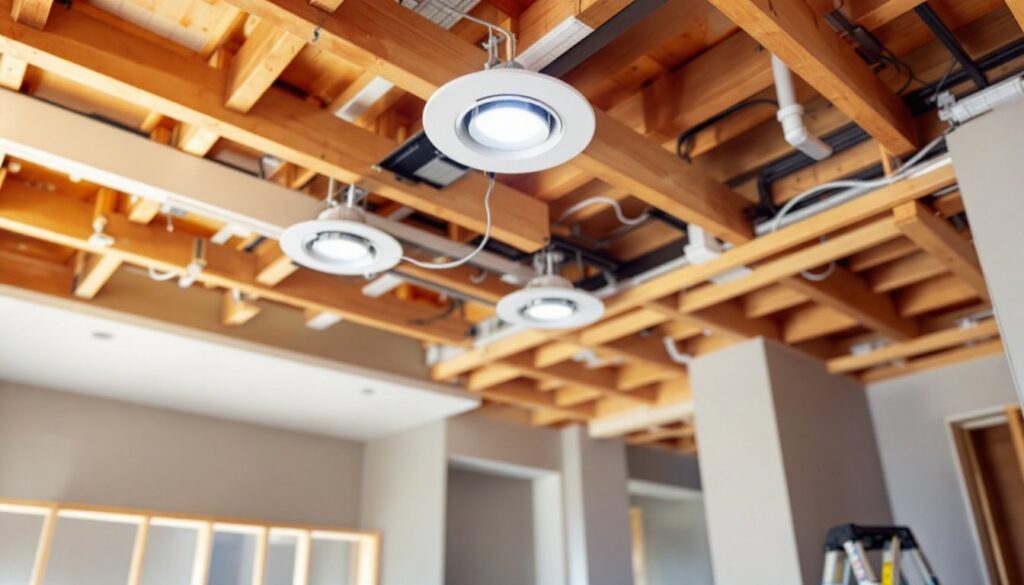
These fixtures come in two main configurations: new construction housings (installed before drywall goes up, nailed directly to joists) and retrofit or remodel housings (designed to clamp into finished ceilings through a hole). Most 3-inch models on the market today are ultra-thin or wafer-style, meaning they have minimal housing depth, often just 1 to 2 inches total. This makes them compatible with shallow ceiling cavities where traditional recessed cans (which can be 6 to 8 inches deep) won’t fit.
Nominal vs. actual sizing matters here. A “3-inch” fixture typically has a 3-inch trim diameter, but the cutout hole in your ceiling might be closer to 3.25 inches to allow the trim bezel to sit flush. Always check the manufacturer’s template before cutting.
Benefits of Choosing 3 Inch Recessed Lights
Compact profile: The biggest advantage is the slim form factor. Many homeowners tackling DIY lighting projects discover that older homes with lath-and-plaster ceilings or second-floor installations over occupied rooms simply don’t have the clearance for traditional 6-inch cans. A 3-inch wafer light solves that.
Cleaner aesthetic: Smaller trim rings mean less visual interruption. In modern or minimalist spaces, a 3-inch fixture blends into the ceiling plane more subtly than a chunky 5- or 6-inch can.
Energy efficiency: Nearly all 3-inch fixtures use integrated LED modules, pulling between 7 and 12 watts while delivering 600 to 900 lumens. Compare that to older halogen cans that could pull 65 watts for similar output.
Easier retrofit: Because most 3-inch models are wafer-style, they install faster in existing ceilings. No need to wrestle a heavy can into a tight joist bay or worry about IC (insulation contact) ratings, the low heat output of LEDs eliminates most thermal concerns.
Flexible placement: The compact size allows tighter spacing without overwhelming a room visually. You can place them 3 to 4 feet apart for even task lighting without the “airport runway” look that oversized fixtures can create.
Types of 3 Inch Recessed Lighting Fixtures
Wafer (Ultra-Thin) Fixtures
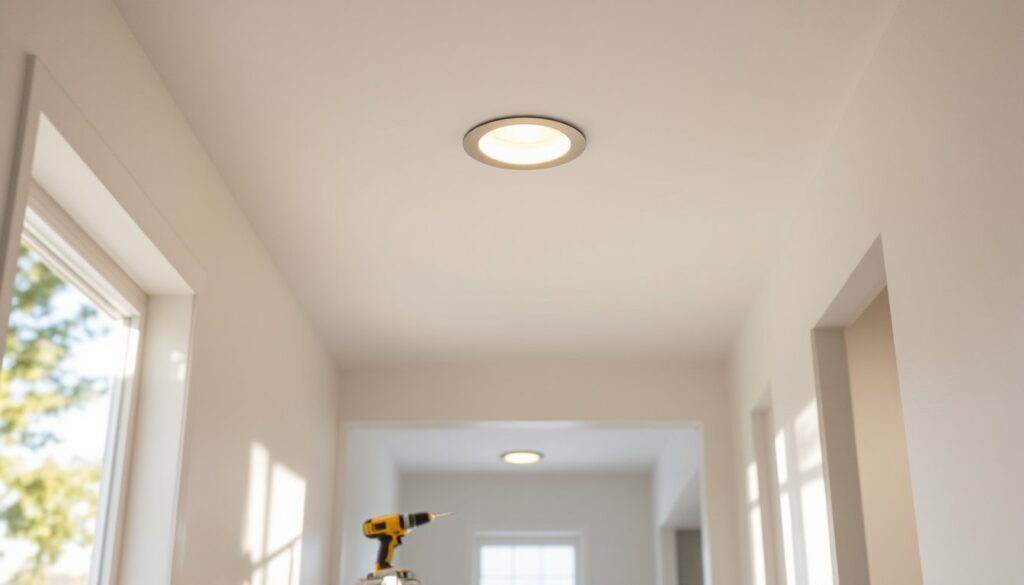
These are the most common 3-inch lights sold today. The entire fixture, driver, LED array, and trim, is integrated into a single disc roughly 1 inch thick. They mount directly to the drywall via spring clips that grab the backside of the ceiling. No separate housing required.
Best for: Retrofits, shallow ceiling cavities, and quick installs.
Houseless Retrofit Kits
Similar to wafer lights but designed to fit into an existing recessed can. If you’re upgrading old halogen fixtures, these kits let you swap the trim and bulb assembly without replacing the housing. Not all kits fit 3-inch housings, so verify compatibility.
Best for: Modernizing older recessed lights without demo work.
New Construction Housings
These are traditional metal cans with an integrated junction box, designed to be nailed between joists before drywall installation. They’re less common in 3-inch sizes but still available for new builds or gut renovations.
Best for: New framing, additions, or major remodels where ceiling access is wide open.
Adjustable/Gimbal Models
Some 3-inch fixtures feature a pivoting inner ring, allowing you to angle the light up to 30 degrees. Useful for accent lighting on artwork or architectural details.
Best for: Galleries, display shelving, or highlighting textured walls.
Where to Use 3 Inch Recessed Lighting in Your Home
Hallways and corridors: Tight spacing (every 4 to 5 feet) provides even illumination without taking up visual real estate. The compact size keeps the focus on the pathway, not the fixtures.
Closets and pantries: A single 3-inch fixture centered in a walk-in closet or pantry delivers plenty of task light. Larger closets might need two fixtures spaced 4 feet apart.
Bathrooms: Install them over vanities (outside the shower zone unless rated for wet locations) or in powder rooms where a single fixture can replace a bulky ceiling-mount light. Check local codes, bathrooms often require GFCI protection on circuits, and wet-rated fixtures in shower/tub areas.
Under cabinets and soffits: In kitchens with soffits or bulkheads, 3-inch lights fit where 4- or 6-inch cans won’t. They’re also popular in custom recessed lighting housing setups for display shelving.
Home theaters and media rooms: Some enthusiasts prefer 3-inch fixtures for ambient lighting behind seating or along side walls, keeping the ceiling uncluttered. Pair with dimmers for full control.
Accent and task lighting: Use adjustable 3-inch fixtures to highlight artwork, bookcases, or architectural niches. The narrow beam spread (often 40 to 60 degrees) focuses light where you want it.
How to Install 3 Inch Recessed Lighting
Safety first: Turn off power at the breaker. Use a non-contact voltage tester to confirm the circuit is dead before touching any wires. Wear safety glasses and have a headlamp or work light handy.
Tools and Materials
- 3-inch recessed lighting fixture(s)
- Hole saw (typically 3.25-inch diameter: check fixture specs)
- Drill (corded or 18V cordless minimum)
- Wire strippers and wire nuts (if not included with fixture)
- Stud finder (to locate joists and avoid cutting into framing)
- Drywall saw or utility knife (for cleanup)
- Voltage tester
- Ladder or step stool
Step-by-Step Installation (Retrofit/Wafer Style)
-
Plan your layout. Mark fixture locations on the ceiling, spacing them 3 to 5 feet apart for general lighting. Avoid placing fixtures closer than 6 inches to a wall or joist (check local fire codes).
-
Check for obstructions. Use a stud finder to locate joists, and if you have attic access, poke your head up to confirm no HVAC ducts, plumbing, or wiring run through your planned holes.
-
Cut the hole. Attach the hole saw to your drill and cut slowly at medium speed. Let the saw do the work, forcing it can grab and twist. A 3.25-inch hole saw is standard for most 3-inch fixtures, but verify with the template included in the box.
-
Run power. If adding a new fixture, you’ll need to tap into an existing circuit (if it has capacity) or run a new circuit from the panel. This often requires fishing wire through walls or attic space. If you’re unfamiliar with residential wiring or if local code requires a permit, hire a licensed electrician. Most jurisdictions require permits for new circuit work.
-
Wire the fixture. Pull the cable through the hole. Strip about 6 inches of sheathing, then strip ½ inch of insulation from each conductor. Connect black to black (hot), white to white (neutral), and bare copper to green or bare (ground) using wire nuts. Tuck wires neatly into the cavity.
-
Mount the fixture. For wafer lights, compress the spring clips on either side and push the fixture up into the hole. The clips will expand and lock against the backside of the drywall. The trim bezel should sit flush with the ceiling.
-
Restore power and test. Flip the breaker back on and test the fixture. If using a dimmer, confirm compatibility, most LED fixtures require an LED-compatible dimmer to avoid flickering or buzzing.
Tip: If installing multiple fixtures on the same circuit, daisy-chain them by running cable from one junction box to the next. Make sure the total wattage doesn’t exceed 80% of the circuit’s capacity (typically 12 to 15 amps for lighting circuits).
Choosing the Right Bulbs and Trim for Your 3 Inch Fixtures
Bulbs (Integrated vs. Replaceable)
Most 3-inch fixtures come with integrated LEDs, the light engine is built in and not user-replaceable. These are rated for 25,000 to 50,000 hours (roughly 10 to 20 years at typical usage). When they eventually dim or fail, you replace the entire fixture.
A few models accept screw-in LED bulbs (typically E26 base), giving you flexibility to change color temperature or upgrade output down the line. The tradeoff: slightly larger housing and less efficient thermal management.
Color Temperature
- 2700K (Warm White): Cozy, incandescent-like glow. Best for living rooms, bedrooms, and dining areas.
- 3000K (Soft White): Neutral and versatile. Works well in kitchens, bathrooms, and hallways.
- 3500K–4000K (Neutral to Cool White): Crisp, task-oriented light. Popular in garages, laundry rooms, and home offices.
- 5000K+ (Daylight): Bright, almost blue-tinged. Use sparingly unless you’re matching natural daylight for photography or detailed work.
Trim Options
Most 3-inch fixtures ship with a basic baffle trim (ribbed interior that reduces glare) in white or brushed nickel. Aftermarket options include:
- Reflector trim: Smooth, mirror-like finish for maximum light output. Can create more glare.
- Adjustable/gimbal trim: Pivoting inner ring to aim the beam.
- Shower trim: Sealed lens for wet locations (look for UL-listed “wet location” or “shower rated”).
Beam Spread
Narrow beam spreads (around 40 degrees) concentrate light, making them ideal for task or accent use. Wide floods (60 to 90 degrees) distribute light evenly for general ambient lighting. Check the fixture’s beam angle spec if you need precise control.
Dimming: Verify that both the fixture and your wall dimmer are compatible. LED fixtures often require ELV (electronic low voltage) or TRIAC dimmers. Using an old incandescent dimmer can cause flickering, buzzing, or premature failure. Many home improvement resources recommend testing a single fixture with your dimmer before installing a full room’s worth.
Conclusion
Three-inch recessed lighting delivers big impact in a small footprint. Whether you’re updating a dated hallway, adding task light to a cramped closet, or chasing a cleaner look in a modern space, these compact fixtures offer flexibility that larger cans can’t match. The installation is straightforward for anyone comfortable with basic electrical work, and the energy savings add up quickly. Just remember: measure twice, cut once, and don’t skip the voltage tester.