Table of Contents
ToggleRecessed lighting transforms a room without taking up visual space. Unlike pendant fixtures or chandeliers that hang down and demand attention, recessed cans disappear into the ceiling while delivering targeted illumination exactly where it’s needed. Whether you’re upgrading a dated kitchen, adding task lighting to a bathroom vanity, or creating ambient glow in a living room, choosing the right recessed fixtures involves more than grabbing the cheapest six-pack at the home center. Housing type, trim style, beam angle, and dimming compatibility all affect performance and longevity. This guide breaks down what matters when selecting recessed lighting for different spaces in your home.
Key Takeaways
- Recessed lighting provides a clean, space-saving aesthetic while delivering flexible, targeted illumination that works with virtually any design style, making it ideal for kitchens, bathrooms, living rooms, and bedrooms.
- Modern LED recessed fixtures are highly energy-efficient, drawing only 10–15 watts while producing output equivalent to 65-watt incandescent bulbs, resulting in significant long-term savings on electricity and bulb replacements over a 25,000+ hour lifespan.
- Choosing the right housing type is critical: IC-rated, airtight housings prevent overheating around insulation and air leaks, directly impacting energy efficiency and fire safety.
- Beam angle, color temperature, and dimming compatibility shape light performance—use narrow 25–35° beams for task lighting, wide 60–90° floods for ambient fill, and match LED fixtures with compatible dimmers to avoid flickering.
- Strategic placement based on ceiling height and room function prevents dark corners and harsh shadows; for example, space 4-inch fixtures 4–5 feet apart in 8-foot ceilings for kitchens, or adjust placement to avoid glare from bed positions in bedrooms.
- Retrofit installations through finished ceilings are practical for existing homes, while proper code compliance, appropriate PPE, and consideration of asbestos risks in older homes are essential for safe, successful recessed lighting installation.
What Makes Recessed Lighting a Top Choice for Modern Homes
Recessed fixtures offer a clean, contemporary look that works with virtually any design style. They sit flush with the ceiling plane, which makes rooms with lower ceilings feel more open compared to hanging fixtures that eat up vertical space.
From a practical standpoint, recessed lights deliver flexible control over illumination. Install them on dimmer switches, and you can shift from bright task lighting during meal prep to soft ambient glow for movie night. Placement matters more than quantity, strategic spacing based on ceiling height and room function prevents dark corners and harsh shadows.
Modern LED recessed fixtures also bring energy efficiency into the equation. A typical 6-inch LED downlight draws 10–15 watts while producing the equivalent output of a 65-watt incandescent bulb. Over the fixture’s 25,000+ hour lifespan, that adds up to significant savings on both electricity bills and bulb replacements.
Another advantage: recessed lighting integrates seamlessly with smart home systems. Many current models support wireless dimming, color temperature adjustment, and voice control without requiring a separate hub. For homeowners planning long-term upgrades, that compatibility future-proofs the investment.
One honest limitation, recessed fixtures require ceiling cavity access. In existing homes, that often means working around insulation, wiring, and joists. If your ceiling’s framed with 2×6 or deeper joists, you’ll have room for standard new-construction housings. Shallower cavities or finished ceilings call for retrofit (remodel) housings designed to install through a ceiling cutout without attic access.
Key Features to Look for When Choosing Recessed Lights
Start with housing type. New-construction housings mount directly to joists before drywall goes up, using adjustable brackets. Retrofit housings use spring clips or twist-lock mechanisms to secure through a finished ceiling. If you’re remodeling or adding lights to an existing room, retrofit is your path, no need to cut huge access holes or tear out drywall.
Next, consider IC vs. non-IC rating. IC (insulation contact) rated housings can safely touch blown-in or batt insulation without overheating. Non-IC fixtures require a 3-inch clearance from insulation, which creates cold spots and energy loss in most climates. Unless you’re installing in a conditioned attic or non-insulated ceiling, spec IC-rated cans.
Airtight housings matter in energy-conscious builds. A standard recessed fixture can leak as much air as a 4-inch diameter hole in your ceiling, driving up heating and cooling costs. Airtight-rated housings use gaskets and sealed construction to minimize air infiltration, critical if you’re aiming for passive house standards or just want to stop paying to heat your attic. Choosing the right recessed lighting housing directly impacts both energy efficiency and fire safety, especially in insulated ceiling applications.
Beam angle and color temperature shape how light behaves in the space. A narrow 25–35° beam creates focused task lighting over counters or reading nooks. Wide 60–90° flood beams provide general ambient fill. For color temperature, 2700K mimics warm incandescent glow, 3000K delivers neutral white suitable for most living spaces, and 4000K+ offers crisp, cool light favored in workshops or garages.
Dimming compatibility isn’t universal. Many LED recessed lights require specific dimmer switches, standard incandescent dimmers often cause flickering, buzzing, or limited range. Look for fixtures explicitly labeled compatible with leading-edge or trailing-edge dimmers, and match them with dimmer switches rated for LED loads.
Trim Styles and Finishes That Match Your Design
Trim is the visible ring that frames the fixture opening. Baffle trim features ribbed interiors that reduce glare, making it the go-to choice for living spaces and bedrooms. Reflector trim uses smooth, mirror-like surfaces to maximize light output, ideal for task-heavy areas like kitchens.
Adjustable or eyeball trims let you pivot the light source to highlight artwork, accent walls, or architectural details. These work well in galleries or living rooms but add complexity to installation since you’ll need to aim each fixture individually.
Finish options typically include white, black, nickel, and bronze. White trim blends into most ceilings and disappears visually. Black creates intentional contrast and suits industrial or modern aesthetics. Metallic finishes coordinate with hardware and fixtures but show dust more readily, plan to wipe them down during routine cleaning.
Shower-rated or wet-location trims include sealed lenses and gaskets to prevent moisture intrusion. These are mandatory for recessed lights installed directly over tub or shower enclosures. Standard trims in damp bathroom locations (outside the shower zone) usually suffice, but check your local building code, some jurisdictions require wet-rated fixtures throughout the bathroom.
Top Recessed Lighting Options for Different Rooms
Lighting needs shift dramatically depending on room function. Kitchens demand bright, shadow-free task lighting. Bedrooms benefit from soft, dimmable ambiance. Hallways need enough illumination for safe navigation without glare.
Kitchen and Bathroom Lighting Needs
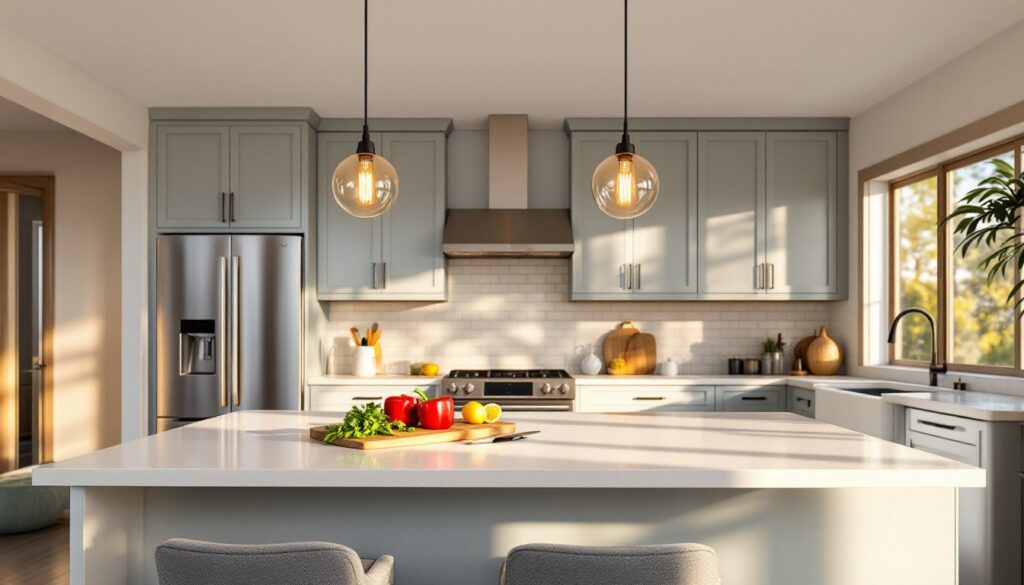
Kitchens require layered lighting, general overhead fill plus targeted task lighting over work surfaces. Space 4-inch recessed cans roughly 4–5 feet apart for even coverage in an 8-foot ceiling. Over islands and counters, install fixtures 18–24 inches from the wall to eliminate shadows cast by wall cabinets.
Color temperature matters here. Most designers recommend 3000K for kitchens, warm enough to make food look appetizing, cool enough to provide clarity for chopping and prep work. If your kitchen doubles as a workspace, consider fixtures with adjustable color temperature to shift between task mode and evening dining ambiance. When planning your overall lighting scheme, explore a range of ceiling light options to complement recessed fixtures with pendants or surface-mount fixtures that add visual interest.
Bathrooms need wet-rated fixtures over showers and tubs. For vanity lighting, recessed cans alone often create unflattering shadows under eyes and chin. Pair overhead recessed lights with wall sconces flanking the mirror for even, shadow-free illumination. Install one or two recessed fixtures centered over the tub for general bathroom fill.
Dimmable LEDs are non-negotiable in bathrooms. Nobody wants full-blast 4000K light at 2 a.m. A dimmer lets you dial down to comfortable nightlight levels without installing separate fixtures.
Living Rooms, Bedrooms, and Hallways
Living rooms benefit from adjustable trims that let you highlight artwork, bookshelves, or architectural features. For general ambient lighting, space fixtures to create overlapping pools of light rather than a rigid grid. A common formula: divide ceiling height by two to find spacing in feet (8-foot ceiling = 4-foot spacing), but adjust based on furniture layout and room shape.
Bedrooms call for softer, warmer light. Stick with 2700K color temperature and install fixtures on dimmers. Position recessed cans to avoid direct glare from typical bed placement, nobody wants a spotlight in their eyes while reading. Consider placing fixtures over closet entries or dressing areas for functional task lighting.
Hallways need enough illumination to prevent trips and falls but shouldn’t feel like airport runways. 3-inch aperture fixtures work well in narrow halls, providing adequate light without overwhelming the space. Install one fixture near each end of the hallway, then space additional fixtures 6–8 feet apart as needed. According to recommendations from lighting specialists, matching fixture output and spacing to room dimensions prevents both dark spots and energy waste.
In homes with kids or aging family members, consider hallway fixtures with nightlight or motion-sensing modes. Some LED recessed fixtures include built-in occupancy sensors that bring lights up to full brightness when someone enters, then dim to a low glow after a set time.
Installation Considerations: New Construction vs. Retrofit
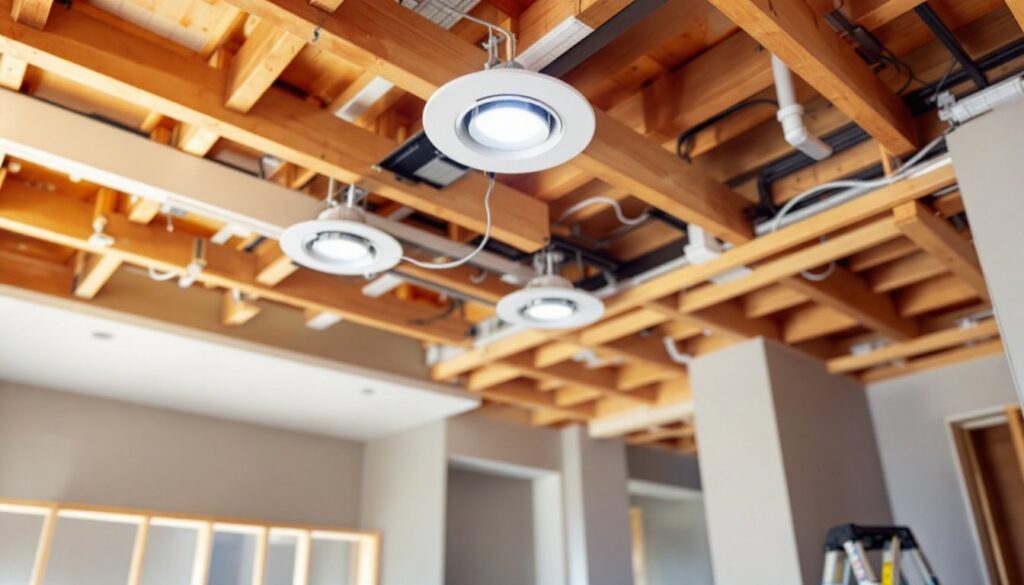
New construction installations happen before drywall goes up. You’ll mount adjustable bracket housings directly to ceiling joists, run electrical cable to each fixture location, and connect everything to a switch leg before the ceiling gets closed in. This approach allows precise placement and easier home runs back to the electrical panel.
Layout matters. Mark each fixture location on the subfloor or ceiling joists, measuring from walls to ensure even spacing. Account for joist locations, if a fixture lands directly on a joist, you’ll need to use an offset hanger or reposition slightly. Most new-construction housings adjust 12–24 inches between joists, giving you some wiggle room.
Make sure your circuit can handle the added load. A typical 15-amp lighting circuit supports up to 1,440 watts. If you’re installing ten 15-watt LED fixtures (150 watts total), you’re well within capacity. But if you’re adding recessed lights to an existing circuit that already powers multiple rooms, calculate total load to avoid nuisance tripping.
Retrofit installations work through finished ceilings. Start by locating joists with a stud finder, you’ll need to position fixtures between joists, not on them. Cut the ceiling opening using a hole saw matched to your fixture size (4-inch, 5-inch, or 6-inch). Most retrofit housings include a template: trace it, drill a starter hole, then cut the opening.
Fishing cable through finished ceilings is the challenging part. If you have attic access, this is straightforward, run 14/2 or 12/2 NM cable from the switch location to each fixture. Without attic access, you may need to cut additional access holes or hire an electrician with wire-fishing tools.
Retrofit housings use spring clips that squeeze through the ceiling cutout, then expand behind the drywall to lock the fixture in place. This means no mounting brackets or screws into joists, just push the housing into the hole and let the clips do the work.
Permits and code compliance: Recessed lighting typically falls under electrical permits. Most jurisdictions require a licensed electrician or homeowner-pulled permit for new circuits or extending existing ones. The National Electrical Code (NEC) mandates proper box fill calculations, wire gauges for circuit length, and IC-rating where insulation is present. If you’re uncomfortable working in a live panel or running new circuits, call a pro. Fishing a few wires is doable for a confident DIYer: upgrading your panel or adding subpanels isn’t.
You’ll also need appropriate PPE: safety glasses (drywall dust and insulation fibers are irritating), dust mask or respirator when cutting into old ceilings, gloves for handling insulation, and a non-contact voltage tester to confirm circuits are dead before touching wires.
Tool requirements for retrofit: hole saw or adjustable recessed light cutting bit, drill, wire strippers, screwdrivers, stud finder, flashlight or headlamp, ladder tall enough to work comfortably. For new construction, add a hammer drill or impact driver for mounting brackets, plus cable staples and a fish tape if running long wire pulls.
One final consideration, if your home was built before 1990, particularly before 1980, there’s a chance your ceiling contains asbestos in popcorn texture or drywall joint compound. Cutting into asbestos-containing material releases fibers that pose serious health risks. If you suspect asbestos, have a sample tested before cutting any holes. Professional abatement isn’t cheap, but it’s non-negotiable.
Many home improvement resources, including This Old House, emphasize the importance of proper planning and code compliance when tackling electrical upgrades. Their tutorials often highlight common mistakes DIYers make, such as improper wire sizing or skipping junction box requirements. When installing recessed lighting over kitchen work zones, particularly in homes where kitchen design emphasizes both function and aesthetics, balancing fixture placement with cabinetry layout prevents shadows and creates a well-lit workspace.
Recessed lighting offers flexibility, clean aesthetics, and energy efficiency, but only when matched properly to the space and installed correctly. Take time upfront to choose the right housing type, trim style, and beam characteristics for each room, and you’ll enjoy decades of trouble-free illumination.