Table of Contents
ToggleMost homeowners spend serious money on decking, then forget about the space underneath. But that shadowy zone below your deck isn’t just wasted square footage, it’s an opportunity. Under deck lighting turns a dim, unusable area into a functional extension of your outdoor living space, whether you’re creating a dry patio, a storage zone, or an outdoor dining area. Beyond the practical benefits, lighting adds visual depth, improves safety on stairs and walkways, and extends the usable hours of your backyard well past sunset. With low-voltage LEDs and straightforward installation methods, even intermediate DIYers can tackle this project over a weekend.
Key Takeaways
- Under deck lighting transforms wasted space beneath your deck into functional, safe outdoor living areas while improving property value and usability after sunset.
- LED systems are the optimal choice for under deck lighting projects, offering low power consumption, cooler operation, and 25,000+ hour lifespans compared to older bulb technologies.
- Recessed fixtures and LED strip lighting each serve different aesthetic needs—recessed lights provide a sleek, modern look while strips offer flexible, continuous illumination along joists and posts.
- Proper planning is essential for under deck lighting success: measure joist spacing, identify power sources, size your transformer with 20% extra capacity, and account for voltage drop over wire distances.
- Low-voltage installations under 30V typically don’t require permits in many jurisdictions, but checking local building codes ensures your project meets GFCI protection and safety standards.
- Annual maintenance like inspecting connections for corrosion, cleaning fixture lenses, and monitoring voltage will keep your under deck lighting system reliable for a decade or more.
Why Under Deck Lighting Is a Game-Changer for Your Outdoor Living
Under deck lighting solves multiple problems at once. First, it addresses safety. Steps, posts, and grade changes that are obvious in daylight become trip hazards after dark. Low-level lighting along joists or beams eliminates those blind spots without glaring into anyone’s eyes.
Second, it expands usable space. If you’ve installed a drainage system beneath your deck, you’ve already created a dry zone that can function as outdoor storage, a workshop, or a second patio. Lighting makes that space genuinely usable rather than a cluttered catch-all.
Third, it adds ambiance without the maintenance headaches of string lights or torches. Waterproof under deck lighting systems are designed to withstand moisture, debris, and temperature swings, so you’re not replacing bulbs every season or untangling cords.
Finally, it boosts property value. Outdoor living features consistently rank high with buyers, and thoughtful lighting signals that the homeowner has invested in both aesthetics and functionality. Just make sure your installation meets local electrical codes, most jurisdictions require GFCI protection for outdoor outlets and fixtures, and some may require a permit for new circuits.
Types of Under Deck Lighting to Consider
Choosing the right fixture type depends on your budget, the structure of your deck, and how much light you actually need. LEDs dominate the market now, they draw less power, run cooler, and last 25,000+ hours compared to incandescent or halogen options.
Recessed LED Lights for a Sleek, Modern Look
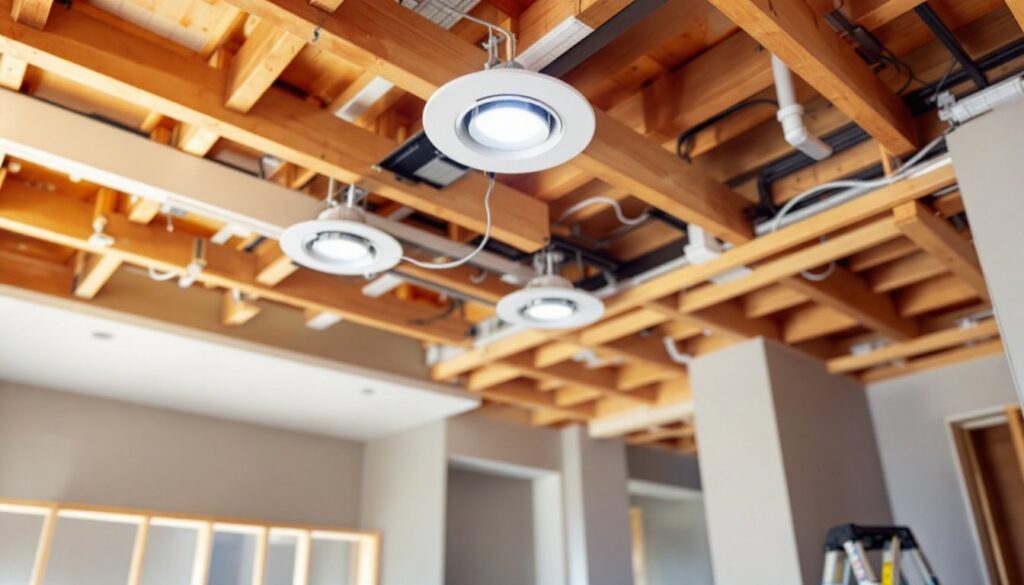
Recessed fixtures mount flush against the underside of your deck boards or joists, creating a clean profile that won’t snag on ladders or storage items. They work especially well if you’re lighting a finished ceiling beneath the deck.
Most recessed under deck lights come in 2- to 4-inch diameters and require a shallow housing, typically 1 to 2 inches deep, which fits neatly between standard 2×8 or 2×10 joists. Look for models rated IP65 or higher for moisture resistance. Some housings are designed specifically for recessed lighting applications and can be retrofitted into existing structures.
Installation involves cutting a hole with a hole saw, running low-voltage wire (usually 12- or 14-gauge stranded copper), and snapping the fixture into place. Spacing these lights 3 to 4 feet apart provides even coverage without harsh shadows. If you’re working alone, a magnetic torpedo level helps keep each fixture aligned while you mark and drill.
Strip Lighting for Continuous Illumination
LED strip lighting offers flexibility that individual fixtures can’t match. You can run strips along the length of joists, around the perimeter of posts, or even trace the outline of built-in seating.
Strips come in various color temperatures, 3000K gives a warm, amber glow similar to incandescent bulbs, while 5000K leans cooler and more clinical. For outdoor living spaces, most people prefer the 3000K to 4000K range.
Quality matters here. Cheap strips use resistor-based circuits that dim unevenly and fail within a year. Look for strips with addressable LEDs or constant-current drivers if you want consistent brightness over long runs. Waterproof ratings vary: IP65 handles splashes, IP67 survives brief submersion, and IP68 can sit in standing water.
Mounting strips requires aluminum channels or clips to prevent sagging and protect the adhesive backing from UV degradation. Run the strips in channels with a diffuser cover to eliminate the “dotted” look of individual diodes and create a smooth wash of light.
Planning Your Under Deck Lighting Installation
Start by sketching your deck’s underside. Measure joist spacing (typically 16 inches on center), note any obstructions like cross-bracing or plumbing, and identify the nearest power source. Most under deck lighting runs on 12V DC, which means you’ll need a transformer to step down standard household 120V AC power.
Choose a transformer with at least 20% more capacity than your total wattage. If you’re running 100 watts of LEDs, use a 120-watt transformer. This headroom prevents overheating and voltage drop, which causes dimming at the end of long wire runs. Transformers should be installed in a weatherproof enclosure or inside the house, not exposed to the elements.
Plan your wire runs next. Low-voltage wire experiences voltage drop over distance, 12-gauge wire can handle about 100 feet before dimming becomes noticeable, while 14-gauge maxes out around 50 feet. If your deck is large, consider multiple transformers or a hub-and-spoke layout where shorter wire runs radiate from a central junction box.
Check your local building codes. Many jurisdictions don’t require permits for low-voltage landscape lighting, but if you’re adding a new circuit or tapping into an existing one, you may need an inspection. NEC Article 411 covers lighting systems operating at 30V or less, and your installation should include proper strain relief, watertight connectors, and GFCI protection at the source.
Decide on a control method. Simple setups use a plug-in timer or photocell. Smarter options include WiFi-enabled controllers that integrate with home automation systems, letting you dim lights or set schedules from your phone.
Step-by-Step Installation Guide for DIY Homeowners
Tools you’ll need:
- Cordless drill with hole saw set (if installing recessed lights)
- Wire strippers and crimpers
- Voltage tester
- Level
- Measuring tape
- Safety glasses and work gloves
Materials checklist:
- LED fixtures or strip lights (IP65+ rated)
- 12V transformer (sized to your total wattage)
- Low-voltage wire (12- or 14-gauge)
- Waterproof wire connectors (heat-shrink or silicone-filled)
- Mounting clips or channels (for strip lights)
- Cable staples or conduit (for exposed wire runs)
Step 1: Install the transformer. Mount it indoors or in a weatherproof box near an existing GFCI outlet. If you’re adding a new circuit, hire a licensed electrician, this is not a DIY task unless you’re comfortable working inside your breaker panel.
Step 2: Run the main wire. Route low-voltage wire from the transformer to your starting point under the deck. Secure it with cable staples every 12 to 18 inches, keeping it tight against joists to avoid snagging. If the wire crosses high-traffic areas, consider running it through Schedule 40 PVC conduit for added protection.
Step 3: Mark fixture locations. For recessed lights, measure and mark centers on joist undersides, ensuring clearance from any obstructions. For strip lights, snap chalk lines along joists or beams where you’ll mount the channels.
Step 4: Install fixtures. For recessed units, drill pilot holes, then use a hole saw to cut the full opening. Feed the fixture’s pigtail wires through, snap the housing into place, and make your wire connections using waterproof connectors, installing proper drainage systems often accompanies lighting projects to ensure longevity. For strips, mount channels first, then press the strip into place and secure it with the channel’s retaining clips.
Step 5: Wire the circuit. Connect each fixture in parallel (positive to positive, negative to negative) rather than daisy-chaining in series, which compounds voltage drop. Use silicone-filled wire nuts or heat-shrink butt connectors, standard twist-on connectors will corrode outdoors.
Step 6: Test before finishing. Power up the transformer and check each light. Use a multimeter to verify voltage at the farthest fixture, it should read within 10% of the transformer’s output (e.g., 10.8V to 13.2V for a 12V system). If voltage is low, upsize your wire or shorten the run.
Step 7: Secure and weatherproof. Bundle excess wire neatly and secure it out of the way. Apply a bead of silicone caulk around recessed fixture edges if the fit isn’t perfectly tight. For strip lights, ensure channel end caps are in place to prevent moisture intrusion.
If you’re uncomfortable with electrical work, there’s no shame in calling a pro for the transformer hookup while handling the fixture installation yourself. According to seasoned DIY resources like Popular Mechanics, breaking a project into manageable phases often leads to better results.
Maintenance Tips to Keep Your Lighting Shining Bright
LED systems are low-maintenance by design, but a little attention goes a long way.
Inspect connections annually. Moisture is the enemy of outdoor wiring. Check wire nuts and connectors for corrosion, especially if you notice flickering or dimming. Re-seal any compromised connections with fresh heat-shrink or silicone.
Clean fixture lenses. Dust, pollen, and spider webs accumulate fast. Wipe down lenses twice a year with a damp microfiber cloth. Avoid abrasive cleaners that can scratch polycarbonate or acrylic covers.
Check for water intrusion. If you spot condensation inside a fixture, the seal has failed. Remove the fixture, dry it completely, and reseal the housing with outdoor-rated silicone. Detailed guidance on waterproof lighting installation techniques can help prevent future issues.
Trim vegetation. Overgrown shrubs or vines can trap moisture against fixtures and block light. Keep a 6-inch clearance around each fixture.
Monitor voltage. If lights dim over time, measure voltage at the transformer and at the end of your run. A drop below 10.8V on a 12V system indicates either a failing transformer or undersized wire. Replacing the transformer is straightforward: re-wiring is more involved but sometimes necessary.
Replace failed LEDs promptly. Even high-quality strips can develop dead diodes. Most strips are sectioned every few inches with cut marks, snip out the failed section and splice in a replacement using waterproof connectors.
With proper installation and a bit of annual upkeep, under deck lighting will serve reliably for a decade or more, turning an overlooked corner of your property into one of its best features.