Table of Contents
ToggleFive-inch recessed lights hit a sweet spot for residential installations. They’re compact enough for standard ceiling joists spaced at 16 inches on center, powerful enough to light most rooms effectively, and energy-efficient when fitted with LED retrofit kits or integrated LED housings. Whether replacing outdated fixtures or planning a remodel, understanding the differences between new construction and remodel housings, IC vs. non-IC ratings, and trim styles will prevent headaches during installation and ensure code-compliant results.
Key Takeaways
- 5 inch recessed lighting provides the ideal balance of light output, aesthetics, and cost-effectiveness for most residential spaces, making them a popular choice for both new construction and remodel projects.
- Choose IC-rated, airtight housings for insulated ceilings to comply with building codes, prevent fire hazards, and reduce heating and cooling losses by 10–15%.
- LED retrofit kits or integrated modules draw just 10–15 watts while delivering 650–850 lumens—approximately 80% less energy consumption than traditional incandescent bulbs over a 25,000-hour lifespan.
- Proper spacing (4–5 feet in kitchens, 6–8 feet in living areas), color temperature selection (3000K–4000K for task lighting, 2700K for ambient), and fixture type determine whether recessed lighting achieves its intended effect.
- Turn off power at the breaker, verify with a voltage tester, check local codes for permits, and consider hiring a licensed electrician to avoid fire hazards from improper wiring and junction box installation.
- Avoid common mistakes like using non-IC housings in insulated ceilings, cutting joists, skipping airtight housings, and ignoring dimmer compatibility—each can lead to code violations, safety risks, or post-installation frustration.
What Is 5 Inch Recessed Lighting and Why It’s Popular
A 5-inch recessed light (sometimes called a can light or downlight) refers to the aperture diameter of the trim, the visible opening in the ceiling. The actual housing that sits above the drywall is larger, typically 7 to 8 inches in diameter, to accommodate the electrical components and insulation clearances.
This size became the go-to for residential applications because it balances light output with unobtrusive aesthetics. Unlike bulkier 6-inch fixtures that dominate low ceilings or tiny 3-inch lights that struggle to illuminate larger spaces, 5-inch cans provide adequate coverage without overwhelming the room visually.
Most 5 in. recessed lighting fixtures accept standard medium-base (E26) bulbs or integrated LED modules. The compact footprint means they fit between ceiling joists without requiring structural modifications in most cases, making them a favorite for both new construction and retrofit projects.
Benefits of Installing 5 In. Recessed Lights in Your Home
Space efficiency is the primary draw. These fixtures sit flush with the ceiling, preserving headroom, critical in basements or rooms with 8-foot ceilings. There’s no dangling hardware to bump into or collect dust.
Versatility comes next. Use them for general ambient lighting in living rooms, task lighting over kitchen counters, or accent lighting to highlight artwork. Adjustable gimbal trims allow the beam to pivot up to 35 degrees, directing light exactly where it’s needed.
Energy savings add up when using LED retrofit kits or integrated LED housings. A typical 5-inch LED recessed light draws 10–15 watts while delivering 650–850 lumens, equivalent to a 65-watt incandescent bulb. That’s about 80% less energy consumption. Over a 25,000-hour rated lifespan, the savings on your electric bill are measurable.
Clean aesthetics matter, too. Without visible fixtures, the ceiling becomes a blank canvas. This minimalist approach works in modern, traditional, and transitional interiors alike. Plus, dimmer-compatible models let you adjust ambiance from bright task lighting to soft mood lighting.
Types of 5 Inch Recessed Lighting Fixtures
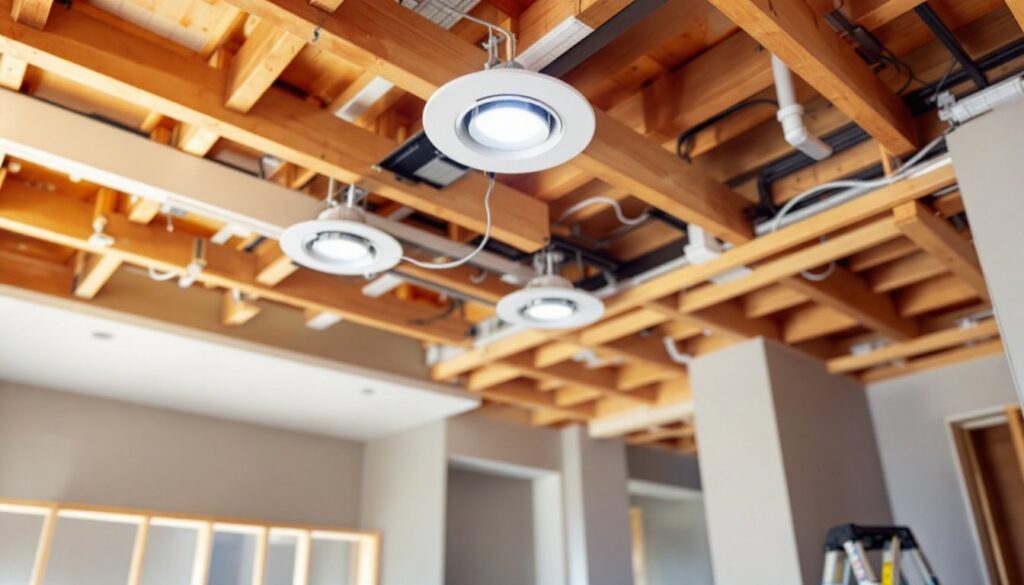
New construction housings install before drywall goes up. They have adjustable brackets that nail directly to ceiling joists. Use these when framing is exposed, it’s the easiest installation method and provides the most secure mounting.
Remodel (old-work) housings are designed for finished ceilings. They feature spring-loaded clips or twist-lock tabs that grip the drywall from below. You’ll cut a hole with a hole saw, feed the housing through, and secure it without attic access. Expect to pay $2–5 more per fixture compared to new construction models.
IC-rated housings are approved for direct contact with insulation. If your ceiling is insulated (most are), you need IC-rated cans to prevent fire hazards. Non-IC housings require a 3-inch clearance from insulation, which often means compressing or moving insulation, a code violation in many jurisdictions.
Airtight housings include gaskets that seal against air leakage. In energy-efficient homes or where building codes require it (like California’s Title 24), airtight IC-rated cans prevent conditioned air from escaping into the attic. They cost about $10–15 more per unit but pay back through reduced heating and cooling costs.
Shallow-depth housings fit where ceiling cavities are limited, above drop ceilings, in soffits, or where ductwork intrudes. Standard housings need 6–8 inches of clearance: shallow versions work in spaces as tight as 3.5 inches.
How to Choose the Right 5 In. Recessed Lights for Each Room
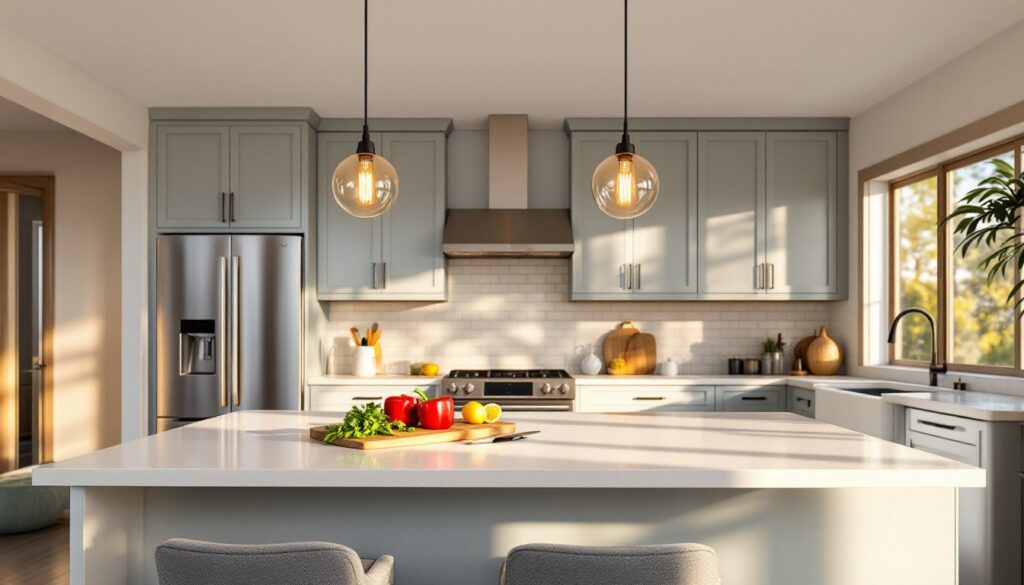
Kitchens demand bright, neutral task lighting. Aim for 3000K–4000K color temperature (cool white) and space fixtures 4–5 feet apart for even coverage over counters and islands. Use narrow flood trims (35–40 degree beam spread) to concentrate light on work surfaces. Damp-rated housings are smart near sinks or dishwashers.
Living rooms benefit from warmer tones, 2700K–3000K (soft white), to create a relaxed atmosphere. Space fixtures 6–8 feet apart for ambient lighting, or use adjustable gimbal trims to accent artwork or architectural features. Pair with dimmer switches (compatible with your LED driver) for flexibility.
Bathrooms require damp-rated or wet-rated housings depending on proximity to showers or tubs. Wet-rated fixtures have sealed lenses: damp-rated models resist moisture but aren’t submersion-proof. Use 3000K–4000K for accurate color rendering when applying makeup or shaving. Install at least two fixtures to eliminate shadows.
Bedrooms call for soft, dimmable lighting. Stick with 2700K for a cozy feel and space fixtures to avoid harsh glare. Consider placing them away from the bed area to prevent light directly overhead while sleeping. Adjustable trims let you redirect light toward closets or reading nooks.
Hallways and stairways need uniform spacing, typically one fixture every 6 feet, to eliminate dark spots and improve safety. Use standard baffle trims to reduce glare and choose housings that meet local fire-resistance ratings for ceiling assemblies.
Step-by-Step Installation Guide for 5 Inch Recessed Lighting
Before starting: Turn off power at the circuit breaker and verify it’s off with a non-contact voltage tester. Most jurisdictions require permits for new electrical circuits. Check local codes, some areas allow homeowners to pull permits: others require a licensed electrician.
Wear safety glasses and a dust mask if working in insulated attics. Ear protection is necessary when using a hole saw.
Planning and Layout
- Map fixture locations on the ceiling. Use painter’s tape to mark spots, keeping lights at least 3 feet from walls to avoid shadows and 6 feet apart for general lighting.
- Locate ceiling joists with a stud finder. Standard joists run 16 inches on center. Plan fixtures between joists to avoid cutting structural members.
- Check for obstructions in the attic or ceiling cavity, ductwork, wiring, plumbing, or trusses. Adjust placement as needed.
Cutting Holes
- Use the template provided with your housing (usually a paper circle). Trace it on the ceiling.
- Drill a pilot hole at the center, then cut with a 5-inch hole saw (for 5-inch trims). A drywall saw works but leaves rougher edges. If you’re installing multiple fixtures, a hole saw on a drill saves time.
- Remove insulation temporarily if working from above to access the cutout.
Wiring
- Run NM cable (Romex) from the switch or junction box to each fixture location. 14/2 wire handles 15-amp circuits: 12/2 wire is required for 20-amp circuits. Leave 18 inches of slack at each fixture.
- Strip the cable sheath back 8 inches. Strip individual wires 3/4 inch.
- Connect wires inside the housing’s junction box: black (hot) to black, white (neutral) to white, bare copper (ground) to the green screw or ground wire. Use wire nuts rated for the wire gauge. Follow NEC-compliant practices, and consider referencing trusted resources on home wiring standards for additional guidance.
Installing the Housing
- For new construction: Nail or screw the adjustable brackets to the joists, centering the housing over the marked location.
- For remodel housings: Push the housing through the hole from below. Tighten the clips or twist the tabs until the housing is snug against the ceiling. Don’t overtighten, drywall can crack.
- Secure the cable with the built-in cable clamp inside the junction box.
Attaching the Trim
- Install the LED retrofit kit or screw in a bulb, depending on your fixture type. Integrated LED housings have drivers pre-wired.
- Attach the trim using the spring clips or twist-lock ring. Trims should sit flush with the ceiling. If there’s a gap, adjust the housing depth.
- Restore power and test each fixture. If a light doesn’t turn on, verify wire connections and check the breaker.
For complex layouts or homes with older wiring, hiring a licensed electrician is the safer route. Mistakes with junction box ratings or improper grounding create fire risks.
Common Mistakes to Avoid When Installing 5 In. Recessed Lights
Using non-IC housings in insulated ceilings is the most frequent error. If insulation touches a non-IC housing, heat buildup can trip thermal cutoffs or, worse, ignite materials. Always choose recessed lighting housing rated for insulation contact when applicable.
Ignoring ceiling depth leads to housings that don’t fit. Measure the space between the drywall and the roof deck or floor above. Standard housings need 6–8 inches of clearance: shallow models work in tighter spaces.
Overlighting or underlighting happens when spacing is off. A room with too many fixtures feels sterile: too few leaves dark corners. Use the formula: Room area (sq ft) ÷ 20 = total wattage needed. Divide by fixture wattage to estimate quantity. For example, a 200-square-foot kitchen needs about 10 watts per square foot, or roughly six 15-watt LED fixtures.
Skipping airtight housings in climate-controlled homes wastes energy. Air leaks around recessed lights can account for 10–15% of heating and cooling loss. Spending a few extra dollars per fixture recoups costs through lower utility bills.
Cutting joists or rafters to fit a fixture is a structural no-go and a code violation. If a joist is in the way, move the fixture location. Never compromise structural integrity for aesthetics.
Forgetting dimmer compatibility frustrates homeowners post-installation. Not all LED drivers work with standard dimmers. Check the fixture specs and match a compatible dimmer switch, manufacturers list approved models. Incompatible combinations cause flickering or buzzing.
Not accounting for fire-rated ceilings is risky in multi-story homes or buildings. Fire-rated assemblies require fire-rated housings that maintain the ceiling’s fire resistance. Consult guides on installation best practices to ensure compliance.
Leaving gaps around trims looks sloppy. If the trim doesn’t sit flush, the housing may be installed too deep or the drywall opening is oversized. Use trim rings to cover minor gaps: major issues require reinstalling the housing.
Conclusion
Five-inch recessed lights deliver reliable, efficient illumination without the visual clutter of surface-mounted fixtures. Choosing the right housing type, IC vs. non-IC, new construction vs. remodel, airtight or standard, prevents code violations and performance issues. Proper spacing, color temperature selection, and attention to prep work make the difference between a polished result and a frustrating redo. Whether tackling installation solo or hiring help for the electrical rough-in, knowing the details ensures the job gets done right the first time.