Table of Contents
ToggleKitchen islands have become the heart of modern homes, a place to prep meals, grab breakfast, or gather with friends over a glass of wine. But overhead fluorescent panels or a single dome light won’t cut it if you want functional task lighting that also looks good. That’s where pendant lights step in. They’re one of the most versatile, visually impactful upgrades you can make, and installation is within reach for most DIYers with basic electrical knowledge. Whether you’re updating an existing island or finishing a new kitchen remodel, getting pendant placement, sizing, and style right makes all the difference.
Key Takeaways
- Pendant lighting over kitchen islands delivers concentrated task lighting while acting as a design anchor, breaking up vertical space and eliminating shadows on the work surface.
- The correct pendant sizing follows a simple rule: measure your island width in inches and select shades between 12–20 inches in diameter for a 60-inch island, with spacing of 24–30 inches center-to-center.
- Hang pendants 30–36 inches above the countertop for standard islands or 36–40 inches for bar-height seating to ensure optimal light delivery without glare.
- Choose warm white bulbs (2700K–3000K) for traditional kitchens or neutral white (3500K–4000K) for modern spaces, and always use dimmable LED bulbs with a CRI of 90+ for natural color rendering.
- Always install pendant lighting fixtures in a UL-listed electrical box rated for the fixture’s weight, and include a dimmer switch to adjust brightness for both task lighting and ambient dining.
Why Pendant Lights Are Perfect for Kitchen Islands
Pendants do two things exceptionally well: they deliver concentrated light exactly where you need it, and they act as design anchors in an otherwise open space.
Unlike recessed cans or flush-mount fixtures that spread light broadly, pendants hang lower and focus illumination on the island surface. This is crucial for food prep, recipe reading, and keeping your knife work visible. The directed light also reduces shadows on the counter, making tasks safer and more comfortable.
From a design standpoint, pendants break up vertical space in kitchens with high or vaulted ceilings. They add visual weight without blocking sightlines, important in open-concept layouts where the kitchen flows into the living or dining area. Many homeowners use lighting fixtures as a way to introduce color, texture, or a distinct material (like blown glass, hammered metal, or woven fiber) that contrasts with cabinetry.
Pendants also offer flexibility. You can dim them for ambient lighting during dinner parties or crank them up for meal prep. Most are compatible with standard dimmer switches (verify bulb compatibility), and because they’re hard-wired, they free up counter outlets for appliances.
Choosing the Right Size and Number of Pendants
Getting the proportions right is half the battle. Too small, and your pendants disappear visually. Too large, and they overwhelm the island or obstruct movement.
As a baseline, measure the width of your island in inches, then convert that to a total pendant diameter range. For example, a 60-inch-wide island can support pendant shades between 12 and 20 inches in diameter (combined, if using multiples). If you’re installing three smaller pendants, you might choose 8- to 10-inch shades: for a pair of larger fixtures, 15 to 18 inches each works well.
How Many Pendants Do You Need?
The answer depends on island length and the style of fixture. Here’s a practical breakdown:
- Islands 4 to 5 feet long: Two pendants, spaced evenly.
- Islands 6 to 7 feet long: Three pendants work best for balanced coverage.
- Islands 8+ feet long: Consider three large pendants or four to five smaller ones.
Space pendants 24 to 30 inches apart, measured from center to center. Leave at least 6 inches of clearance from the pendant edge to the island edge to avoid head-bumping when someone leans over the counter.
If you’re using a single linear fixture (like a multi-bulb chandelier or a long drum shade), aim for a fixture that’s roughly two-thirds the length of the island. According to Remodelista, linear pendants have become a go-to in modern farmhouse and minimalist kitchens for their clean lines and even light distribution.
Popular Pendant Styles for Kitchen Islands
Pendant style should complement your kitchen’s overall aesthetic, but don’t be afraid to use it as an accent that adds personality.
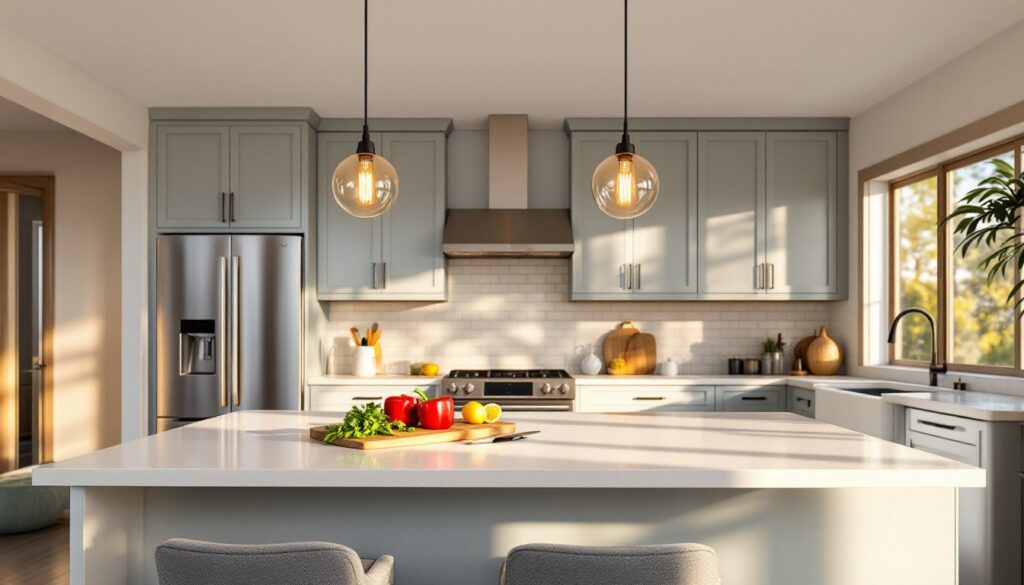
Globe pendants (clear or frosted glass spheres) are timeless and work in both traditional and contemporary kitchens. They provide 360-degree light output, making them good for general illumination. Milk glass or seeded glass versions soften the bulb glare.
Drum shades offer a cleaner, more architectural look. They’re popular in transitional kitchens and pair well with shaker cabinetry. Fabric drum shades provide warm, diffused light, while metal drums create sharper shadows and a more industrial feel.
Industrial-style pendants (metal cones, barn lights, or cage fixtures) suit loft kitchens, urban remodels, and rustic spaces. These typically have exposed bulbs or Edison-style filament bulbs, so choose dimmable LEDs if you want adjustable brightness.
Mini pendants are small, streamlined fixtures, often just 5 to 8 inches in diameter. They’re ideal for narrow islands or when you want multiple points of light without visual clutter. Designer vintage lighting fixtures in mini pendant form can add character to period kitchens.
Lantern-style pendants (often with metal frames and glass panels) bring a hint of classic or coastal charm. They work especially well in kitchens with painted cabinetry and decorative hardware.
When selecting a finish, coordinate with cabinet hardware, faucet finish, and appliance color. Matte black, brushed nickel, aged brass, and oil-rubbed bronze are all widely available and hold up well in kitchen environments.
Installation Height and Spacing Guidelines
Pendant height is one of the most common mistakes in kitchen lighting, and it’s also one of the easiest to get right with a tape measure and a little planning.
The standard rule: hang pendants so the bottom of the shade sits 30 to 36 inches above the island countertop. This range ensures the light reaches the work surface without shining directly into anyone’s eyes when they’re standing or seated on a stool.
If your island has bar-height seating (counter is 42 inches high instead of the standard 36 inches), raise the pendants proportionally, aim for 36 to 40 inches above the counter.
Ceiling height also matters. In kitchens with 8-foot ceilings, stick to the lower end of the range (30 to 32 inches above the counter) to avoid a cramped feeling. With 9- or 10-foot ceilings, you have more flexibility and can use longer drop rods for a dramatic effect, as seen in many ceiling lights installations in open-plan homes.
Horizontal spacing should distribute light evenly. For three pendants over a 6-foot island, position them at roughly 18-inch intervals from center to center, leaving equal space from each end. Use painter’s tape on the ceiling to mock up placement before cutting any holes.
One pro tip: if you’re installing pendants over an island that’s not yet in place (during a remodel), double-check the island’s final position. Cabinets sometimes shift an inch or two during installation, and you don’t want off-center pendants.
Lighting Temperature and Bulb Selection
Bulb choice affects both the quality of light and your electric bill. Most pendant fixtures accept standard E26 medium-base bulbs, but always verify the maximum wattage rating on the fixture label.
Color temperature is measured in Kelvin (K). For kitchens, most designers recommend 2700K to 3000K (warm white) for a cozy, inviting feel, or 3500K to 4000K (neutral to cool white) for task-focused brightness. Warm white works well in traditional or farmhouse kitchens: neutral white suits modern and contemporary styles.
Avoid bulbs above 4000K in residential kitchens, they veer into commercial territory and can make food look unappetizing.
LED bulbs are the go-to for efficiency and longevity. A quality LED uses about 9 watts to produce the equivalent of a 60-watt incandescent and lasts 15,000 to 25,000 hours. Look for bulbs with a CRI (Color Rendering Index) of 90 or higher to ensure colors, especially food, look natural.
If you’re using a dimmer switch (highly recommended for kitchen pendants), verify that your bulbs are dimmable LEDs. Not all LEDs dim smoothly: cheaper models may flicker or hum. Brands like Philips, GE, and Cree offer reliable dimmable options.
For exposed-bulb pendants (like Edison-style fixtures), consider LED filament bulbs. They mimic the warm glow of incandescent filaments but use a fraction of the energy. Most are available in 2200K to 2700K for an amber, vintage look.
Wattage requirements vary by fixture and island size. As a rule of thumb, aim for a combined 150 to 200 watts of incandescent-equivalent light for a standard 6-foot island (that’s roughly 25 to 35 actual watts if using LEDs). Adjust based on ceiling height and whether you have additional ambient or task lighting.
Common Mistakes to Avoid When Installing Island Pendants
Even experienced DIYers can stumble on pendant installation. Here’s what to watch for.
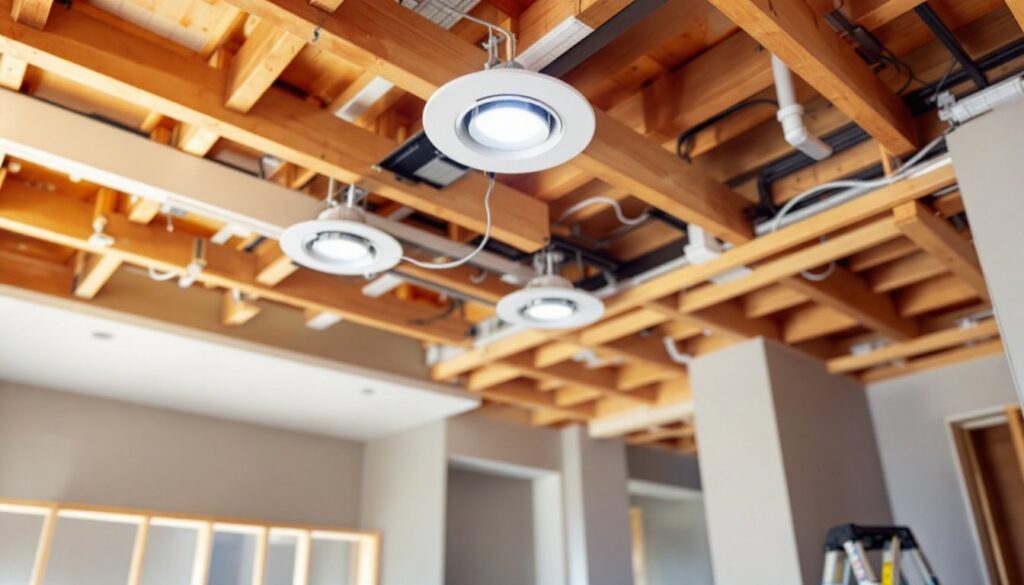
Installing without a junction box or using an undersized box. All pendant fixtures must be supported by a UL-listed electrical box rated for the fixture’s weight. Pancake boxes work for lightweight pendants (under 10 pounds), but heavier glass or metal fixtures need a standard-depth box or a ceiling fan-rated box. If you’re not confident working with electrical wiring, hire a licensed electrician. Most jurisdictions require a permit for new electrical work, and improperly installed fixtures are a fire hazard.
Ignoring the island’s function. If your island includes a cooktop or sink, pendant placement must account for clearances. The National Electrical Code (NEC) doesn’t allow light fixtures directly over cooktop burners (fire risk), and you’ll want to avoid placing pendants where they’ll be splashed by the sink.
Choosing the wrong finish for a high-moisture environment. Kitchens see grease, steam, and temperature swings. Opt for powder-coated or sealed metal finishes rather than untreated brass or copper, which can tarnish quickly. Glass and ceramic are naturally moisture-resistant.
Skipping the dimmer. Fixed-brightness pendants limit your flexibility. A standard slide or rotary dimmer costs $15 to $30 and takes ten minutes to install (power off at the breaker first). Make sure it’s compatible with LED bulbs if that’s what you’re using.
Poor wire management. Pendants with adjustable cord or chain length often come with excess wiring coiled inside the canopy. If you don’t secure it properly, the canopy won’t sit flush against the ceiling. Use wire nuts, fold the slack neatly, and ensure no bare copper is exposed.
Hanging pendants at the wrong stage of a remodel. Install pendants after painting and backsplash work to avoid splatters and damage. But rough-in the electrical boxes and wiring early, ideally before drywall if you’re doing a full remodel.
Finally, don’t forget about bulb replacement access. Some pendants have shades that require two hands and a stepladder to remove. If you’re over 50 or have mobility issues, choose fixtures with easy-access shades or hinged designs.
Pendant lighting over a kitchen island isn’t just a design choice, it’s a functional upgrade that improves task visibility, enhances ambiance, and ties your kitchen’s aesthetic together. Measure carefully, choose the right style and bulb temperature, and don’t skip the dimmer. With a few hours of work and attention to detail, you’ll have a lighting setup that works as hard as you do.