Table of Contents
ToggleGood kitchen lighting isn’t just about swapping out a fixture or adding a dimmer switch. It’s the difference between chopping onions in a shadow and actually seeing what you’re doing. Poor lighting makes every task harder, from reading recipes to spotting spills before they become permanent stains. Get it right, and the kitchen transforms from a functional workspace into the actual heart of the home, well-lit, welcoming, and surprisingly easy to work in. This guide breaks down the three core lighting types, matches fixtures to different layouts, and walks through planning a functional lighting scheme that won’t leave anyone working in the dark.
Key Takeaways
- Kitchen lighting design requires three distinct layers—ambient, task, and accent lighting—each serving a specific purpose to create a functional and welcoming space.
- Task lighting over work zones like countertops, stoves, and sinks is critical for safety; under-cabinet LED strips rated at 300-500 lumens per foot eliminate shadows where injuries and cooking mistakes happen most.
- Ambient lighting should provide 50-75 lumens per square foot; recessed cans spaced 4-6 feet apart and dimmable LED bulbs at 2700K-3000K create warm, energy-efficient overhead illumination.
- Different kitchen layouts—galley, L-shaped, U-shaped, and open-concept—require tailored fixture placement; track lighting and pendant lights over islands or peninsulas define zones and prevent uneven shadows.
- Proper planning involves mapping work zones, calculating total lumens needed, choosing dimmable LED bulbs, ensuring circuit separation, and testing each lighting layer independently before finishing.
Understanding the Three Types of Kitchen Lighting
Every effective kitchen lighting plan layers three distinct types: ambient, task, and accent. Think of them as teammates, each handling a specific job. Skip one, and the whole setup feels incomplete.
Ambient Lighting: Your Kitchen’s Foundation
Ambient lighting is the base layer, general illumination that lets someone walk through the kitchen safely at any hour. It typically comes from ceiling-mounted fixtures like flush mounts, semi-flush mounts, or recessed cans. For a kitchen, aim for roughly 50-75 lumens per square foot of ambient light. A 120-square-foot kitchen would need around 6,000 to 9,000 total lumens from overhead sources.
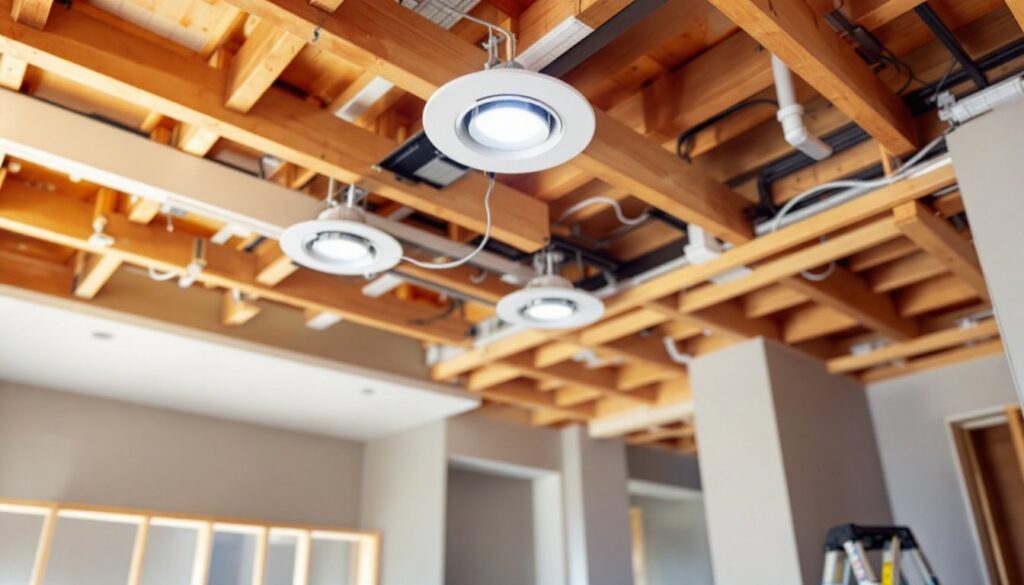
Recessed lighting remains the go-to for clean, modern kitchens. Space 4-inch cans about 4 feet apart, or 6-inch cans at 6-foot intervals. If the ceiling height exceeds 9 feet, increase spacing slightly. LED bulbs (2700K-3000K color temperature) provide warm, neutral light without the heat buildup of incandescent.
Central fixtures like chandeliers or pendant clusters work well over islands or in eat-in areas, but they don’t usually provide enough spread for the whole room. Pair them with perimeter recessed lights or track lighting to avoid dead zones.
Task Lighting: Illuminating Work Zones
Task lighting targets specific work areas: countertops, stovetops, sinks, and prep zones. This is where most kitchen injuries and mistakes happen, so direct, shadow-free light is non-negotiable.
Under-cabinet lighting is the workhorse here. LED strip lights or puck lights mount to the underside of wall cabinets, washing light across countertops. Install them toward the front edge of the cabinet to minimize shadows from your hands and cutting boards. Hardwired options look cleaner, but plug-in strips work fine for renters or quick upgrades. Look for strips rated at 300-500 lumens per foot for prep areas.
Over the sink, a small pendant or recessed can directly above prevents working in your own shadow. Same logic applies above the range, either a built-in range hood with integrated lighting or a dedicated recessed fixture centered over the cooktop.
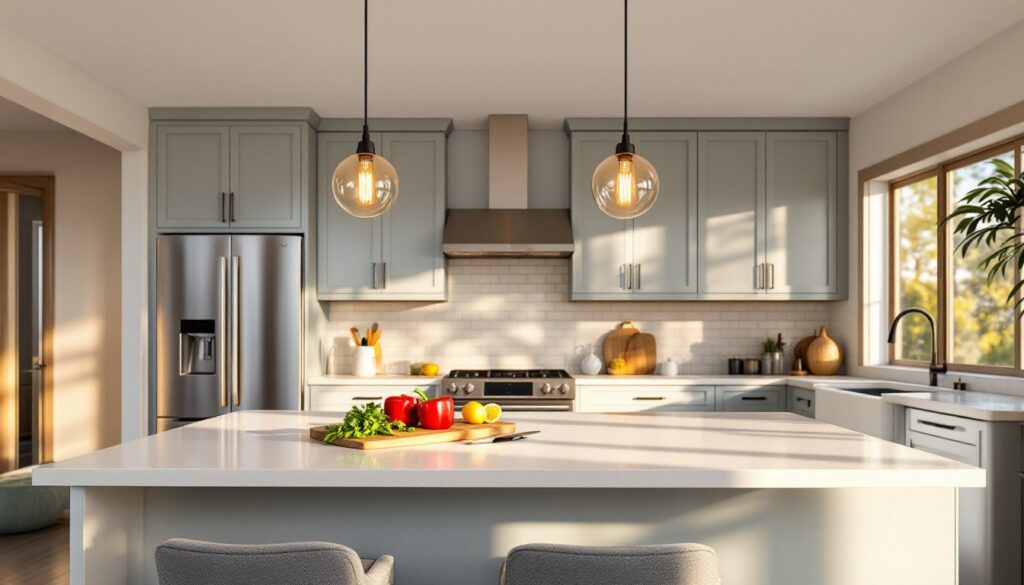
For islands, pendant lights hung 30-36 inches above the countertop provide both task lighting and visual interest. Space multiple pendants evenly, typically 24-30 inches apart for balance.
Accent Lighting: Adding Depth and Drama
Accent lighting isn’t strictly necessary, but it’s what elevates a kitchen from functional to finished. It highlights architectural features, glass-front cabinets, or open shelving.
In-cabinet lighting showcases dishware or glassware behind glass doors. Small LED pucks or strips inside the cabinet create a soft glow. Toe-kick lighting, LED strips installed at the base of lower cabinets, adds a floating effect and acts as subtle nighttime navigation without the glare of overhead lights.
Cove lighting above cabinets (if there’s a gap to the ceiling) washes the ceiling with indirect light, making the room feel taller. Pair this with dimmers to adjust mood for different times of day.
Best Lighting Fixtures for Different Kitchen Layouts
Not all kitchens are created equal, and fixture choices should match the layout and workflow.
Galley kitchens benefit from a central run of recessed lights down the length of the space, supplemented by under-cabinet strips on both sides. Avoid a single row of fixtures on one side only, it creates uneven light and shadows.
L-shaped and U-shaped kitchens need fixtures that cover each leg of the layout. A grid of recessed cans works, but track lighting offers flexibility if the room has multiple work zones at varying distances from walls. Track heads adjust to aim light exactly where it’s needed. Consider placing pendant lights over any peninsula or breakfast bar to define that zone visually.
Open-concept kitchens blur into dining or living areas, so lighting needs to signal the transition. Pendants over an island or dining table create a clear boundary. Use separate switches or smart controls to adjust ambient lighting independently in the kitchen versus adjacent spaces. This prevents the whole area from feeling like an operating room when someone just wants to grab a midnight snack.
Small kitchens can’t handle bulky fixtures. Slim LED panels flush-mount to the ceiling and distribute light evenly without eating up headroom. Under-cabinet lighting becomes even more critical here, as wall cabinets often block overhead light from reaching counters. If there’s no island, a single well-placed recessed fixture in the center works better than multiple smaller ones that crowd the ceiling.
For kitchens with vaulted or sloped ceilings, adjustable-angle recessed housings (often called “slope” or “sloped ceiling” cans) keep the light aimed down instead of at an angle. Pendant fixtures on sloped ceilings should hang on adjustable rods or chains to maintain proper clearance and visual alignment.
Planning Your Kitchen Lighting Layout
A lighting plan starts with measuring the space and identifying work zones, then matching fixtures and circuits to meet both function and code.
Step 1: Map the Room and Zones
Sketch the kitchen to scale on graph paper or use a digital layout tool to plot fixture locations. Mark the sink, range, refrigerator, and primary prep areas. Note any existing electrical boxes, moving them later costs money and hassle.
Step 2: Calculate Lighting Needs
For ambient lighting, multiply square footage by 50-75 lumens. A 150-square-foot kitchen needs 7,500-11,250 lumens total. Divide that by the number of planned fixtures to determine lumens per bulb or fixture. Example: Eight recessed cans would need roughly 950-1,400 lumens each.
Task zones need brighter, concentrated light. Under-cabinet runs should deliver at least 300 lumens per linear foot. A 6-foot counter run needs a minimum of 1,800 lumens.
Step 3: Choose Fixtures and Bulb Temperatures
Stick with LED bulbs for longevity and efficiency, most last 25,000-50,000 hours and use a fraction of the wattage of incandescent. 2700K (warm white) works well for ambient and accent lighting, while 3000K (soft white) or 3500K (neutral white) is better for task areas where color accuracy matters (like checking if chicken is fully cooked).
Dimmable LEDs paired with compatible dimmer switches offer flexibility. Not all LED bulbs dim smoothly, check the packaging for “dimmable” labeling and match it to an LED-rated dimmer to avoid flickering.
Step 4: Plan Circuits and Switches
Kitchen lighting typically requires at least two circuits: one for ambient/overhead and one for task lighting. National Electrical Code (NEC) requires GFCI protection for outlets within 6 feet of a sink, but lighting circuits usually don’t require GFCI unless the fixture is directly above or within the sink area. Check local codes, some jurisdictions have specific rules for wet locations.
Hardwiring under-cabinet lighting is cleaner but requires running cable through walls or cabinets. If the cabinets are already installed, plug-in LED strips with a hidden outlet inside an upper cabinet work as a solid alternative.
If adding or relocating fixtures, pulling permits is often required. Any new circuits, junction boxes, or changes to the electrical panel typically need inspection. Hiring a licensed electrician makes sense if the plan involves more than swapping fixtures on existing boxes.
Step 5: Install and Test in Layers
Install ambient lighting first, then task, then accent. Test each layer independently before finishing walls or cabinets. Walk through the kitchen at different times of day to check for glare, shadows, or dark corners.
Safety note: Always shut off power at the breaker before working on any electrical fixtures. Use a non-contact voltage tester to confirm wires are dead. Wear safety glasses when drilling into ceilings or cabinets, debris and insulation dust are guaranteed.
Consider integrating smart switches or controls for whole-room dimming and scheduling. Many systems allow interior lighting adjustments via smartphone, useful for setting different scenes, bright for cooking, dimmed for dining, minimal for late-night raids on leftovers. According to design experts at Remodelista, layered lighting controlled independently in each zone is a hallmark of well-planned kitchen remodels.
Finally, don’t overlook regular maintenance. Dust and grease buildup on fixtures and bulbs reduce output by as much as 30%. Wipe down under-cabinet strips and recessed trim rings every few months, and replace any flickering or dimming bulbs promptly.
Conclusion
A well-lit kitchen doesn’t happen by accident. It takes intentional layering of ambient, task, and accent lighting, matched to the room’s layout and the way it’s actually used. Plan carefully, respect electrical codes, and don’t skimp on lumens where they matter most, over the cutting board, the stove, and the sink. The result is a kitchen that works as hard as it looks.