Table of Contents
ToggleKitchen island lighting isn’t just about illumination, it’s the focal point that anchors your kitchen’s entire design. Get it right, and you’ve elevated a workspace into something that feels intentional, balanced, and genuinely yours. Get it wrong, and even the most expensive countertop or backsplash won’t save the room from looking flat.
The good news? Finding unique island lighting that works for your space doesn’t require an interior designer or a massive budget. It requires understanding a few practical principles about scale, task lighting, and layering, and knowing what’s out there beyond the same builder-grade fixtures everyone else has. Here’s how to choose lighting that actually makes a difference.
Key Takeaways
- Unique kitchen island lighting serves three critical roles—task lighting for food prep, ambient room fill, and a visual design anchor that anchors your kitchen’s entire aesthetic.
- Proper sizing and placement are essential: aim for fixture widths that are two-thirds your island length, space multiple pendants 24–30 inches apart, and hang them 30–36 inches above the counter surface.
- Statement pendant lights in smoked glass, sculptural metal, or hand-blown art glass instantly elevate a kitchen without requiring professional design, though heavier fixtures may need reinforced junction boxes.
- Modern linear suspension lights (36–60 inches) eliminate the need for multiple pendants while offering adjustable color temperature to shift from warm ambient to cool task lighting.
- Mixed-material combinations like seeded glass with metal frames or concrete hybrids bridge traditional and contemporary styles, though natural materials like rattan require supplements for task lighting and regular maintenance.
- Always verify your ceiling junction box weight rating (standard plastic boxes handle 35–50 pounds), use LED-compatible dimmers, cut power at the breaker before installation, and hire a licensed electrician for new circuits or electrical rough-ins to meet NEC requirements.
Why Kitchen Island Lighting Matters More Than You Think
Island lighting serves three distinct roles that most other fixtures don’t have to balance. First, it provides task lighting for meal prep, assignments, and late-night snack assembly. You need enough lumens to see what you’re chopping without shadows falling across your cutting board. Second, it acts as ambient lighting that fills the room when overhead cans or recessed fixtures aren’t doing the job. Third, and this is where unique fixtures shine, it’s a design anchor that sets the tone for the entire kitchen.
Most kitchens have 8- to 9-foot ceilings and islands between 4 and 7 feet long. That means your pendant or fixture hangs in the visual center of the room, right at eye level when someone’s standing. It’s the first thing guests notice. If you’ve spent money on custom cabinets or a waterfall-edge counter, weak or generic lighting undermines all of it.
From a practical standpoint, island lighting also needs to accommodate the National Electrical Code (NEC) requirements for kitchen circuits and spacing. Most installations require a dedicated 15- or 20-amp circuit, and if you’re swapping out an existing fixture, you’re usually good to go as a DIY project. Adding new junction boxes or moving electrical rough-ins often requires a permit and a licensed electrician, depending on your jurisdiction.
Statement Pendant Lights That Steal the Show
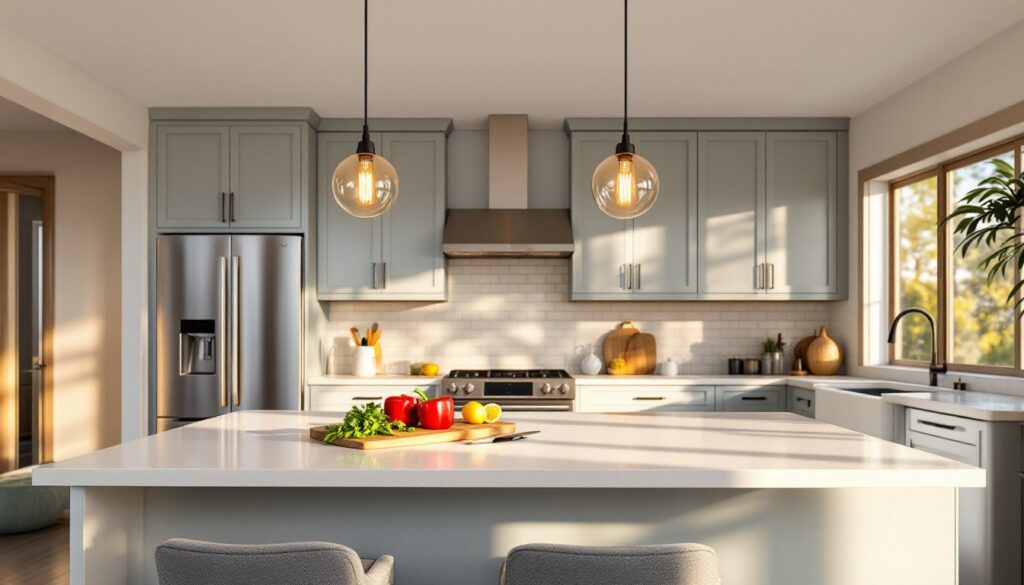
Oversized globe pendants in smoked glass or amber tones bring serious visual weight without feeling heavy. These work especially well over long islands (6 feet or more) where a single large fixture, 18 to 24 inches in diameter, can replace the typical three-pendant setup. The key is ensuring the globe doesn’t hang so low that it blocks sightlines across the kitchen. Stick to 30 to 36 inches above the counter surface for most applications.
Sculptural metal pendants with geometric cages, asymmetrical frames, or hand-forged details add an artisan touch. Look for fixtures that incorporate brass, blackened steel, or brushed nickel. These read as custom even when they’re not, and they layer well with stainless appliances or matte-black hardware. When selecting sculptural pieces, pay attention to the bulb visibility, exposed Edison-style filament bulbs enhance the look, but you’ll want dimmable LEDs rated for enclosed fixtures to avoid early burnout.
For those leaning into color, hand-blown art glass pendants in jewel tones or organic shapes bring a gallery-level aesthetic. These fixtures often come from smaller makers or artisan collectives, so expect longer lead times and higher price points. The payoff is a one-of-a-kind look that can’t be replicated in a neighbor’s kitchen. Just confirm the fixture’s weight and whether your existing ceiling lights junction box is rated to support it, most standard boxes handle up to 50 pounds, but heavier art glass may require reinforcement.
Industrial and Rustic Lighting for Character-Rich Kitchens
Vintage-inspired factory pendants with enamel shades and exposed sockets give off that reclaimed-from-a-warehouse vibe without the rust and electrical hazards of actual salvage fixtures. These typically come in 10- to 16-inch diameters and work best in multiples, three over a standard island creates balanced task lighting. Choose shades in matte black, navy, or classic white, and pair them with cloth-covered or twisted cord for an authentic period look.
Reclaimed wood beam chandeliers with integrated Edison bulbs merge rustic charm with modern wiring. These are often DIY-friendly if you’re comfortable with basic electrical and have a sturdy mounting point. A solid wood beam spanning 4 to 5 feet can house four to six bulb sockets wired in parallel. Make sure the beam is kiln-dried or properly sealed to prevent warping in a kitchen environment, humidity from cooking will wreak havoc on green lumber.
If you’re after something more refined, wrought iron or hand-forged metal frames with candelabra-style bulbs offer rustic elegance. These fixtures often include adjustable chain lengths, which is useful when dealing with sloped or vaulted ceilings. Many designs influenced by vintage lighting fixtures incorporate patinas and hand-hammered details that add texture and depth to the space.
Modern and Minimalist Fixtures for Clean Contemporary Spaces
Linear suspension lights are the go-to for long, narrow islands. These fixtures, often 36 to 60 inches in length, integrate multiple LED modules in a single housing, eliminating the need for multiple pendants and creating a sleek, uninterrupted line of light. Look for models with adjustable color temperature (2700K to 4000K) so you can dial in warm light for dining or cooler light for detailed prep work.
For a barely-there aesthetic, low-profile drum pendants in white linen or frosted acrylic provide diffused, shadow-free illumination. These sit close to the ceiling plane and work well in kitchens with limited headroom or when you want the focus on other design elements. Pair them with dimmer switches rated for LED loads, standard incandescent dimmers will cause flicker and reduce bulb lifespan.
Another modern option gaining traction is thin-profile ring or hoop pendants in brushed aluminum or powder-coated steel. These produce a halo effect that’s visually striking but functional, especially when the LED strip is positioned on the inner circumference. Installations are straightforward if you’re replacing existing pendants, but adding new electrical for the first time typically requires hiring a licensed electrician to ensure NEC compliance and proper load calculations. Design inspiration from sources like Remodelista’s curated pendant collections highlights how minimalist fixtures can create maximum impact.
Mixing Materials: Glass, Metal, and Natural Elements
Seeded or textured glass paired with metal frames adds depth without busy patterns. The glass diffuses light while still allowing the bulb filament to show through, creating a warm glow that’s ideal for ambient lighting. Common combinations include clear seeded glass with oil-rubbed bronze or ribbed glass with brushed brass. These fixtures bridge traditional and contemporary styles, making them versatile for transitional kitchens.
Woven rattan or wicker shades introduce natural texture and a casual, lived-in feel. These work especially well in coastal or Scandinavian-inspired kitchens where organic materials dominate. The downside is they provide less direct task lighting, so plan to supplement with under-cabinet LED strips or recessed lighting housing in the ceiling. Rattan fixtures also require regular dusting, grease and airborne particles settle into the weave.
For a bolder mix, consider concrete and metal hybrids. Concrete pendant shades, often cast in molds and hand-finished, bring an industrial edge that’s softened by pairing with warm wood tones or matte black metal accents. These are heavy (typically 8 to 15 pounds per fixture), so verify your junction box can handle the load and use appropriate ceiling anchors if mounting to drywall rather than a joist.
Capiz shell or mother-of-pearl inlays offer iridescent, light-catching surfaces that feel upscale without being overly formal. These fixtures are delicate and best reserved for kitchens where airborne grease is managed with a good range hood. Shell fixtures don’t hold up well to harsh cleaners, so plan to dust with a microfiber cloth and avoid ammonia-based sprays.
Installation Tips and Sizing Guidelines for Perfect Placement
Sizing is where most DIYers stumble. A good rule of thumb: the combined width of your fixtures should be roughly two-thirds the length of your island. For a 6-foot (72-inch) island, aim for pendants or a linear fixture totaling around 48 inches. If you’re using multiple pendants, space them 24 to 30 inches apart, center to center.
Hanging height matters as much as diameter. Standard practice is 30 to 36 inches from the counter surface to the bottom of the fixture. Go lower (28 to 30 inches) for a more intimate feel in kitchens with 9-foot ceilings or higher: go up to 36 inches in spaces with 8-foot ceilings to avoid head-bumping. If the island includes seating, make sure the fixtures don’t block sightlines for seated guests.
When swapping an existing fixture, confirm the electrical box is rated for the new weight. Standard plastic “old-work” boxes are rated for ceiling fans up to 35 pounds, but heavier chandeliers or multi-pendant setups require a metal box secured to a joist or blocking. If you’re unsure, pull the fixture and check the box label.
Wiring for dimmers or smart switches is straightforward for most fixtures, but LED-compatible dimmers are a must, old rotary dimmers will cause buzzing and reduced lifespan. If you’re installing a new circuit or adding junction boxes, that’s permit territory in most jurisdictions and often requires a licensed electrician to meet NEC standards. Planning your overall lighting layout can help integrate island fixtures with ambient and task lighting for a cohesive result.
Safety notes: Always cut power at the breaker before touching any wiring. Use a non-contact voltage tester to confirm the circuit is dead. Wear safety glasses when working overhead, and if you’re dealing with plaster ceilings or heavy fixtures, get a second pair of hands to support the weight during installation. Resources like The Kitchn and Homify offer real-world examples and visual guides that can clarify spacing and proportions before you commit to drilling.
Conclusion
Unique island lighting transforms a kitchen from functional to exceptional. Whether you lean toward statement pendants, industrial fixtures, or mixed-material designs, the key is balancing aesthetics with the practical realities of task lighting, scale, and installation. Measure twice, respect electrical codes, and choose fixtures that reflect how you actually use the space, not just how it photographs.