Table of Contents
ToggleChoosing the right outdoor lighting supplies can mean the difference between a backyard that feels like a forgotten afterthought and one that becomes the neighborhood’s evening showpiece. Whether you’re adding security to a dark walkway, illuminating a patio for late-night dinners, or just trying to stop tripping over the garden hose, the supplies you pick matter. In 2026, options range from simple solar stakes to sophisticated smart systems that sync with your phone. This guide walks through what you actually need, how to choose it, where to buy it, and how to install it safely, no fluff, just the essentials to get your project done right.
Key Takeaways
- Quality outdoor lighting supplies with durable finishes (aluminum, stainless steel, powder-coated) and proper UL ratings outlast cheap fixtures by years, reducing long-term replacement costs.
- LED bulbs are the 2026 standard for outdoor applications, using 75% less energy than incandescent and lasting 25 times longer while offering color temperatures from 2700K to 4000K for different moods.
- Low-voltage systems are safer for DIY installations and work well for small projects, while line-voltage setups provide more power for extensive coverage but require permits and GFCI protection.
- Always call 811 to have utilities marked before digging, bury UF-B cable at least 12 inches deep (18 inches without conduit), and use weatherproof connectors and sealed junction boxes to prevent moisture intrusion.
- Smart outdoor lighting integrations with Wi-Fi allow remote control and automation, though they add upfront cost—pair smart systems with quality fixtures rated IP65 or higher for reliable performance.
Why Quality Outdoor Lighting Supplies Matter for Your Home
Cheap outdoor lighting supplies fail fast. A $12 fixture that rusts through in six months costs more in the long run than a $40 one that lasts a decade. Outdoor environments are brutal, UV exposure, temperature swings, moisture, and physical wear all take their toll.
Durability is non-negotiable. Look for fixtures rated for wet or damp locations (check the UL rating on the box). Aluminum, stainless steel, and powder-coated finishes hold up better than plastic or bare steel. Gaskets and sealed housings keep moisture out of sockets and wiring.
Safety is the other big factor. Outdoor lighting typically runs on 120V line voltage or 12V low voltage. Line voltage offers more light output but requires GFCI protection and weatherproof boxes, mistakes can be dangerous. Low-voltage systems are safer for DIY installs but require transformers and proper wire gauge to avoid voltage drop over distance.
Quality supplies also improve energy efficiency. Well-designed LED lighting options use 75% less energy than incandescent and last 25 times longer, cutting both your electric bill and the hassle of bulb replacements. In 2026, LED is the default for nearly all outdoor applications.
Essential Outdoor Lighting Supplies Every Homeowner Needs
Fixture Types and Their Best Uses
Different tasks need different fixtures. Here’s what matters:
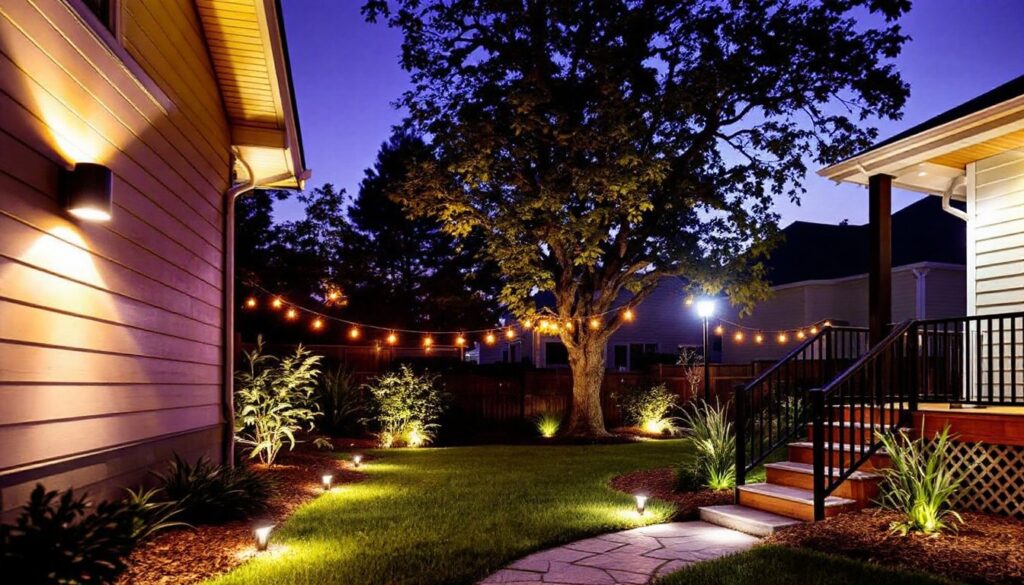
Path lights guide foot traffic and define walkways. Most are 12V low-voltage stakes, 12–18 inches tall. Space them 6–10 feet apart for even coverage. Avoid tiny solar models for primary paths, they’re too dim and unreliable in winter.
Floodlights and spotlights provide security and accent lighting. Use motion-sensing floodlights near entries and garages (look for adjustable sensitivity and timer settings). Spotlights work well for uplighting trees or architectural features, aim for narrow beam angles (15–30°) to avoid light spill.
Wall-mounted sconces and lanterns flank doors and illuminate porches. Choose fixtures rated for your exposure (covered porches can use damp-rated: open areas need wet-rated). Down-facing designs reduce glare and light pollution.
String lights and decorative fixtures add ambiance. Commercial-grade string lights with rubber-molded sockets outlast consumer versions. For permanent installs, look for UL-listed outdoor string lights, not the cheap holiday sets.
Deck and step lights improve safety on stairs and walking surfaces. Recessed step lights install into risers: surface-mount versions attach with screws. Both typically run on 12V systems.
Bulbs, Wiring, and Power Options
Bulbs: LED is standard. For replaceable-bulb fixtures, use A19 or BR30 LEDs for general lighting, PAR38 LEDs for floods and spots. Check the color temperature, 2700K–3000K (warm white) suits residential settings: 4000K+ feels institutional. Lumen output matters more than wattage equivalents: 800 lumens replaces a 60W incandescent, 1600 lumens a 100W.
Wiring: Low-voltage systems use 12-gauge or 14-gauge landscape wire. Twelve-gauge supports longer runs (up to 200 feet from the transformer without significant voltage drop). Line-voltage wiring requires UF-B (underground feeder) cable, typically 14/2 or 12/2 with ground. Bury UF-B at least 12 inches deep (18 inches without conduit in some jurisdictions, check local codes).
Transformers: Low-voltage systems need a transformer to step down 120V to 12V. Size it for 120–150% of your total wattage to avoid overload. Many transformers now include timers, photocells, and smart controls.
Power options: Hardwired line voltage offers the most power but often requires a permit and should be GFCI-protected. Low-voltage plug-in systems are DIY-friendly. Solar fixtures work for accents and path lights but struggle in shaded yards or cloudy climates. Battery-powered LED spotlights suit temporary or rental situations.
How to Choose the Right Outdoor Lighting Supplies for Your Project
Start with a lighting plan. Walk your property at dusk and note dark spots, trip hazards, and areas you want to highlight. Sketch a rough layout showing fixture locations, power sources, and wire routes.
Match voltage to scope. For small projects (a few path lights, a porch fixture), low-voltage or solar works fine. Larger installs with multiple zones, floods, or extensive coverage benefit from line voltage, but expect to pull permits and possibly hire an electrician for the connections.
Consider control options. Basic setups use timers or photocells. Smart outdoor lighting, covered extensively in reviews like those on Tom’s Guide, integrates with Wi-Fi, allowing remote control, scheduling, and automation. Brands like Philips Hue, Ring, and Govee offer outdoor-rated smart bulbs and fixtures. Smart tech adds cost but pays off in convenience and energy savings.
Prioritize IP ratings. IP65 or higher means dust-tight and water-jet resistant, good for most outdoor uses. IP67 handles temporary immersion (near pools or sprinkler zones). Lower ratings (IP44) are fine for covered areas.
Check beam angles and light distribution. Narrow beams (15–30°) focus light: wide beams (90–120°) spread it. Path lights and floods need wide beams: accent lights need narrow. Some fixtures let you swap optics or adjust the beam.
Budget for longevity. Quality outdoor lighting fixtures cost more upfront but reduce replacement cycles. A $50 LED fixture with a 50,000-hour lifespan beats a $20 unit that dies in two years.
Where to Buy Outdoor Lighting Supplies: Online vs. Local Options
Local home centers (Home Depot, Lowe’s, Menards) stock a solid range of basic fixtures, bulbs, wire, and transformers. You can see finishes in person, check build quality, and grab supplies the same day. Staff knowledge varies, some locations have knowledgeable lighting or electrical associates, others don’t.
Electrical supply houses carry professional-grade gear: commercial transformers, UL-listed landscape wire in bulk, and contractor-quality fixtures. Pricing is often competitive if you’re buying volume. They’re also a good source for code-compliant materials and technical advice.
Online retailers (Amazon, Wayfair, specialized lighting sites) offer wider selection and often better prices. Read reviews carefully, outdoor lighting gets hit hard by weather, and negative reviews reveal which products rust, leak, or fail early. Shipping costs and return policies matter: fixtures are bulky and heavy.
For curated design-forward options, resources like Gardenista’s outdoor lighting roundup point to boutique suppliers and vintage sources that go beyond big-box offerings.
Smart home and tech retailers (Best Buy, B&H Photo, Apple) stock outdoor smart lights and hubs. Digital Trends regularly reviews new smart home tech, including outdoor lighting integrations.
Buy transformers, wire, and connectors locally when possible, returns and replacements are easier. Order specialty fixtures and decorative pieces online where selection is broader. Always confirm wet/damp ratings and warranty terms before checkout.
Installation Tips and Safety Considerations
Safety first. Outdoor electrical work can be hazardous. If you’re uncomfortable working with electricity, hire a licensed electrician. Line-voltage installs often require permits: check with your local building department.
Wear proper PPE: safety glasses, gloves, and if digging, sturdy boots. Use a non-contact voltage tester to confirm circuits are off before touching wires.
Plan your layout before digging. Call 811 (in the US) to have utilities marked. Hitting a buried gas or electric line is dangerous and expensive. Lay out fixtures and measure wire runs to avoid waste.
Bury cable at code depth. UF-B cable in conduit typically needs 12 inches of cover: direct-burial UF-B often requires 18 inches (check IRC and local amendments). Low-voltage landscape wire can be surface-laid or buried a few inches, but deeper is better to avoid nicks from aeration or shovels.
Use weatherproof connectors and boxes. Twist-on wire nuts aren’t enough outdoors, use silicone-filled wire nuts or heat-shrink butt connectors. Line-voltage splices must be in approved junction boxes with gasketed covers.
Avoid voltage drop. In low-voltage systems, long wire runs cause dimming at the far end. Use 12-gauge wire for runs over 50 feet, and consider splitting the load across multiple transformer taps or adding a second transformer.
Test before burying. Connect everything, turn it on, and walk the system at night. Check for flicker, dim spots, and proper fixture aim. Adjust and troubleshoot while wiring is still accessible.
Maintain your system. Clean fixture lenses annually, check for corrosion at connections, and trim vegetation that blocks light. Regular lighting maintenance practices extend fixture life and keep your yard safe and bright. Replace any cracked lenses or damaged gaskets immediately, moisture intrusion kills fixtures fast.
Outdoor lighting is one of the most satisfying DIY upgrades. With the right supplies, a clear plan, and attention to safety and code, most homeowners can tackle low-voltage installs confidently. For line-voltage work or complex smart systems, don’t hesitate to bring in a pro, good lighting is worth doing right.